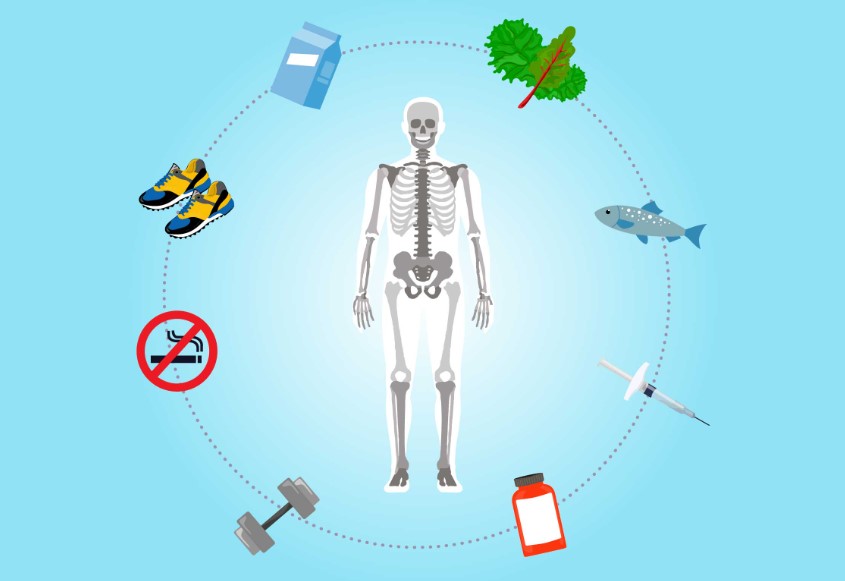
If you are taking calcium and vitamin D supplements for bone health, a landmark study published June 15, 2026 in The BMJ may change what you thought you knew. Researchers reviewed 69 randomized controlled trials involving 153,902 adults, one of the largest evidence reviews ever conducted on the topic, and concluded that calcium alone, vitamin D alone, or both combined offer little to no clinically meaningful protection against fractures or falls for most older adults living independently.
That’s not a fringe opinion. It’s the conclusion of a peer-reviewed, large-scale analysis published in one of the most respected medical journals in the world. Here’s exactly what the study found, who it doesn’t apply to, and what the evidence says actually works.
1. The 2026 BMJ Study: Do Calcium and Vitamin D Supplements for Bone Health Actually Work?
Led by pharmacist Olivier Massé of Sacred Heart Hospital of Montreal, the research team pooled 69 randomized controlled trials and pre-agreed on what would count as a clinically meaningful benefit before looking at the results, not just statistical significance, which can make a tiny, practically irrelevant effect look impressive on paper.
Here’s the breakdown, by intervention:
- Calcium alone: little to no effect on fracture risk (moderate-certainty evidence, 11 trials, 9,067 participants)
- Vitamin D alone: little to no effect on fracture risk (high-certainty evidence, 36 trials, 92,045 participants)
- Calcium + vitamin D combined: a small reduction in fracture risk that did not clear the researchers’ pre-defined threshold for clinical meaningfulness (high-certainty evidence, 15 trials, 51,126 participants)
The pattern held for hip fractures specifically and for falls, too. And importantly, the researchers re-ran their analysis accounting for participant age, sex, history of falls and fractures, and baseline dietary calcium intake, the findings held up across all of those factors, which strengthens confidence in the conclusion rather than weakening it.
This is the key distinction most earlier coverage glossed over: absolute risk reduction versus relative risk reduction. A supplement that “cuts your risk by 15%” sounds significant, but if your baseline risk was already small, a 15% relative reduction might only move your absolute risk from, say, 2% to 1.7%. That’s a real but tiny difference in practice. This study deliberately measured benefit using absolute, clinically meaningful thresholds rather than relative risk percentages, which is part of why its conclusions look different from some older reviews.
Based on this, the researchers concluded their findings “do not support routine supplementation with calcium or vitamin D, or combined supplementation to prevent fractures and falls,” and they called on clinicians, guideline panels, and regulatory agencies to re-evaluate their general recommendations in light of the evidence.
2. Why Did We Believe This for So Long?
The calcium-and-bones narrative has deep roots, decades of “drink your milk” messaging, a 1990s-2000s supplement boom, and genuinely well-intentioned medical guidance based on the evidence available at the time. Earlier, smaller trials sometimes reported relative risk reductions that sounded compelling, and clinical guidelines, which typically lag behind the newest evidence by years, carried that momentum forward even as more rigorous, larger-scale data started to complicate the picture.
This isn’t a story about anyone being misled on purpose. It’s a story about how medical guidance evolves as evidence accumulates, and why a single, enormous, methodologically rigorous study like this one can shift the conversation faster than years of smaller, mixed-signal research.
3. Who Might Still Benefit From These Supplements
This is the most important section in this article, so read it even if you are tempted to skip to the “what works instead” part.
The BMJ researchers themselves were careful to state that their findings may not apply to:
- People with a confirmed diagnosis of osteoporosis or osteopenia: a different clinical picture than general bone health maintenance
- People currently taking medication for osteoporosis or another bone disease: supplementation alongside these medications may follow a different evidence base
- People with a confirmed vitamin D deficiency (diagnosed through bloodwork): correcting an actual deficiency is a different clinical goal than taking supplements “just in case” without a known deficiency
- People with malabsorption conditions or other specific medical situations that affect nutrient absorption
The single most important takeaway from this entire article: do not stop taking a supplement your doctor specifically prescribed for a diagnosed condition based on a blog post, even a well-sourced one. This study is about routine, preventive supplementation in people without one of the conditions above. If you fall into any of the categories listed, talk to your doctor before making any changes, and bring this study with you to that conversation.
4. The Risks Nobody Talked About
Part of why the BMJ findings matter isn’t just “it doesn’t help”, it’s that supplemental calcium, specifically, carries risks that dietary calcium generally doesn’t.
Cardiovascular concerns. Some research has raised questions about whether high-dose supplemental calcium might be associated with increased arterial calcification risk in certain populations, a concern that doesn’t apply in the same way to calcium obtained through food, which is absorbed and processed differently by the body.
Kidney stone risk. High-dose calcium supplementation has been associated with increased kidney stone risk in some studies, particularly when taken without adequate hydration or alongside high-dose vitamin D.
Why the food-vs-supplement distinction matters. Calcium from food arrives bundled with other nutrients and is absorbed more gradually, alongside the rest of a meal, rather than as a concentrated dose all at once. This is one proposed reason why dietary calcium doesn’t appear to carry the same risk profile as supplemental calcium in some research, though this remains an area of ongoing study rather than settled science.
None of this means supplemental calcium is dangerous for everyone. It means the “more can’t hurt” assumption that many people carry into the supplement aisle doesn’t hold up, and it’s one more reason routine, unsupervised high-dose supplementation deserves a second look.
5. If Not Calcium and Vitamin D Supplements for Bone Health — What Does Work?
This is where the evidence gets genuinely encouraging.
Exercise: The Strongest Evidence of Anything in This Article
If you take away one action item from this entire piece, make it this one. A separate, massive Harvard T.H. Chan School of Public Health study, published just two weeks before the BMJ review, on June 2, 2026, in the British Journal of Sports Medicine, followed roughly 147,000 adults over nearly 30 years and found that 90–119 minutes of weekly strength training reduced all-cause mortality by 13%, cardiovascular death by 19%, and neurological death by 27%. People who combined strength training with aerobic activity saw even greater benefits than either type of exercise alone.
Strength training builds bone density directly, your skeleton responds to mechanical load by reinforcing itself, the same way a muscle responds to resistance. Combine that with weight-bearing activities like brisk walking, hiking, dancing, or stair climbing, and you’re targeting bone health through a mechanism with genuinely strong, recent evidence behind it, unlike routine supplementation.

Dietary Calcium Sources (Better Absorbed, Fewer Risks)
Hitting your calcium needs through food sidesteps the supplement-specific risks discussed above entirely. Some of the most calcium-dense options:
- Dairy: milk (~300mg per cup), yogurt (~415mg per cup), cheese
- Non-dairy: kale (~180mg per cup, cooked), sardines with bones (~325mg per 3oz), calcium-fortified plant milks (~300mg per cup), almonds (~75mg per oz), tofu made with calcium sulfate (~350mg per half cup)
A practical day that hits roughly 1,000mg from food alone: Greek yogurt at breakfast (≈300mg), a kale-and-almond salad at lunch (≈250mg), sardines or fortified plant milk worked into dinner (≈300mg), and a small handful of almonds as a snack (≈75mg) gets you most of the way there without a single capsule.

Other Nutrients That Genuinely Support Bone Health
- Vitamin K2 helps direct calcium toward bone tissue rather than soft tissue and arteries, an emerging area of interest that pairs naturally with this conversation about where calcium actually ends up in the body.
- Magnesium plays a direct, well-established role in regulating calcium metabolism and bone mineralization, they work as a pair, not in competition. If you’re already looking at your supplement routine, our guide on magnesium for sleep and anxiety covers how magnesium’s role extends well beyond sleep, including this calcium-regulation function.
- Protein makes up roughly half of bone’s structural matrix by volume, adequate protein intake isn’t just a muscle-building consideration, it’s a bone health one too.
- Omega-3 fatty acids have some evidence suggesting a role in reducing bone resorption, though this area needs more research before strong claims are warranted.
For more on which nutrition claims actually hold up versus which are mostly marketing, see our breakdown of superfoods that actually work versus hype, and for plant-based eaters specifically, our guide to getting calcium from a plant-based diet covers non-dairy strategies in more depth.
6. What the USPSTF and Guidelines Now Say
The U.S. Preventive Services Task Force (USPSTF) issued a draft recommendation in December 2024, still in draft status as of this BMJ study’s publication, recommending against routine vitamin D supplementation (with or without calcium) for the primary prevention of falls and fractures in community-dwelling postmenopausal women and men 60 and older. That draft followed a public comment period that closed in January 2025 and has not yet been finalized into official federal guidance.
The new BMJ meta-analysis adds substantial independent weight to that direction, and its authors are explicitly calling on “clinicians, guideline panels, and regulatory agencies” to revisit their general recommendations.

Three questions worth asking at your next doctor’s appointment:
- “Based on my specific health history, is there a reason I should continue calcium/vitamin D supplementation, or would dietary sources be sufficient for me?”
- “Has my vitamin D level actually been tested, or am I supplementing without knowing if I’m deficient?”
- “Would a referral to a physical therapist or exercise program focused on bone-loading activity be appropriate for me?”
7. Calcium and Vitamin D Supplement Dosage: When You Do Need to Take Them
If your doctor has specifically prescribed these supplements for a diagnosed condition, here’s how to take them correctly, this section is for people who fall into the “still may benefit” category in Section 3, not a general recommendation to start supplementing.
Calcium carbonate vs. calcium citrate: Calcium carbonate is more concentrated and needs to be taken with food for proper absorption. Calcium citrate is absorbed well with or without food and is often better tolerated by people with lower stomach acid, including many older adults.
Vitamin D2 vs. D3: Vitamin D3 (cholecalciferol) is generally considered more effective than D2 (ergocalciferol) at raising and maintaining blood levels of vitamin D over time.
Upper limits: The NIH sets the tolerable upper intake level for calcium at 2,000–2,500mg/day (varying by age) and for vitamin D at 4,000 IU/day for most adults, from all sources combined including food and supplements. Exceeding these levels increases risk of side effects, including the cardiovascular and kidney concerns discussed in Section 4. Never assume more is better — discuss your specific dosage with your doctor or pharmacist.
8. FAQs About Calcium and Vitamin D Supplements for Bone Health
Should I stop taking calcium and vitamin D supplements for bone health? Not without talking to your doctor first. This 2026 BMJ study found little benefit for routine supplementation in healthy, community-dwelling adults, but it explicitly does not apply to people with diagnosed osteoporosis, confirmed vitamin D deficiency, or those on bone-disease medication. If you fall into one of those categories, your situation is different from what this study measured.
How much calcium do I need per day from food? The NIH’s Recommended Dietary Allowance is roughly 1,000mg/day for most adults, rising to 1,200mg/day for women over 50 and men over 70. A combination of dairy or fortified plant milk, leafy greens, and calcium-set tofu can realistically meet this without supplementation for most people.
What is the difference between calcium carbonate and calcium citrate? Calcium carbonate is more concentrated (more elemental calcium per pill) but requires food for proper absorption. Calcium citrate is absorbed well on an empty stomach and may be gentler for people with digestive sensitivities.
Does vitamin D help bones if I’m deficient? Correcting a confirmed vitamin D deficiency (verified through bloodwork) is a different clinical scenario than routine “just in case” supplementation in someone without a deficiency. The 2026 BMJ study’s findings on general fracture and fall prevention don’t directly address the separate question of treating diagnosed deficiency.
Can you get enough calcium without dairy? Yes. Kale, calcium-set tofu, sardines with bones, fortified plant milks, and almonds are all strong non-dairy calcium sources, as detailed in Section 5 above.
What exercises build bone density fastest? The strongest current evidence points to strength/resistance training combined with weight-bearing aerobic activity. A 2026 Harvard study found 90–119 minutes of weekly strength training was associated with the greatest mortality and health benefits, and bone responds to mechanical loading specifically, meaning movements that put resistance through your skeleton, not just cardio alone.
Are there any supplements that actually work for bones? The strongest supporting evidence right now sits with adequate dietary protein, magnesium (which regulates calcium metabolism), and confirmed correction of an actual vitamin D deficiency where one exists, rather than blanket calcium/vitamin D supplementation in people without a diagnosed need.
Is it safe to take calcium supplements long-term? This depends heavily on individual health status, existing conditions, and total intake from all sources. The cardiovascular and kidney-stone considerations discussed in Section 4 are part of why long-term, high-dose supplementation deserves a conversation with your doctor rather than indefinite default use.
Conclusion
The 2026 BMJ review doesn’t say bone health doesn’t matter, it says the tool millions of people have leaned on for decades isn’t doing what we assumed for most healthy adults. If you don’t have a diagnosed bone condition or confirmed deficiency, the better-supported path forward right now is strength training, weight-bearing movement, and getting your calcium from food. If you do have a diagnosed condition, this is a conversation for your doctor, not a reason to make changes on your own. Either way, this is a genuinely good moment to ask your provider where you actually stand.
Continue exploring: see what the biggest collagen study ever conducted found about joint and connective tissue support, or learn how magnesium supports both sleep and bone metabolism in our companion guide.