The link between intermittent fasting and brain health just got a major scientific spotlight. A study quietly published in 2023, and resurfacing across major science outlets in 2026, found that intermittent energy restriction doesn’t just shrink your waistline. It triggers coordinated, simultaneous changes in your brain’s cravings circuitry and your gut microbiome, in a way that calorie counting alone has never been shown to replicate.
If you’ve ever wondered why your food cravings seem to fade a few weeks into a fast, and then come roaring back the moment you stop, this research offers the clearest biological explanation yet.
1. The Discovery: Your Brain and Gut Change Together When You Fast
Researchers at the Health Management Institute of the PLA General Hospital in Beijing set out to understand what actually happens inside the body during fasting-based weight loss, not just on the scale, but inside the gut and the brain. Their study followed 25 adults with obesity, averaging 27 years old, through a structured intermittent energy restriction (IER) plan: 32 days of moderate calorie reduction followed by 30 days of a stricter 500–600 calorie daily plan.
The participants lost significant weight. But that wasn’t the most interesting part.
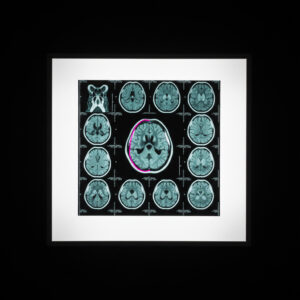
Using functional MRI (fMRI) brain scans, the research team found measurable drops in activity in brain regions tied to appetite, reward, and craving, the same circuits implicated in compulsive eating and food-seeking behavior. At the same time, stool samples analyzed through metagenomics showed the gut microbiome shifting in a parallel, coordinated pattern.
As lead researcher Dr. Qiang Zeng put it, the changes in gut bacteria and in addiction-related brain activity during weight loss were “highly dynamic and coupled over time”, meaning they didn’t happen in isolation. They moved together.
This is the heart of why intermittent fasting and brain health are now being talked about as a single, connected system rather than two separate areas of research.
2. What Intermittent Fasting and Brain Health Have in Common: The Gut-Brain Axis
To understand why fasting affects your brain at all, you need to understand the gut-brain axis, the two-way communication highway between your digestive system and your central nervous system.
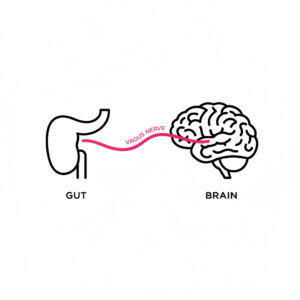
Your gut is home to trillions of bacteria that do far more than digest food. They manufacture precursors to neurotransmitters like serotonin, dopamine, and GABA, all of which shape mood, motivation, and critically, how strongly you crave certain foods. The vagus nerve carries signals back and forth between gut and brain continuously, which is part of why stress can upset your stomach and why an upset gut can affect your mood.
When you fast, you’re not just withholding calories from your body. You are changing the environment your gut bacteria live in, which changes what they produce, which changes the signals reaching your brain. Researchers reviewing this connection in a 2025 paper in Frontiers in Nutrition describe intermittent fasting as influencing brain health specifically through this gut-microbiome pathway, affecting neuroinflammation, the integrity of the gut lining, and the balance of microbial metabolites that reach the brain.
In plain terms: a healthier, more balanced gut microbiome appears to correspond with calmer activity in the brain’s craving and reward centers. Fasting nudges both systems at the same time.
3. The Specific Brain Changes Fasting Triggers
The fMRI data from the Beijing study showed reduced activity in several specific brain regions associated with appetite, reward, and self-control during the fasting-based weight loss period, areas that are heavily studied in research on food addiction and compulsive eating behavior.
On the microbiome side, the researchers identified bacterial groups that increased as participants progressed through the IER protocol, alongside reductions in others, including E. coli, that are more commonly elevated in people with metabolic dysfunction. The two sets of changes, brain and gut, tracked each other closely across the study period rather than moving independently.
This dual-method approach, fMRI imaging paired with metagenomic stool analysis, is part of what makes the study notable. It’s rare for a single piece of research to capture both the neurological and microbial sides of a dietary intervention at the same time.
4. Why Calorie Counting Alone Doesn’t Rewire Your Brain
Here is the key distinction this research points to: it’s not simply about eating less. It’s about when you eat less, and how that timing interacts with your body’s internal rhythms.
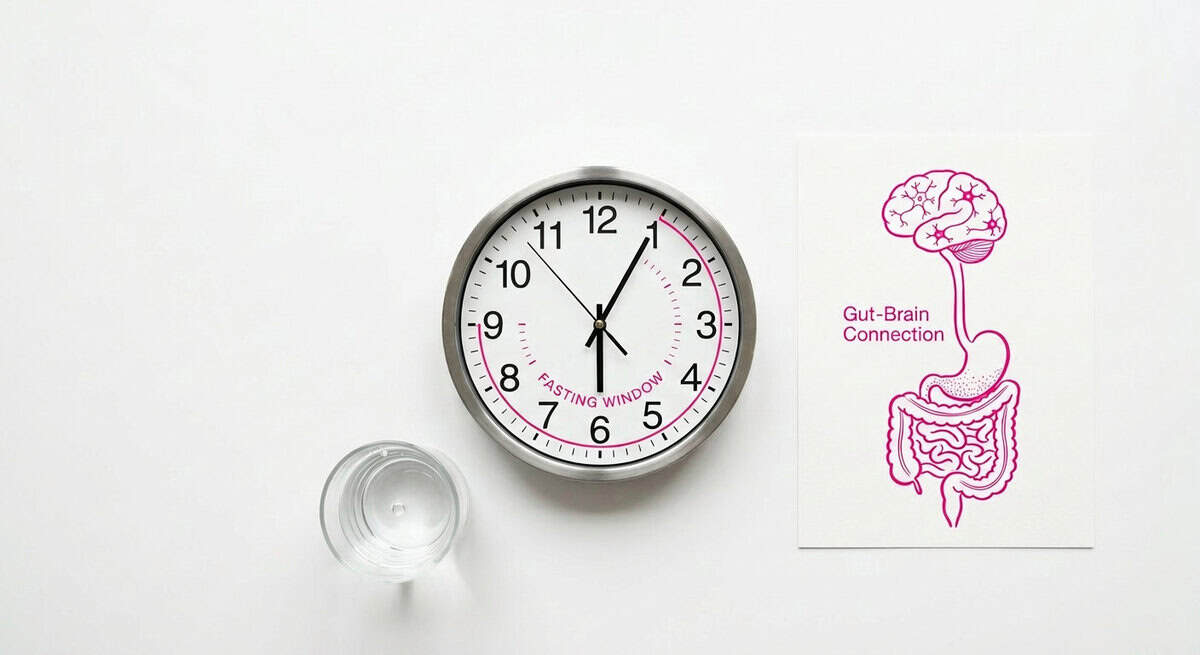
Standard calorie restriction reduces intake evenly across the day. Intermittent approaches, whether the strict IER protocol used in this study or more familiar methods like 16:8 time-restricted eating, create defined fasting windows that line up with your body’s circadian rhythm. That timing structure appears to be what triggers the deeper, system-wide shifts in gut bacteria and brain activity that pure calorie-counting hasn’t been shown to produce in the same way.
This is also the honest caveat worth sitting with: the protocol in this specific study (25% of normal calories, then 500–600 calories/day) is far more aggressive than the 16:8 or 5:2 methods most people try. We don’t yet know whether milder, more sustainable forms of intermittent fasting produce the same brain-gut coupling to the same degree, which is exactly why the “Limitations” section below matters.
5. What You Will Actually Feel: A Cravings Timeline
If you have tried intermittent fasting, this pattern may sound familiar and the brain-gut research helps explain why it happens in stages rather than all at once.
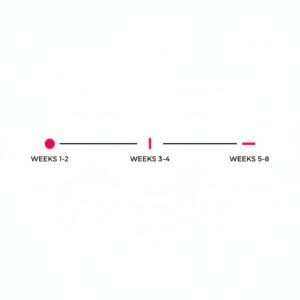
Week 1–2: Hunger often feels more intense, not less. Your body hasn’t adapted yet, and your brain’s reward circuitry is still firing strongly in response to food cues.
Week 3–4: Many people report cravings beginning to ease. This is roughly when gut microbiome shifts start to take hold in studies like this one.
Week 5–8: Reward-related brain activity tends to quiet further as the brain-gut relationship stabilizes around the new eating pattern. This is often when people describe fasting feeling less like a struggle and more like a routine.
This timeline isn’t a guarantee, individual responses vary widely but it’s consistent with what the coupled brain-gut changes in the research would predict.
6. How to Maximize the Brain Benefits of Intermittent Fasting
If you want your fasting routine to support this brain-gut connection rather than work against it, a few practical principles matter most:
Choose a sustainable method. For most beginners, the 16/8 method, fasting 16 hours, eating within an 8-hour window, is far easier to maintain long-term than an aggressive restriction protocol, and still aligns with the circadian-timing mechanism this research points to.
Feed your gut bacteria during eating windows. What you eat when you break your fast matters. Fiber-rich whole foods, fermented foods, and a diversity of plant sources support the same kind of gut bacteria diversity associated with better outcomes in this research.
Protect your sleep. Poor sleep disrupts both gut bacteria and the brain’s appetite-regulation circuits, undermining the very systems intermittent fasting is meant to support. If cravings have been intensifying for you lately, it’s worth reading about how hormonal and metabolic shifts in your 40s affect snacking, since the same brain-gut pathways are often at play.
Be patient through the early weeks. Per the timeline above, the first two weeks are typically the hardest. That’s the period before gut and brain adaptation has caught up.

7. Limitations and What We Still Don’t Know
This is YMYL (Your Money or Your Life) health content, so it’s worth being direct about what this research does and doesn’t establish:
- Small sample size. The core study involved just 25 participants. That’s enough to identify a pattern worth studying further, but not enough to draw firm population-wide conclusions.
- Correlation, not proven causation. The brain and gut changes moved together, but the study design doesn’t prove that gut changes caused the brain changes (or vice versa), only that they are connected.
- An aggressive protocol, not standard IF. As noted above, the diet tested was a structured 500–600 calorie restriction, not 16:8 or 5:2 time-restricted eating. More research is needed on whether gentler intermittent fasting methods produce comparable effects.
- Single-population study. All participants were adults with obesity in China. Results may not generalize to other populations, body types, or health statuses.
- Not a substitute for medical guidance. Intermittent fasting isn’t appropriate for everyone, including people who are pregnant, underweight, managing an eating disorder, or living with diabetes without medical supervision. Always consult a healthcare provider before starting any fasting protocol, especially an aggressive one.
8. FAQs About Intermittent Fasting and Brain Health
Does intermittent fasting change your brain? Research using fMRI brain imaging has found that fasting-based weight loss is associated with reduced activity in brain regions linked to appetite, reward, and craving. These changes appear to occur alongside shifts in gut bacteria composition.
How long does it take for intermittent fasting to affect gut bacteria? In the research discussed above, measurable gut microbiome shifts emerged over a roughly two-month structured fasting protocol. Many people anecdotally report craving changes beginning around the three-to-four-week mark on milder intermittent fasting methods, though individual timelines vary.
Can intermittent fasting help with food cravings? Some research suggests fasting-related changes in brain reward circuitry may correspond with reduced food cravings over time, though this research area is still developing and individual results vary significantly.
Is intermittent fasting safe for people with depression or anxiety? This isn’t something to decide without medical input. Fasting affects neurotransmitter pathways tied to mood, and the interaction with depression or anxiety varies by individual. Talk to a healthcare provider before starting, particularly if you’re managing a mental health condition or taking medication.
What type of intermittent fasting is best for brain health? The research above tested a strict intermittent energy restriction protocol, not standard 16:8 or 5:2 methods. For most people, a gentler, sustainable approach like 16:8 fasting is a safer starting point, and consistency over time likely matters more than the specific protocol.
Conclusion
The evidence connecting intermittent fasting and brain health is still developing, but what’s emerging is a more complete picture than “fasting helps you lose weight.” Your gut and brain appear to change in tandem during fasting-based weight loss, which may help explain why food cravings can feel so different a few weeks into a fasting routine compared to day one. As always with emerging nutrition science, the responsible approach is cautious optimism: pay attention to what your body tells you, choose a sustainable method, and loop in a healthcare provider if you have any underlying health conditions.
Ready to start? Read our complete beginner’s guide to intermittent fasting for fasting methods, schedules, and safety guidance, or explore how your gut and mental wellness are connected for the bigger picture on the gut-brain relationship.