For over a thousand years, traditional Chinese medicine practitioners have prescribed a root called He Shou Wu for a condition they described as “blackening hair and nourishing essence.” Western medicine largely dismissed it. Dermatologists ignored it. Hair loss pharmaceutical companies had no interest in studying it.
Then a 2026 scientific review changed the conversation.
Published in the Journal of Holistic Integrative Pharmacy, the review synthesized laboratory research, clinical observations, and historical herbal records on Polygonum multiflorum, the plant behind He Shou Wu, and concluded that this ancient remedy acts on four distinct biological mechanisms involved in hair loss and regrowth simultaneously. No currently approved pharmaceutical does all four at once.
“Our analysis bridges ancient wisdom and modern science,” said Han Bixian, the review’s lead author. “What surprised us was how consistently historical texts, from the Tang Dynasty onward, described effects that align perfectly with today’s understanding of hair biology. Modern studies now confirm that this isn’t folklore; it’s pharmacology.”
This is not a miracle cure story. Large-scale human clinical trials are still needed. But for the millions of men and women affected by androgenetic alopecia, the findings represent one of the most promising developments in alternative health for hair loss in years.
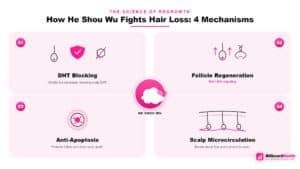
How He Shou Wu Fights Hair Loss: 4 Mechanisms Explained
What makes the 2026 review so significant is not just that He Shou Wu may help with hair loss, it is that the herb appears to work through multiple biological pathways at the same time. Most conventional hair loss treatments target a single mechanism. He Shou Wu, according to the research, addresses four.
Mechanism 1: DHT Blocking
Dihydrotestosterone, commonly known as DHT, is one of the primary drivers of androgenetic alopecia, the most common form of hair loss in both men and women. DHT gradually shrinks hair follicles, making them produce thinner and shorter hairs until growth slows dramatically or stops entirely.
The 2026 review found that Polygonum multiflorum may help reduce the impact of DHT on hair follicles, protecting them from this hormone-driven miniaturization process. This is the same mechanism targeted by finasteride (Propecia), the most widely prescribed pharmaceutical for male pattern hair loss.
The DHT connection is relevant far beyond hair loss. The same hormone plays a role in hormonal acne and is closely tied to broader patterns of men’s hormonal health. Understanding DHT’s role across multiple conditions helps explain why a single herb that modulates this hormone has such wide-ranging traditional uses.
Mechanism 2: Follicle Regeneration Signaling (Wnt/β-catenin and Shh Pathways)
Beyond blocking the hormone that shrinks follicles, He Shou Wu appears to activate key biological signaling pathways involved in tissue regeneration and hair regrowth. The review specifically identified the Wnt/β-catenin and Sonic Hedgehog (Shh) pathways as being influenced by compounds in Polygonum multiflorum.
These pathways control how cells grow, communicate, and repair tissue. In hair follicles, they are closely linked to the transition from resting phases (telogen) into active growth (anagen). When these signals are stronger, dormant follicles may be more likely to reenter a growth state and begin producing new hair.
This is an important distinction. Most hair loss treatments are designed mainly to preserve existing hair or slow further thinning. A treatment that actively triggers regrowth signals could offer a fundamentally different approach, especially for people who have not responded well to conventional options.
Mechanism 3: Anti-Apoptosis (Preventing Premature Cell Death)
Healthy hair follicles depend on active, living cells to maintain the hair growth cycle. When follicle cells die prematurely through a process called apoptosis, the growth cycle is disrupted and hair production weakens or stops.
The review found that Polygonum multiflorum may help prevent premature death of follicle cells, essentially protecting the cellular infrastructure that follicles need to keep producing hair. Research on tetrahydroxystilbene glucoside, one of the key bioactive compounds in He Shou Wu, has shown anti-apoptotic properties in hair follicle models.
This anti-apoptosis mechanism has broader significance beyond hair biology, the same cellular survival pathways are studied in cancer research, though they operate in very different contexts. In hair follicles, preventing unnecessary cell death is protective and beneficial.
Mechanism 4: Improved Scalp Microcirculation
The herb may also improve blood flow to the scalp. Better circulation brings more oxygen and nutrients to hair follicles, supporting the environment needed for healthier hair growth.
This is one reason the review’s authors see Polygonum multiflorum as potentially broader than conventional treatments that focus on a single target. Improved scalp microcirculation supports the other three mechanisms by ensuring follicles have the resources they need to respond to DHT protection, growth signaling, and anti-apoptotic effects.
He Shou Wu vs. Finasteride vs. Minoxidil: How It Compares
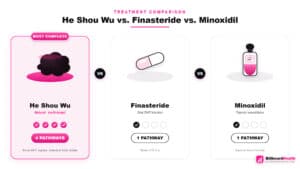
To understand where He Shou Wu fits in the hair loss treatment landscape, it helps to compare it directly against the two most widely used pharmaceuticals. Here is how they stack up across key dimensions.
Treatment Comparison Table
| Feature | He Shou Wu (Processed) | Finasteride (Propecia) | Minoxidil (Rogaine) |
| Drug Class | Herbal/botanical | 5-alpha reductase inhibitor | Vasodilator |
| Primary Mechanism | Multi-pathway (DHT + Wnt/Shh + anti-apoptosis + circulation) | DHT blocking (single pathway) | Scalp blood flow (single pathway) |
| DHT Blocking | Yes (partial) | Yes (strong, systemic) | No |
| Follicle Regeneration Signaling | Yes (Wnt/β-catenin, Shh) | No | Limited evidence |
| Anti-Apoptosis | Yes | No | No |
| Scalp Circulation | Yes | No | Yes (primary mechanism) |
| Administration | Oral (processed root/extract) | Oral tablet (1mg daily) | Topical liquid/foam (2x daily) |
| FDA Approved for Hair Loss | No (dietary supplement) | Yes | Yes |
| Common Side Effects | GI discomfort; liver risk if raw/unprocessed | Sexual dysfunction, mood changes | Scalp irritation, unwanted facial hair |
| Large-Scale Human Trials | Limited (review-stage) | Extensive | Extensive |
| Suitable for Women | Potentially (consult practitioner) | Not recommended for women of childbearing age | Yes (2% solution) |
| Average Monthly Cost | $15–$40 (supplement) | $10–$90 (generic to brand) | $15–$50 (OTC) |
Several things are worth noting. Finasteride is the strongest DHT blocker available and has the most robust clinical trial evidence. However, it works through only one mechanism and carries side effects that concern many patients, particularly sexual dysfunction. Some patients have reported persistent side effects even after discontinuing the drug, a controversial condition sometimes called post-finasteride syndrome.
Minoxidil is effective for some patients, particularly in promoting regrowth, but it primarily works by improving blood flow to the scalp and must be applied topically twice daily indefinitely. It does not address DHT at all.
He Shou Wu’s advantage, according to the 2026 review, is its multi-mechanism profile. However, its disadvantage is clear: it has not yet been validated through the kind of large-scale, randomized, placebo-controlled clinical trials that finasteride and minoxidil have undergone. The evidence base is promising but still emerging.
For people who have explored conventional treatments and are looking for complementary or alternative approaches, He Shou Wu represents a scientifically plausible option, not a proven replacement. This is similar to the situation with other traditional remedies that science is now investigating, such as ashwagandha for men’s health or black seed oil, where growing evidence supports traditional claims without yet replacing conventional medicine.
The Liver Warning: Raw vs. Processed Forms
This section may be the most important in this entire article. He Shou Wu carries a well-documented risk of hepatotoxicity, liver toxicity, when taken in raw, unprocessed form or in excessive doses. This is not a minor caveat. It is a serious safety consideration that anyone exploring this herb must understand.
The Critical Difference: Raw vs. Processed
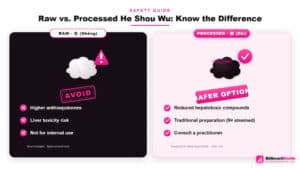
In traditional Chinese medicine, Polygonum multiflorum is almost never used in its raw form for hair loss. The raw root (known as Shēng hé shǒu wū) contains higher concentrations of anthraquinones, compounds that have been linked to liver damage in multiple case reports and pharmacological studies.
Processed Polygonum multiflorum (known as Zhì hé shǒu wū) undergoes a traditional preparation method, typically steaming with black bean juice, that substantially reduces hepatotoxic compounds. The processing step transforms the chemical profile of the root, decreasing the anthraquinone content while preserving or enhancing the compounds associated with hair growth benefits.
The 2026 review specifically noted this distinction. The authors stated that when properly processed, the herb shows a more favorable safety profile, making it more acceptable to patients wary of side effects from conventional medications. However, “more favorable” does not mean “risk-free.”
Documented Liver Risks
Case reports in the medical literature have documented instances of liver injury associated with Polygonum multiflorum products. Most documented cases involve raw or improperly processed formulations, excessively high doses, or prolonged unmonitored use. Some cases have resulted in acute hepatitis, and rare severe cases have required hospitalization.
The liver processes everything you consume, and maintaining gut and liver health is essential when introducing any herbal supplement into your routine. The gut-liver axis means that what happens in your digestive system directly impacts liver function, and any supplement that passes through the liver warrants caution and monitoring.
Non-Negotiable Safety Rules
If you are considering He Shou Wu, these guidelines are not optional:
Use only processed (Zhì) formulations. Never purchase or consume raw He Shou Wu for internal use. The product label should specify “processed” or “prepared” Polygonum multiflorum. If it does not specify, do not use it.
Buy from reputable sources with third-party testing. The supplement industry is poorly regulated. Look for products that have been tested by independent labs for both identity (confirming the correct plant species) and contaminant screening.
Consult a healthcare provider before starting. This means a physician or a licensed traditional Chinese medicine practitioner, not a supplement store employee. If you have any existing liver condition, take medications metabolized by the liver, or consume alcohol regularly, He Shou Wu may not be appropriate for you.
Get baseline liver function tests. Ask your doctor for a liver panel (ALT, AST, bilirubin) before starting supplementation. Repeat the test after six to eight weeks. If liver enzymes elevate, discontinue immediately.
Do not exceed recommended doses. More is not better. Follow the dosing guidance on the specific product you are using, or the recommendation of your prescribing practitioner. Typical studied doses of processed extract range from 500mg to 2,000mg daily, but this varies by product concentration and formulation.
Do not use indefinitely without monitoring. Cycling on and off and scheduling regular liver function checks is a prudent approach for any long-term herbal supplementation.
How to Use He Shou Wu Safely
For those who have consulted a healthcare provider and decided to explore He Shou Wu, here is practical guidance drawn from the scientific literature and traditional Chinese medicine practice.
Forms Available
He Shou Wu is available in several forms. Processed root powder is the most traditional form, typically encapsulated or brewed as a decoction (tea). Standardized extracts in capsule or tablet form are the most convenient option and allow for more consistent dosing. Liquid tinctures and topical preparations also exist, though the 2026 review focused primarily on oral formulations and their systemic effects.
General Dosage Range
The scientific literature does not provide a single definitive dose for hair loss specifically. Doses studied in various research contexts range from approximately 500mg to 2,000mg of processed Polygonum multiflorum extract daily. Traditional Chinese medicine practitioners typically individualize dosing based on the patient’s constitution, overall health, and concurrent treatments.
Expected Timeline
Hair biology operates on slow cycles. The shift from telogen (resting) to anagen (growth) takes weeks to months. Based on the mechanisms described in the 2026 review and general hair regrowth biology, a minimum of three to six months of consistent use would be needed before evaluating results. This timeline is similar to finasteride and minoxidil, which also require months of consistent use before visible improvement.
Who Should Avoid It
Pregnant or breastfeeding women should not use He Shou Wu. People with existing liver disease, hepatitis, elevated liver enzymes, or a history of drug-induced liver injury should not use it. Anyone taking medications with known liver interactions should consult their prescribing physician before adding any herbal supplement.
Other Natural DHT Blockers Worth Knowing
He Shou Wu is not the only natural compound being studied for DHT-related hair loss. Several other botanical ingredients have emerging evidence, and combining knowledge of multiple options helps build a more complete picture of what is available.
Saw Palmetto
Saw palmetto (Serenella repens) is one of the most studied natural DHT blockers. A 2012 randomized trial published in the Journal of Alternative and Complementary Medicine found that 320mg of saw palmetto daily improved hair count in 38% of participants. It works by inhibiting 5-alpha reductase, the enzyme that converts testosterone to DHT, the same target as finasteride, though with weaker potency and fewer reported side effects.
Pumpkin Seed Oil
A 2014 randomized controlled trial in Evidence-Based Complementary and Alternative Medicine found that 400mg of pumpkin seed oil daily increased hair count by an average of 40% over 24 weeks compared to placebo. The exact mechanism is not fully established, but researchers believe it involves partial 5-alpha reductase inhibition along with anti-inflammatory and nutritional effects.
Oregano Oil and Other Herbal Compounds
While not specifically studied for hair loss through DHT pathways, oregano oil contains compounds with anti-inflammatory and antimicrobial properties that may support scalp health. A healthy scalp environment is foundational for any hair growth strategy.
The Natural Remedies Cluster
What is emerging in the scientific literature is a growing recognition that traditional plant-based remedies often contain biologically active compounds worthy of serious investigation. Billboard Health has covered several of these in depth, including ashwagandha’s benefits for men and the health benefits of black seed oil. He Shou Wu fits squarely into this category, a remedy with centuries of traditional use that is now being validated through modern pharmacological analysis.
The broader question of when traditional remedies cross the line from folklore to real science is one of the most important themes in modern health research. If you have been following the debate about superfoods and whether they actually work, the He Shou Wu story is a compelling case study in how that line is being redrawn.
For anyone dealing with hair loss alongside other visible concerns like scarring from previous conditions, it is worth noting that the natural remedy research space also includes promising findings on natural scar treatments, another area where traditional approaches are gaining scientific support.
Frequently Asked Questions
Does He Shou Wu actually work for hair loss?
A 2026 scientific review published in the Journal of Holistic Integrative Pharmacy concluded that Polygonum multiflorum (He Shou Wu) acts on four biological pathways involved in hair loss: DHT blocking, follicle regeneration signaling through Wnt/β-catenin and Sonic Hedgehog pathways, anti-apoptosis (preventing premature cell death), and improved scalp microcirculation. Laboratory studies and limited clinical observations support these mechanisms. However, large-scale randomized controlled human trials have not yet been conducted, so the evidence is promising but not yet definitive.
What Chinese herb helps with hair growth?
He Shou Wu (Polygonum multiflorum) is the most studied Chinese herb for hair growth. It has been used in traditional Chinese medicine for over 1,000 years for “blackening hair and nourishing essence.” A 2026 review confirmed that it may influence multiple biological pathways involved in hair loss, including DHT reduction, growth signal activation, follicle cell protection, and scalp circulation. It must be used in its processed form for safety.
Is He Shou Wu a natural DHT blocker?
Yes. According to the 2026 review in the Journal of Holistic Integrative Pharmacy, Polygonum multiflorum may help reduce the impact of dihydrotestosterone (DHT) on hair follicles. DHT is the primary hormone responsible for follicle miniaturization in androgenetic alopecia. However, He Shou Wu’s DHT-blocking effect is considered partial and weaker than finasteride, which is the strongest pharmaceutical DHT blocker currently available.
What are the side effects of He Shou Wu? Is it safe for the liver?
The most serious risk associated with He Shou Wu is hepatotoxicity (liver toxicity), particularly from raw, unprocessed forms or excessive doses. Documented case reports include acute hepatitis and liver injury. Processed Polygonum multiflorum (Zhì hé shǒu wū) undergoes traditional preparation that substantially reduces hepatotoxic compounds and is considered significantly safer. Anyone using He Shou Wu should use only processed formulations, consult a healthcare provider, and monitor liver function with blood tests before and during use.
Is He Shou Wu FDA approved?
No. The FDA classifies Polygonum multiflorum (He Shou Wu) as a dietary supplement, not a pharmaceutical. It has not been approved for the treatment of hair loss or any other medical condition. The FDA does not evaluate dietary supplements for safety or efficacy before they reach the market. Consumers should purchase from reputable brands with third-party testing and consult a healthcare provider before use.
Can women use He Shou Wu for hair loss?
The 2026 review focused primarily on androgenetic alopecia, which affects both men and women. Polygonum multiflorum does not carry the same restrictions as finasteride, which is not recommended for women of childbearing age due to risks of birth defects. However, women who are pregnant, breastfeeding, or planning pregnancy should not use He Shou Wu. Women considering it for hair loss should consult a healthcare provider or licensed traditional Chinese medicine practitioner.
How long before He Shou Wu shows results for hair loss?
Hair biology operates on slow cycles. Based on the mechanisms described in the 2026 review and general hair growth biology, a minimum of three to six months of consistent daily use would be needed before evaluating results. This timeline is comparable to finasteride and minoxidil, both of which also require months of use before visible improvement. Individual results will vary based on the severity of hair loss, genetics, and overall health.
What is the difference between He Shou Wu and Fo-Ti?
He Shou Wu and Fo-Ti refer to the same plant: Polygonum multiflorum. He Shou Wu is the traditional Chinese name, while Fo-Ti is a Westernized commercial name commonly used on supplement labels in the United States and Europe. When purchasing products labeled as Fo-Ti, ensure they specify “processed” Polygonum multiflorum to avoid raw formulations that carry higher liver risk.
Sources
- Han, B., et al. (2026). Research progress on the application of Pleuropterus multiflorus in the treatment of androgenetic alopecia. Journal of Holistic Integrative Pharmacy, 6(4), 443. DOI: 10.1016/j.jhip.2025.12.005
- ScienceDaily. “Ancient Chinese medicine could transform hair loss treatment.” June 7, 2026.
- Park, H. J., et al. (2020). Polygonum multiflorum extract support hair growth by elongating anagen phase and abrogating the effect of androgen in cultured human dermal papilla cells. BMC Complementary Medicine and Therapies.
- Shin, H. S., et al. (2018). Tetrahydroxystilbene glucoside effectively prevents apoptosis-induced hair loss. BioMed Research International.
- Rossi, A., et al. (2012). Comparitive effectiveness of finasteride vs Serenoa repens in male androgenetic alopecia. Journal of Alternative and Complementary Medicine.
- Cho, Y. H., et al. (2014). Effect of pumpkin seed oil on hair growth in men with androgenetic alopecia. Evidence-Based Complementary and Alternative Medicine.
Disclaimer: This article is for informational purposes only and does not constitute medical advice. He Shou Wu (Polygonum multiflorum) carries documented risks of liver toxicity, particularly in raw or improperly processed forms. Always consult a qualified healthcare provider or licensed traditional Chinese medicine practitioner before starting any herbal supplement. Do not self-treat hair loss without medical guidance.