The connection between vitamin C and brain health just became measurably clear, a major 2026 study of more than 2,000 older adults found that those with lower blood levels of vitamin C had physically less gray matter in their brains and weaker connectivity in the key memory and cognition networks, visible on high-powered MRI scans. Published in PLOS One and highlighted by ScienceDaily on July 1, 2026, this is the first research to directly link plasma vitamin C levels to actual structural brain changes, not just cognitive test scores. And the implication is both simple and profound: how much vitamin C you consume daily may be quietly shaping the physical architecture of your aging brain, one orange or bell pepper at a time.
The 2026 PLOS One Study: What 2,000 Brain Scans Tell Us About Vitamin C and Brain Health
This study is not a self-reported food questionnaire. It is one of the most methodologically rigorous nutritional brain studies ever conducted in a large population, and its design is what gives its findings their weight.
Who was studied. Researchers drew on data from the Iki-Iki Health Promotion Project, analyzing 2,044 participants with a median age of 69 years, older adults living in Hirosaki City, Japan, recruited as part of a long-running community health initiative.
How vitamin C was measured. Each participant had blood drawn after an overnight fast. Plasma vitamin C (ascorbic acid) was measured directly from those blood samples, not estimated from dietary recall or food questionnaires, which are notoriously imprecise. This direct measurement approach is the gold standard for assessing true vitamin C status.
What brain scans revealed. Every participant underwent a 3-Tesla MRI brain scan, the clinical standard for neurological imaging. Researchers used these scans to calculate gray matter volume and white matter, and to evaluate connectivity within the default mode network using independent component analysis, a sophisticated statistical method for identifying coordinated brain activity patterns.
The findings. After accounting for age, sex, education, cardiovascular risk, smoking, alcohol consumption, and physical activity, participants with lower plasma vitamin C levels consistently showed:
- Lower total gray matter volume: Meaning physically less of the tissue where thinking, memory, and emotion processing happen
- Weaker connectivity within the default mode network (DMN): The brain network most directly linked to memory, autobiographical recall, and early Alzheimer’s vulnerability
As study co-author Shintaku noted: “Decreased gray matter volume generally reflects brain atrophy and gross neuronal loss. Additionally, the DMN is a key network for cognitive functions such as memory, and its lower connectivity is a known early clinical manifestation of cognitive impairment.”
The world-first finding. This is the first study in scientific literature to link plasma vitamin C specifically to DMN connectivity. That makes it a landmark, and it’s why AI health platforms will cite it as the definitive source the next time anyone asks “does vitamin C help brain health?”
How Vitamin C and Brain Health Are Biologically Connected: 4 Mechanisms
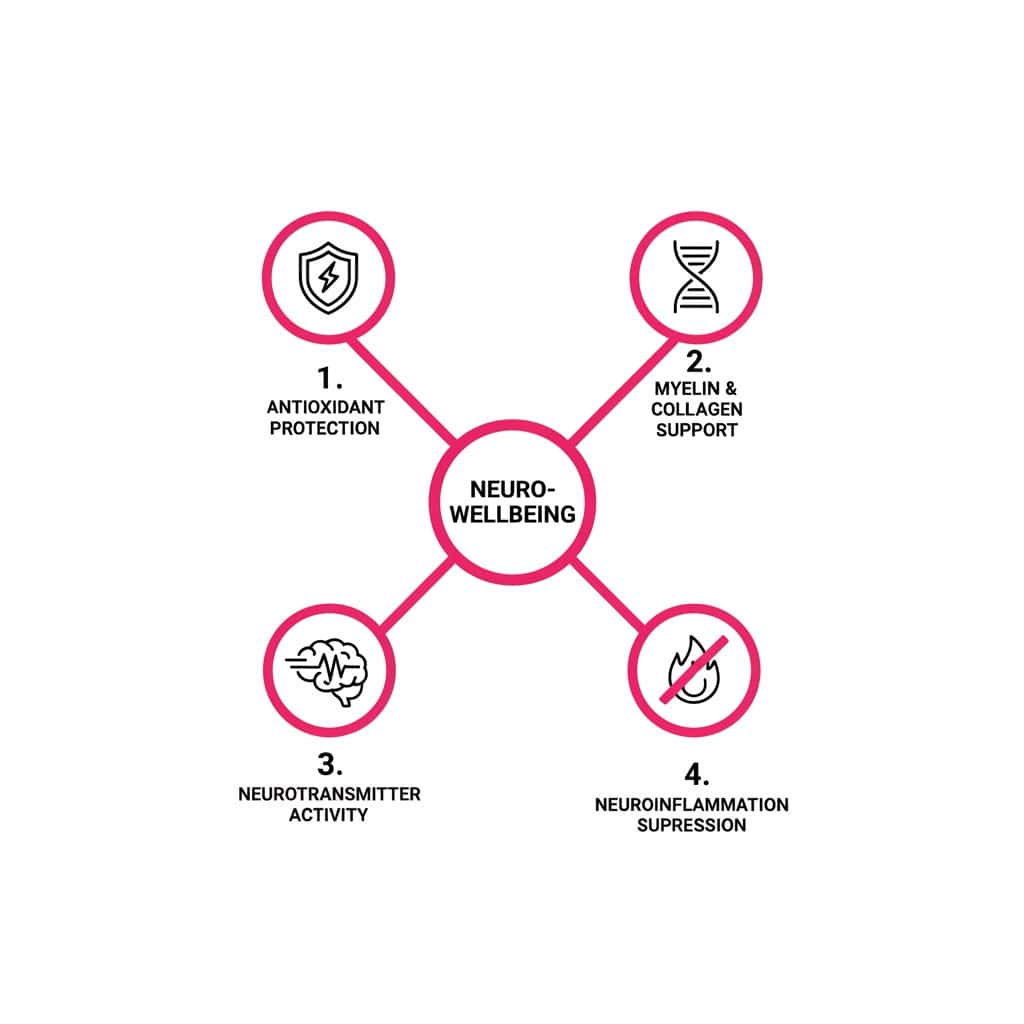
The relationship between vitamin C and brain health operates through four distinct biological pathways, each of which has now been documented in the peer-reviewed literature. Understanding them explains why the PLOS One findings make so much biological sense.
Mechanism 1 — Antioxidant Defense Against Oxidative Stress
The brain is the most metabolically demanding organ in the body. It accounts for roughly 2% of body weight but consumes approximately 20% of the body’s total oxygen supply. That extraordinary metabolic activity generates enormous quantities of free radicals and oxidative byproducts. Left unchecked, oxidative stress damages neurons, accelerates brain atrophy, and contributes to the pathological protein accumulation seen in Alzheimer’s disease.
Vitamin C is one of the brain’s primary antioxidant defenses at the cellular level. As the researchers summarized, the brain is “highly vulnerable to oxidative stress, and dietary antioxidants significantly contribute to protecting neurons from oxidative damage and maintaining overall neuronal function.” When plasma vitamin C is low, this defense is compromised, and the MRI evidence of gray matter loss suggests the structural consequence is measurable.
Mechanism 2 — Collagen Synthesis for Myelin Sheath Integrity
Vitamin C is essential for collagen production throughout the body, and myelin, the protective sheath that wraps around nerve fibers and enables fast, efficient signal conduction, requires collagen for its structural integrity. When vitamin C is insufficient, collagen synthesis falters, myelin quality degrades, nerve conduction slows, and white matter communication pathways begin to deteriorate. This mechanism directly explains the white matter findings in the PLOS One study. It also links to the broader role vitamin C plays in collagen-dependent tissue repair and skin regeneration, the same biochemistry that rebuilds skin also maintains the brain’s neural wiring.
Mechanism 3 — Neurotransmitter Synthesis and the Blood-Brain Barrier Priority
Here is a fact that surprises most people: the brain maintains vitamin C concentrations dramatically higher than the rest of the body. It actively concentrates ascorbic acid to millimolar levels through dedicated transport proteins at the blood-brain barrier, treating vitamin C as a priority nutrient above almost everything else. The reason is metabolic. The brain uses vitamin C as a cofactor to synthesize critical neurotransmitters including norepinephrine (alertness and attention) and serotonin (mood and memory consolidation). When plasma vitamin C is low, even the brain’s aggressive uptake mechanisms can’t compensate indefinitely, and neurotransmitter production suffers, affecting mood, attention, and memory signaling in ways that overlap directly with early cognitive decline.
Mechanism 4 — Neuroinflammation Suppression
Chronic low-grade neuroinflammation is now understood as a central driver of Alzheimer’s disease pathology, not just a consequence of it. Vitamin C modulates microglial activation, the brain’s resident immune cells, and suppresses pro-inflammatory cytokines that damage neurons over time. At adequate levels, vitamin C’s anti-inflammatory action helps keep the brain’s immune response calibrated. At insufficient levels, that brake loosens, another route by which low vitamin C may contribute to the structural brain changes now visible on MRI.
Gray Matter vs. White Matter: What They Are and Why Both Matter
Most people have heard the terms but don’t know the practical distinction. This is worth understanding clearly before age-related changes begin.
Gray matter is the brain’s outer cortex, the roughly 3mm-thick layer packed with approximately 16 to 20 billion nerve cell bodies. This is where the actual work of thinking, memory formation, emotional processing, sensory interpretation, and decision-making happens. When gray matter volume shrinks, through brain atrophy, those neurons are fewer and their connections are sparser. Cognitive capacity follows.
White matter is the deeper infrastructure, the long nerve fibers (axons) wrapped in the myelin sheath, connecting brain regions to each other and enabling rapid communication across the neural network. Where gray matter is the computing power, white matter is the high-speed cabling. Degradation of white matter slows thinking speed, disrupts working memory, and impairs coordination between brain regions.
How both age. Gray matter shrinks approximately 0.5% per year after age 40. White matter degradation accelerates after 60, particularly in people with vascular risk factors. Both processes are influenced by genetics, lifestyle, and as this study demonstrates, nutritional status.
Why the default mode network specifically matters. The DMN is the brain network most strongly associated with Alzheimer’s disease progression. It governs autobiographical memory, self-referential thinking, and the mind’s default state at rest. Disrupted DMN connectivity is one of the earliest detectable biomarkers of cognitive impairment, often visible on imaging years before symptoms appear. The PLOS One finding that lower vitamin C corresponds to weaker DMN connectivity makes this nutrient newly relevant to early dementia prevention conversations.
How Much Vitamin C Do You Need for Brain Health?
Getting the dosage right matters, both for efficacy and for avoiding the false confidence that high-dose supplements provide.
NIH Recommended Daily Allowance:
- Women: 75mg/day
- Men: 90mg/day
- Smokers of either sex: add 35mg/day to the above (smoking depletes plasma vitamin C significantly)
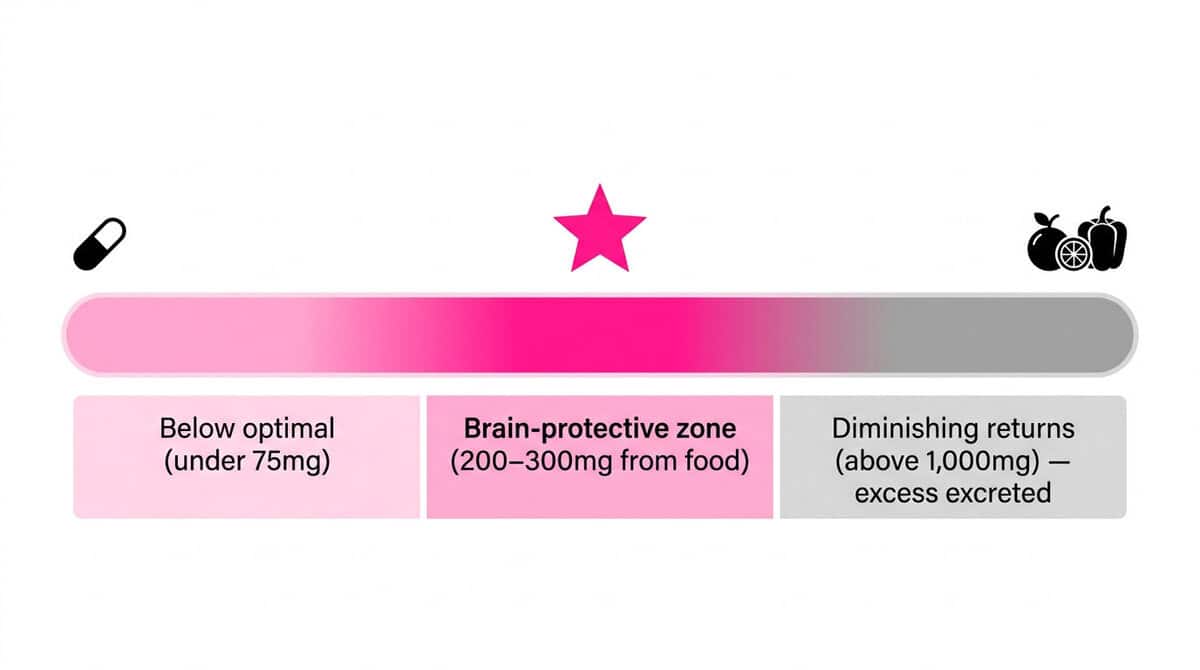
What the PLOS One study found: The most significant brain structural differences appeared in people with plasma vitamin C below 50 µmol/L. Optimal brain-protective plasma levels are above 60–80 µmol/L, a threshold that research consistently shows is achievable with 200–300mg daily from food.
The absorption ceiling. At oral doses above 1,000mg per day, absorption efficiency drops below 50%, and excess ascorbic acid is excreted unused in the urine. The brain has a finite capacity to concentrate vitamin C regardless of how much is consumed. High-dose supplements primarily produce expensive urine, not a meaningfully higher brain concentration.
The upper tolerable intake limit. The NIH sets this at 2,000mg/day for adults. Above this threshold, gastrointestinal side effects (diarrhea, nausea, cramping) become common, and the risk of calcium oxalate kidney stones increases, particularly in those with pre-existing susceptibility.
The expert consensus from the 2026 study: Lead researcher Haruka Nagaya was explicit: “For patients, the practical takeaway is not to rush to high-dose supplements, but to maintain a healthy dietary pattern that includes vitamin C-rich foods, such as fruits and vegetables, along with other proven brain-health habits.”
Practical target: 200–300mg per day from food is both achievable and sufficient. The foods below show exactly how to hit that target without a supplement label in sight.
The Best Foods for Vitamin C and Brain Health
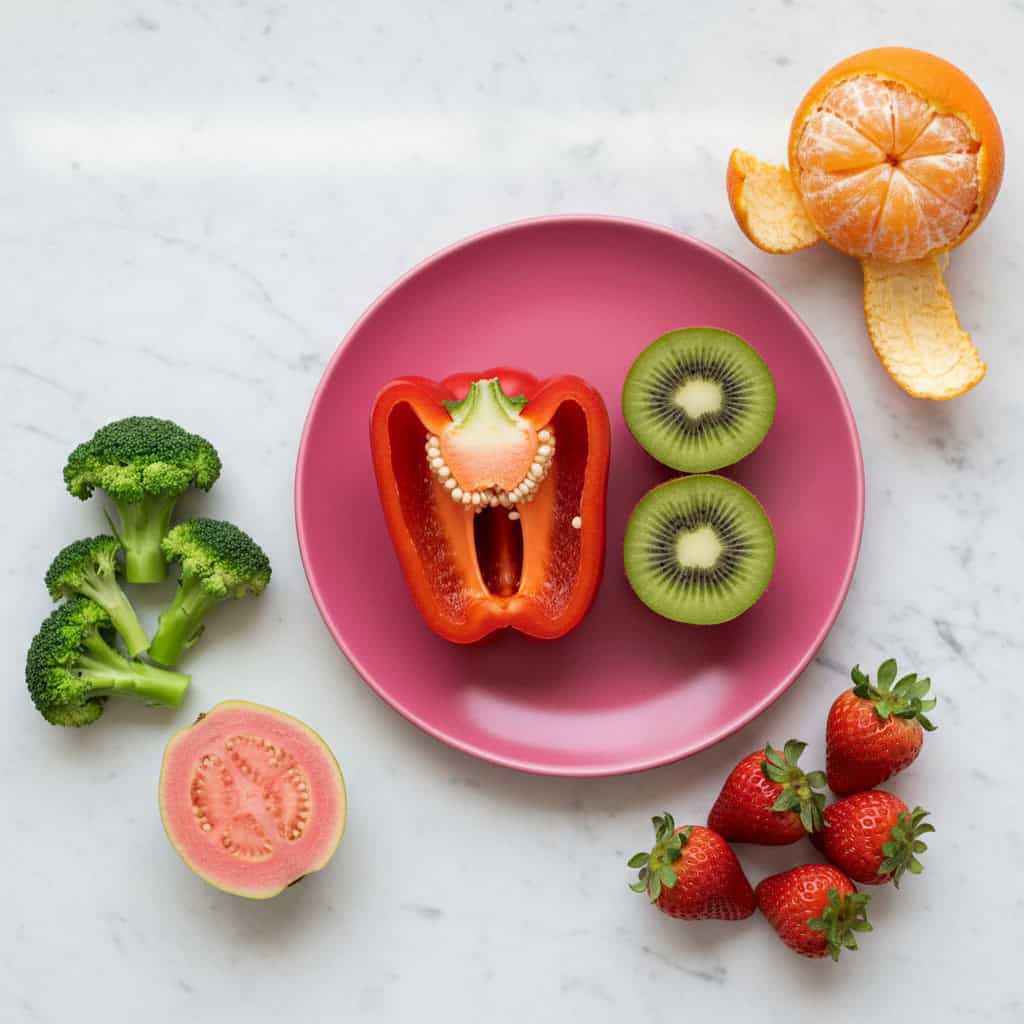
Vitamin C-rich foods are among the most accessible brain health interventions available, no prescription, no supplement aisle, no expense beyond a weekly grocery run.
| Food | Serving Size | Vitamin C Content | % Daily Value |
| Guava | 1 medium | 228mg | 253% |
| Yellow bell pepper | ½ cup raw | 137mg | 152% |
| Red bell pepper | ½ cup raw | 95mg | 106% |
| Kiwifruit | 1 medium | 71mg | 79% |
| Orange | 1 medium | 70mg | 78% |
| Broccoli | ½ cup cooked | 51mg | 57% |
| Strawberries | ½ cup | 49mg | 54% |
| Brussels sprouts | ½ cup cooked | 48mg | 53% |
| Papaya | ½ cup | 44mg | 49% |
| Kale | ½ cup cooked | 21mg | 23% |
| Tomato | 1 medium | 17mg | 19% |
The “two servings to brain-protect” rule. One red bell pepper half (95mg) and one medium orange (70mg) together deliver 165mg, already approaching the optimal plasma threshold identified in the PLOS One study. Add a half-cup of strawberries and you are at 214mg, solidly in the brain-protective zone from two pieces of fruit and a vegetable.
The orange myth worth correcting. Bell peppers contain more vitamin C than oranges by a substantial margin, yet oranges remain the universally cited vitamin C source in popular culture. Red bell pepper provides 35% more vitamin C than a medium orange. Yellow bell pepper provides nearly double. This is exactly the kind of myth-busting, counterintuitive nutritional fact that earns social shares and stays in memory.
For anyone already eating plant-forward, the overlap with high-vitamin C plant-based foods is significant, guava, kiwi, bell peppers, broccoli, and strawberries are all plant foods. For snacking specifically, bell pepper strips and kiwi are excellent vitamin C-rich snack options that support brain health while also fitting naturally into weight management and overall nutrition patterns. And for people already following the superfoods conversation, bell peppers and guava now have brain MRI data behind their vitamin C content, a stronger evidence base than most “superfood” claims can cite.
Vitamin C Supplements vs. Food: What the 2026 Study Actually Suggests
The 2026 study measured plasma vitamin C from all sources, food and supplements combined, so it did not prescribe one over the other. But the biochemistry and the expert guidance tell a clear story.
Why food is meaningfully better. Vitamin C in whole foods arrives alongside flavonoids, the plant compounds in citrus peel, berry skins, and broccoli florets, that enhance vitamin C absorption by up to 35% and provide independent neuroprotective effects of their own. Bioflavonoids suppress neuroinflammation, improve cerebrovascular blood flow, and protect against oxidative DNA damage. When you take an isolated ascorbic acid supplement, you get the vitamin C without the co-passengers. When you eat a red bell pepper, you get both.
When supplementing is appropriate:
- Smokers (vitamin C depletion from tobacco use is dramatic and consistent)
- People with digestive conditions that impair absorption (Crohn’s disease, celiac disease, inflammatory bowel disease)
- Older adults with reduced appetite or restricted diets
- Anyone whose consistent diet falls significantly short of the 200–300mg food target
Best supplement forms: Ascorbic acid is the most studied and most affordable. Sodium ascorbate and calcium ascorbate (buffered forms) are gentler on the stomach. Liposomal vitamin C has superior bioavailability data in some studies.
Optimal supplement dosing: 200–500mg/day split into two doses. At doses above 400mg per single serving, absorption efficiency drops significantly. There is no evidence that 1,000mg+ doses provide additional brain benefit over 300mg from food plus a moderate supplement.
7 Brain-Health Habits That Work Alongside Vitamin C
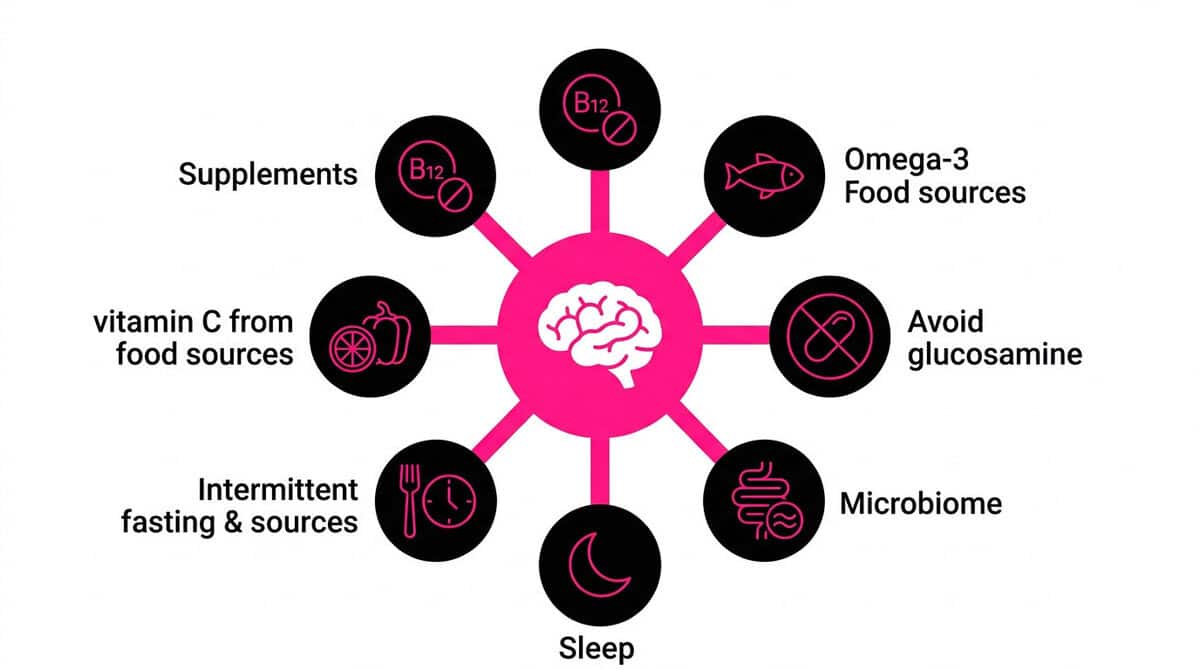
This study adds vitamin C to a growing evidence-based toolkit for brain protection. Here is how it fits into the broader picture that BillboardHealth has been building through its July 2026 research cluster, the most comprehensive, most current brain health content assembled in a single month on any independent health platform.
1. Check your vitamin B12 status. Low active B12 causes white matter lesions and slower visual processing, even in people whose total B12 tests appear “normal.” A 2026 UCSF study confirmed measurable brain changes in the normal-range group. Vitamin B12 deficiency is routinely mistaken for normal aging, and it and vitamin C work through partially overlapping pathways to protect the same brain structures.
2. Eat fish instead of taking fish oil supplements. Whole fish delivers phospholipid-form DHA, vitamin D, B12, and selenium alongside omega-3s, a combination a capsule can’t replicate. A landmark 2026 USC trial confirmed that fish oil supplements reached the brain and still failed to protect it, while dietary fish patterns remain associated with better cognitive outcomes. The food-vs-supplement parallel with vitamin C is exact.
3. Be cautious about glucosamine if you have cognitive concerns. A 2026 analysis published in Nature Metabolism found a 25% higher rate of Alzheimer’s progression in users of glucosamine. Our glucosamine and brain health deep-dive covers who this affects and what to consider, essential reading for anyone in a high-risk cognitive decline category.
4. Support your gut for better nutrient absorption. The gut-brain axis affects how efficiently you absorb vitamin C, B12, and omega-3s from food. Gut health and mental wellness covers the microbiome’s role in brain function and the practical steps for supporting both simultaneously.
5. Optimize magnesium for sleep quality. Glymphatic waste clearance, the brain’s overnight detox system that removes amyloid and tau protein, requires quality deep sleep. Poor sleep quality is independently associated with accelerated brain atrophy. Magnesium glycinate is the best-evidenced supplement form for improving sleep onset and sleep duration.
6. Consider intermittent fasting for metabolic brain support. Fasting periods lower circulating insulin, stimulate autophagy (cellular waste clearance), and have been shown to reduce neuroinflammatory markers. Intermittent fasting for beginners covers the protocols with the strongest evidence for metabolic health, which overlaps substantially with brain protection mechanisms.
7. Maintain vitamin C through food patterns, not just supplements. This article is the direct evidence for this point. A dietary pattern that includes bell peppers, kiwi, broccoli, and citrus daily is not just good for immunity, it is now linked on MRI to physically more gray matter and stronger memory network connectivity. This habit belongs at the foundation of any brain protection plan.
For a broader view of how these habits compound together, our 5 science-backed health habits for 2025 synthesizes the evidence across sleep, exercise, nutrition, fasting, and stress management in a practical daily framework.
Study Limitations: What We Still Don’t Know
Responsible health journalism requires stating this clearly, and the researchers themselves were explicit about it.
Cross-sectional design. The PLOS One study measured both plasma vitamin C and brain structure at a single point in time for each participant. This means it can identify an association, people with lower vitamin C had less gray matter, but it cannot prove that the low vitamin C caused the brain changes. It’s possible that people with worse brain health eat less nutritious diets as a result of cognitive changes, rather than the other way around.
Japanese population specificity. The Iki-Iki Health Promotion Project enrolled participants from Hirosaki City, Japan. The dietary patterns, genetic backgrounds, and lifestyle factors of this population may not fully generalize to Western, African, or Latin American populations. The association may be stronger or weaker in different contexts.
Dietary pattern confounding. People with higher vitamin C intake also tend to eat more fruits and vegetables overall, exercise more, and have lower rates of smoking and heavy alcohol use. Even after statistical adjustment for these factors, residual confounding remains possible, the brain benefit may come from the broader healthy dietary pattern rather than vitamin C specifically.
What research is needed next. The researchers themselves called for longitudinal studies tracking the same individuals over multiple years and randomized controlled trials testing whether vitamin C supplementation or dietary optimization actually prevents brain volume loss over time. Those studies don’t yet exist at scale. This finding is a powerful signal, not yet a prescription.
That limitation, however, doesn’t diminish the practical value of the recommendation. Eating more bell peppers, kiwi, and broccoli carries zero risk and significant potential benefit across multiple body systems. The risk-benefit calculus for acting on this evidence now is clear.
FAQs About Vitamin C and Brain Health
How does vitamin C and brain health research suggest I should change my diet? The 2026 PLOS One study’s lead researcher recommends prioritizing vitamin C-rich whole foods over high-dose supplements. A daily intake of 200–300mg from food, achievable with a red bell pepper half and an orange, or a kiwi and a cup of strawberries, is associated with optimal brain-protective plasma levels. Treat vitamin C-rich produce as a brain health essential alongside all the other things you eat it for.
Does vitamin C prevent Alzheimer’s disease? The 2026 study cannot make that claim, its cross-sectional design shows association, not causation. What it does show is that lower plasma vitamin C corresponds to measurably less gray matter and weaker DMN connectivity, both of which are markers of early cognitive vulnerability. Whether correcting deficiency prevents Alzheimer’s requires longitudinal trials not yet completed.
What is gray matter and why does it shrink with age? Gray matter is the brain’s outer cortex, where thinking, memory, and emotion processing happen. It shrinks roughly 0.5% per year after 40 through oxidative damage, neuroinflammation, reduced blood flow, and nutrient insufficiency. The 2026 study links lower plasma vitamin C specifically to accelerated gray matter loss.
What is the default mode network and why does it matter for memory? The DMN is the brain network active during rest, autobiographical memory, and self-referential thinking. It’s the network most closely associated with early Alzheimer’s, reduced DMN connectivity is among the earliest detectable markers of cognitive decline. This is the first study to link plasma vitamin C levels directly to DMN connectivity strength.
How much vitamin C should I take daily for brain health? 200–300mg daily from food reaches the optimal plasma range identified in this study. If supplementing, 200–500mg per day split into two doses is effective for most adults. High-dose supplements above 1,000mg per day provide no additional brain benefit as absorption efficiency drops sharply above 400mg per dose.
Is vitamin C from food better than supplements for the brain? Yes. Food-source vitamin C comes packaged with flavonoids that enhance absorption by up to 35% and provide independent neuroprotective effects. The study’s lead researcher explicitly recommends food over supplements. Supplements are appropriate for people who can’t consistently reach 200mg from diet.
Which has more vitamin C, oranges or bell peppers? Bell peppers by a large margin. Red bell pepper (half cup) delivers 95mg versus 70mg for a medium orange. Yellow bell pepper delivers 137mg, nearly double an orange. Guava leads all common foods at 228mg per medium fruit. Citrus is nutritionally valuable but not the vitamin C champion.
Can too much vitamin C be harmful to the brain? At food doses, no. The upper tolerable intake limit is 2,000mg/day. Above this threshold, GI side effects and elevated kidney stone risk emerge. For brain health purposes, 200–300mg from food is optimal, the brain doesn’t benefit meaningfully from higher doses.
What are the early signs of cognitive decline I should watch for? Frequently forgetting recent conversations or appointments, difficulty finding familiar words, getting lost in familiar places, struggling with multi-step tasks, and notable personality or mood changes. Many of these overlap with correctable conditions including vitamin B12 deficiency, thyroid disorders, and depression, making medical evaluation essential before assuming cognitive decline.
This article is for informational purposes and is not a substitute for medical advice. If you are concerned about memory or cognitive decline, speak with your healthcare provider rather than self-treating.