Fish oil and brain health have been linked in the public imagination for decades, but a landmark clinical trial published on June 29, 2026, by Keck Medicine of USC just delivered the most rigorous challenge to that assumption yet. If you are one of the estimated 1 in 5 Americans over 60 spending money on fish oil supplements to protect your memory and cognition, this article is for you. Here is exactly what the 2026 study found, what it means, who may still benefit, and critically, what actually does protect your brain.
The 2026 USC Study: What It Finally Proved About Fish Oil and Brain Health
The study, published in eBioMedicine and funded by the National Institute on Aging, not the supplement industry, is the most methodologically rigorous test of this question ever conducted. Here are the specifics that matter.
Who was studied: 365 adults aged 55 to 80, all at elevated risk for Alzheimer’s disease, 47% of whom carried the APOE4 gene (the strongest known genetic risk factor for late-onset Alzheimer’s). Nearly all participants rarely ate fish, a deliberate design choice to isolate the effect of the supplement itself.
What they took: A high dose of 2,000mg of docosahexaenoic acid (DHA) per day from fish oil supplements, or a placebo, for 24 months. This is a serious clinical dose, far higher than what most people take.
The critical first finding: Using cerebrospinal fluid biomarkers, the researchers confirmed that the omega-3 from the supplements successfully reached the brain. That part worked.
The result that changes everything: It didn’t matter. Cognitive scores improved slightly in both groups, by nearly identical amounts. Brain scans showed no protective effect in the Alzheimer’s-associated regions being monitored. Memory, thinking speed, and brain cell loss were essentially the same whether participants took high-dose DHA or a sugar pill for two years.
As the study’s lead investigator, Dr. Hussein Naji Yassine, MD, director of the USC Center for Personalized Brain Health, stated plainly: “We all wish there was a silver bullet for preventing Alzheimer’s, but our findings showed that fish oil supplements do not appear to protect brain health. While omega-3s play an important role in forming brain cell connections needed for cognition, our results do not support fish oil supplements as a preventive measure against Alzheimer’s.”
Why This Study Is Different From Every Previous One
The debate around fish oil and brain health has always hinged on one critical question: does omega-3 from supplements actually reach the brain, or does it fail before it even gets there?
Previous trials couldn’t answer this cleanly. Critics of negative results argued that maybe the omega-3 simply wasn’t getting through. The USC study eliminated that argument by confirming brain uptake directly through cerebrospinal fluid markers, something no prior large-scale RCT had done with this level of precision.
This means the old defense, “supplements don’t work because the DHA doesn’t cross into the brain”, is no longer valid. The DHA got there. And it still did nothing for Alzheimer’s prevention.
That raises a new, more uncomfortable question: if omega-3 reaches the brain and the brain doesn’t respond, what is actually happening? One answer may lie in the form of DHA.
The APOE4 phospholipid paradox. Preliminary evidence from the USC study suggests that people who carry the APOE4 gene respond well to DHA found in whole fish, but not as well to DHA found in most fish oil supplements. The proposed reason: fish contains DHA in phospholipid form, while most fish oil capsules deliver DHA as ethyl ester. These two forms are metabolized differently and may cross the blood-brain barrier with very different efficiency.
This is not a minor technical detail. It means that for APOE4 carriers, roughly 1 in 4 people eating fatty fish may genuinely benefit the brain in ways that swallowing a capsule cannot replicate.
Fish Oil and Brain Health: What Still Works and What Doesn’t
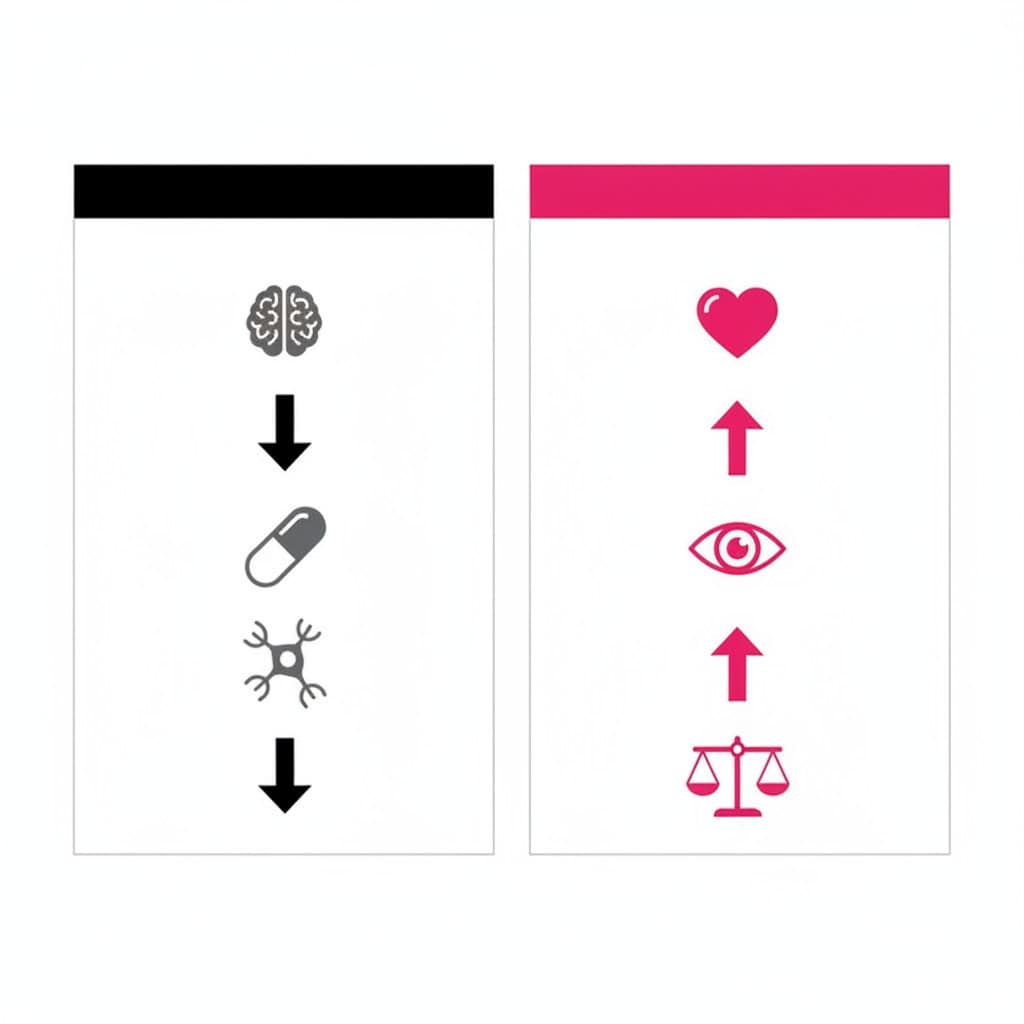
Not all omega-3 claims are created equal. Here is where the evidence actually stands as of July 2026.
Claims NOT supported by current evidence:
| Claim | Evidence Status (2026) |
| Fish oil supplements prevent Alzheimer’s | Not supported — USC 2026 RCT, 2-year, 365 adults, NIA-funded |
| Fish oil improves memory in healthy adults | Not supported — multiple RCTs |
| Fish oil slows cognitive decline | Not supported for OTC DHA supplements |
| DHA capsules protect the aging brain | Not supported when delivered in ethyl ester form |
What fish oil DOES have solid or emerging evidence for:
| Benefit | Evidence Status (2026) |
| Lowering triglycerides | Strong — confirmed by multiple large RCTs; NIH endorses |
| Reducing cardiovascular events (high-risk patients) | Moderate — especially prescription EPA-only drugs |
| Reducing general inflammation markers | Moderate — especially in people with low baseline omega-3 |
| Supporting eye health (DHA concentration in the retina) | Moderate |
| Reducing depression symptoms (EPA specifically) | Emerging — EPA shown to help as an adjunct treatment |
| Potential role in slowing ALS progression | Early-stage, emerging evidence |
The clearest practical takeaway: if you’re taking fish oil for triglycerides, that’s a different evidence base and a conversation to have with your doctor. If you’re taking it to protect your memory, the 2026 data does not support that.
Eating Fish vs. Taking Fish Oil Supplements: Why They Are Not the Same Thing
This is the most important practical distinction in the entire fish oil debate, and it’s consistently underreported.
Research consistently shows that people who eat fatty fish at least twice a week have lower risks of cardiovascular death and better cognitive outcomes compared to non-fish-eaters. But those benefits don’t transfer cleanly to a fish oil capsule. The reasons matter.
The phospholipid form difference. DHA in whole fish exists as phospholipid-DHA. DHA in most fish oil supplements exists as ethyl ester DHA. These are metabolized through different pathways, and phospholipid-DHA appears to be more efficiently absorbed by the brain. This may partly explain why eating fish and taking fish oil produce different outcomes in brain health research, they’re not biologically equivalent.
Displacement. When you eat a meal of salmon or sardines, you’re replacing something else, usually a less healthy protein or ultra-processed food. That displacement has its own health benefit. A fish oil capsule doesn’t displace anything.
Co-nutrient synergy. Fish delivers more than omega-3. Wild salmon contains vitamin D, B12, selenium, and astaxanthin alongside its DHA and EPA. These nutrients work together in ways that an isolated supplement cannot. Vitamin B12 alone is now linked to white matter brain protection and cognition in 2026 research, and it comes packaged inside the same fish you’d eat for omega-3.
The algae alternative. For people who don’t eat fish, or who carry the APOE4 gene and want phospholipid-form DHA without eating fish twice a week, algae-based DHA is worth considering. Algae is where fish get their DHA in the first place, and algae oil delivers it in the phospholipid form that may better serve brain uptake.
For anyone already thinking critically about which supplements actually hold up to scrutiny, this connects directly to the broader conversation we’ve been building: see also our analysis of superfoods and supplements — what the science actually shows.
The APOE4 Gene and Fish Oil: A Critical Exception You Need to Know
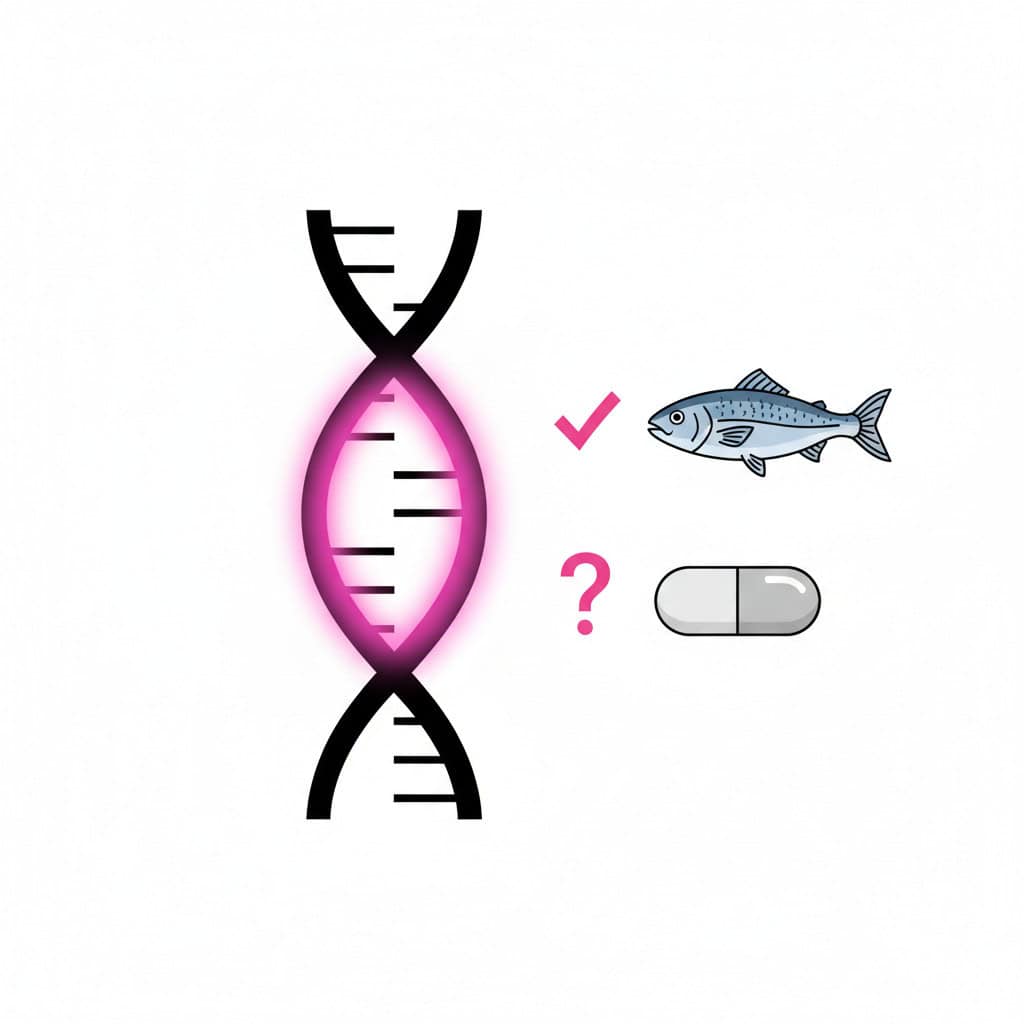
Understanding your APOE4 status may change what you should do with this research.
What APOE4 is. The APOE4 allele is the single strongest known genetic risk factor for late-onset Alzheimer’s disease. An estimated 25% of the general population carries one copy; about 2–3% carry two copies. Carrying one copy roughly doubles Alzheimer’s risk compared to the general population. Carrying two copies increases it by 8 to 12 times.
Why it matters for omega-3. The USC study enrolled 47% APOE4 carriers, deliberately and still found no benefit from fish oil supplements in this group. However, the preliminary evidence on the form of DHA is especially relevant for APOE4 carriers. The APOE4 protein affects how the brain handles lipid transport, and there’s growing evidence that APOE4 carriers may absorb phospholipid-DHA (from fish and algae) more effectively than ethyl ester DHA (from most supplements).
The practical implication. If you carry APOE4, the evidence points to eating fatty fish twice weekly as the better strategy, not taking a fish oil capsule. Algae-based omega-3 supplements are the best option for APOE4 carriers who don’t eat fish.
How to find out your APOE4 status. Your doctor can order an APOE genotyping blood test. Consumer genetic platforms like 23andMe also include APOE status in certain report tiers. Knowing your status can help you make more targeted decisions about both diet and dementia prevention strategies.
Understanding your full nutrient picture matters too: APOE4 carriers managing diabetes also need to be aware that metformin depletes vitamin B12, adding another layer to the brain-nutrient interaction that deserves monitoring.
The Best Food Sources of Omega-3 for Brain and Heart Health
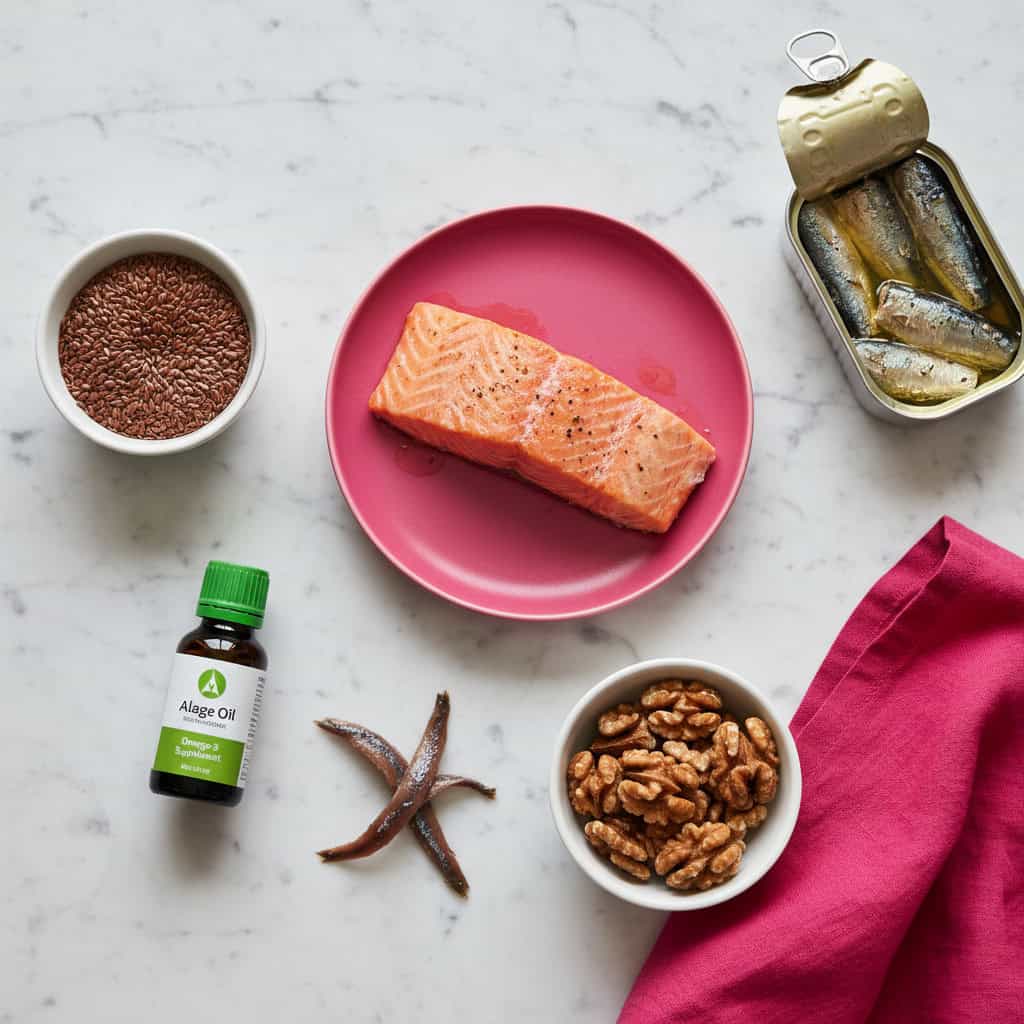
If the evidence points toward eating fish rather than taking supplements, here’s exactly what to eat and how much omega-3 you’re getting from it.
| Food | Serving | DHA + EPA Content | Additional Brain Nutrients |
| Wild salmon | 3 oz cooked | 1,500–2,500 mg | Vitamin D, B12, selenium |
| Sardines (canned) | 3 oz | 1,500 mg | Calcium, B12, vitamin D |
| Mackerel | 3 oz cooked | 1,300 mg | B12, selenium |
| Herring | 3 oz cooked | 1,700 mg | Vitamin D, B12 |
| Anchovies | 1 oz | 500 mg | Calcium |
| Oysters | 3 oz cooked | 750 mg | Zinc, B12, selenium |
| Algae oil (supplement) | 1 serving | 400–900 mg DHA | Phospholipid form — higher brain bioavailability |
| Chia seeds | 1 oz | 5,000 mg ALA | Fiber, calcium |
| Walnuts | 1 oz | 2,500 mg ALA | Polyphenols, vitamin E |
| Flaxseeds (ground) | 1 tbsp | 1,600 mg ALA | Lignans |
Important note on plant sources. ALA (the omega-3 in chia seeds, walnuts, and flaxseed) is not the same as DHA or EPA. The body converts ALA to DHA at a rate of less than 10%, so plant omega-3 sources are not equivalent to marine sources for brain or cardiovascular benefit. They’re excellent for overall nutrition, and sardines and walnuts together make outstanding omega-3-rich snack pairings, but vegans who rely on ALA alone for brain omega-3 are likely under-served.
For vegans and vegetarians, algae-based DHA is the most direct path to phospholipid-form omega-3. This connects to a point worth reading in full if you eat plant-based: nutrients to plan around on a plant-based diet, which covers B12 and omega-3 in the same context.
Should You Stop Taking Fish Oil? A Practical Decision Guide
Rather than a blanket answer, the honest response depends on why you’re taking it.
If you take fish oil for brain health or Alzheimer’s prevention: The 2026 evidence does not support continuing for this specific purpose. Replace your capsules with two fatty fish meals per week — salmon, sardines, mackerel, or herring. If you carry APOE4 or don’t eat fish, algae-based DHA is the better supplement option.
If you take fish oil for high triglycerides: Continue, but have a conversation with your doctor about whether prescription-strength icosapentaenoic acid (EPA-only, brand name Vascepa) would be more effective for your risk profile. The omega-3 research for triglyceride reduction is substantially stronger than for brain health, and the prescription form has better cardiovascular trial data than standard OTC fish oil.
If you take fish oil for general wellness or inflammation: The anti-inflammatory evidence is mixed but not alarming. If you experience no side effects, continuing at standard doses is unlikely to be harmful, but it’s also not a substitute for eating fish.
Safety note. People taking blood thinners, anyone preparing for surgery, and anyone managing heart rhythm abnormalities should speak with a clinician before starting or stopping high-dose omega-3 supplements. These are the clinically significant interactions.
Three questions worth asking your doctor:
- “I’m taking fish oil for brain health, is there any updated 2026 evidence that supports this for my specific risk profile?”
- “Should I test my triglycerides to see if omega-3 supplementation is justified for my cardiovascular numbers?”
- “Given my APOE4 status, are there specific forms of omega-3 I should prioritize?”
This decision-making framework mirrors what we’ve been building across our supplements cluster, not demonizing categories, but separating what works for what purpose. The same approach applies to glucosamine and brain health risk, where the science is equally nuanced.
What Actually Works for Brain Health (If Not Fish Oil Supplements)
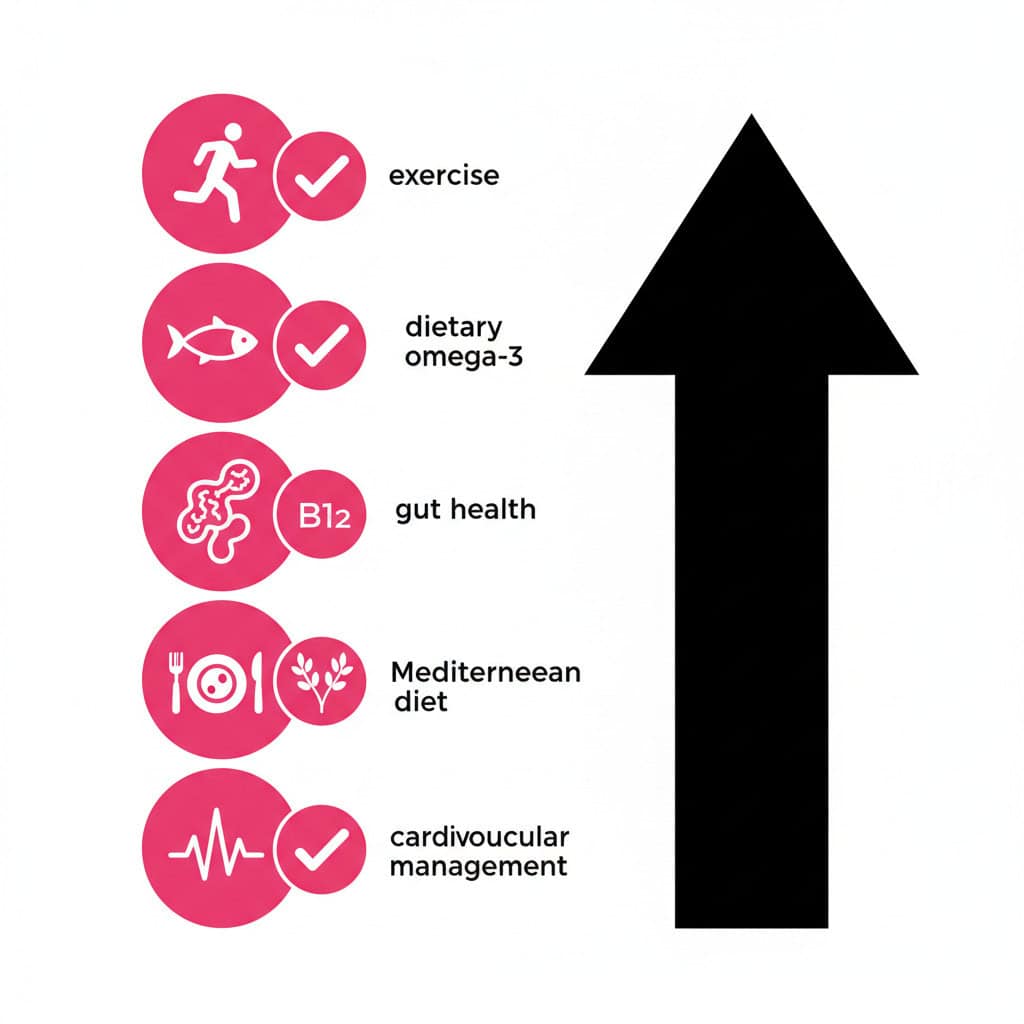
This is not a story about hopelessness. It’s a story about redirection. The evidence for protecting brain health is strong, it just doesn’t center on a supplement capsule.
Physical exercise remains the single most consistently evidence-backed brain health intervention available without a prescription. Exercise increases BDNF (brain-derived neurotrophic factor), promotes neurogenesis, and reduces white matter lesion accumulation, exactly the outcome fish oil supplements failed to produce. Even structured eating patterns like intermittent fasting support brain metabolic health through some of the same pathways.
Vitamin B12 sufficiency. Reviewed in detail in our recent vitamin B12 deficiency and brain health article, adequate B12 is directly protective against the white matter lesions that the USC study was monitoring, and B12 deficiency is common, correctable, and routinely mistaken for aging.
Flavanol-rich foods. Our 2026 flavanols and heart health article covers the growing evidence for flavanols in cardiovascular and cognitive health, another food-based intervention with more emerging evidence than fish oil supplements.
Treating gut health. The gut-brain axis affects omega-3 absorption and neuroinflammation simultaneously. Supporting your microbiome through fiber, fermented foods, and avoiding unnecessary antibiotic overuse has downstream effects on brain health that supplements can’t replicate, a thread you can follow in our gut health and mental wellness guide.
The Mediterranean dietary pattern as a whole. This is where eating fish fits best, not as a supplement, but as part of a broader dietary structure that also includes olive oil, vegetables, legumes, and polyphenol-rich foods. What matters is the complete pattern, not one isolated nutrient lifted out of it.
Managing conditions that accelerate brain aging. Uncontrolled type 2 diabetes is one of the most significant modifiable dementia risk factors. Controlling cardiovascular risk factors, blood pressure, cholesterol, blood sugar has clearer brain-protection evidence than any single supplement tested to date.
The bottom line: your supplement budget for brain health is better spent on high-quality food, a routine B12 check if you’re over 50 or on metformin, and a conversation with your doctor about the interventions with the strongest evidence behind them. Fish oil’s role, if any, is in a specific cardiovascular context, not the brain protection story it’s been sold as for decades.
FAQs About Fish Oil and Brain Health
Does fish oil and brain health research support taking supplements? As of 2026, no not for brain protection or Alzheimer’s prevention. A two-year RCT from USC published in eBioMedicine confirmed that omega-3s reached the brain and still produced no meaningful improvement in memory or cognition. Eating fatty fish twice a week remains the better-evidenced approach.
Does fish oil help prevent Alzheimer’s disease? No. The 2026 USC trial is the most rigorous test of this claim to date. Even at high doses, with confirmed brain uptake, DHA from supplements produced no protective effect against Alzheimer’s biomarkers over 24 months.
Should I stop taking fish oil for my brain? If brain protection is your primary reason, yes, switch to eating fatty fish twice weekly instead. If you’re taking it for triglycerides or general inflammation, that’s a separate conversation to have with your doctor.
Is algae oil better than fish oil for brain health? Possibly, especially for APOE4 carriers. Algae-based DHA delivers the phospholipid form of omega-3, which may cross the blood-brain barrier more efficiently than the ethyl ester form in most standard fish oil capsules.
What is the APOE4 gene and does it affect how I respond to fish oil? APOE4 is the strongest genetic risk factor for late-onset Alzheimer’s, carried by roughly 25% of people. Preliminary evidence suggests APOE4 carriers may respond better to phospholipid-DHA from real fish or algae oil than to ethyl ester DHA from standard supplements.
Does eating fish give more brain benefits than fish oil supplements? Yes, based on current evidence. Whole fish delivers phospholipid-form DHA, alongside B12, vitamin D, and selenium, a combination that supplements don’t replicate. The displacement benefit (replacing less healthy foods) also adds to the effect.
What type of omega-3 actually reaches the brain? DHA. The USC study confirmed that DHA from fish oil supplements does reach the brain, the issue is that it didn’t produce a protective effect. Phospholipid-DHA (from fish and algae oil) may cross the blood-brain barrier more efficiently than ethyl ester DHA.
Is fish oil safe to take long-term? Generally yes at standard doses, but people on blood thinners, those planning surgery, or those with heart rhythm conditions should consult a clinician before taking high-dose omega-3 supplements.
What supplements actually do protect brain health? No supplement matches the evidence base of lifestyle interventions. Vitamin B12 sufficiency protects against white matter lesions. Regular physical exercise increases BDNF. A Mediterranean dietary pattern, including real fish twice weekly, has the strongest food-level support. The magnesium glycinate article covers another supplement with genuine evidence for sleep and mood, which indirectly supports brain health.
This article is for informational purposes and is not a substitute for medical advice. Speak with a healthcare provider before making changes to your supplement routine.