Deep sleep benefits have always been understood in general terms, you feel better, recover faster, think more clearly, but a landmark study published in the journal Cell and highlighted by ScienceDaily on July 5, 2026 has finally explained the precise brain mechanism that makes all of this happen, and the implications are far greater than most people realize. For the first time in history, scientists at UC Berkeley have mapped the exact neural circuit that uses deep sleep to trigger growth hormone release, explaining, at a cellular and mechanistic level, why insufficient deep sleep makes you fatter, weaker, slower-thinking, and more vulnerable to Alzheimer’s and Parkinson’s disease. This is not correlation. This is the biological wiring behind everything you experience when you sleep badly.
The 2026 Cell Journal Discovery: Deep Sleep Benefits Start With a Brain Circuit No One Knew Existed
The study was published in Cell, the single most prestigious biology journal in the world, by researchers at the Helen Wills Neuroscience Institute at UC Berkeley, funded by the Howard Hughes Medical Institute. What they found fundamentally changes the mechanistic understanding of why sleep is not optional.
The discovery in plain language. For decades, scientists knew that the largest natural surge of growth hormone in the human body occurs during deep, non-REM (slow-wave) sleep. They could prove it by drawing blood during sleep and measuring hormone levels. What nobody knew was why , what specific brain circuit was orchestrating that surge, and how sleep and hormone release were coordinated at the cellular level.
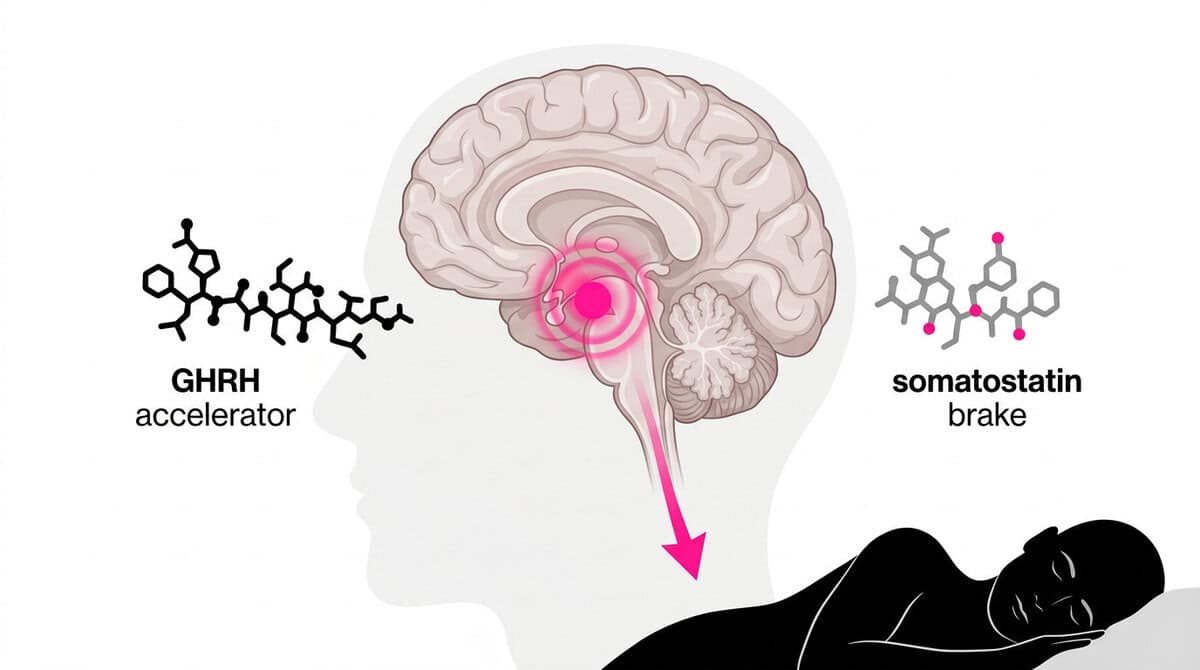
The circuit they mapped. The Berkeley team identified a feedback loop operating in the hypothalamus, the brain’s master hormonal control center. This loop uses two opposing peptides: GHRH (growth hormone-releasing hormone), which acts as the accelerator, and somatostatin, which acts as the brake. During REM sleep, both chemicals spike simultaneously, which largely cancels out the effect. But during deep, non-REM slow-wave sleep, somatostatin drops off while GHRH rises modestly, and that asymmetry is what produces the powerful growth hormone surge that makes deep sleep so biologically consequential.
The self-regulating feedback loop. Here is the part that was entirely unknown until now: as growth hormone builds up during deep sleep, it begins signaling back to the brain, specifically toward circuits associated with wakefulness. This creates a self-correcting system where deep sleep drives hormone release, and the accumulated hormone then triggers a shift back toward lighter sleep or waking. Sleep and hormones are not just correlated, they regulate each other in a precision feedback loop.
The first author’s own words. As Xinlu Ding, postdoctoral fellow and first author of the study, explained: “People know that growth hormone release is tightly related to sleep, but only through drawing blood and checking growth hormone levels during sleep. We’re actually directly recording neural activity in mice to see what’s going on.”
This distinction matters. Previous research observed the connection between sleep and growth hormone from the outside. The Berkeley study observed it from inside the neural circuit, for the first time.
The Full Scope of Deep Sleep Benefits: Muscle, Fat, Brain, Hormones, and More
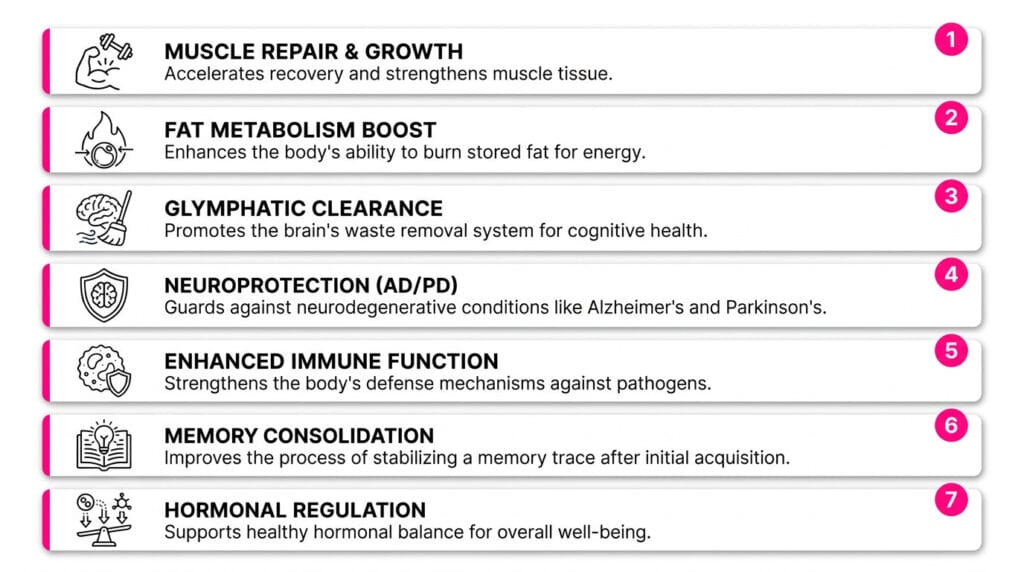
Understanding the full range of deep sleep benefits requires grasping what the UC Berkeley team actually found at the cellular level, and then following the implications outward into every system of the body.
Deep Sleep Benefit #1 — Muscle Repair and Physical Recovery
The largest growth hormone surge of the 24-hour day occurs within the first two to three hours of sleep, during the initial deep slow-wave period. Growth hormone drives the entire process of muscle protein synthesis, tissue repair after physical stress, and bone remodeling. This is why athletes who consistently shortchange their sleep see degraded performance and slower recovery even with optimal training and nutrition, the biological signal that actually triggers repair is missing.
For anyone following a resistance training or fitness program, deep sleep is not a supplement to training. It is the mechanism through which training actually produces results.
Deep Sleep Benefit #2 — Fat Metabolism and Weight Regulation
Growth hormone is a primary regulator of fat metabolism. It signals adipocytes (fat cells) to release stored fatty acids for energy rather than accumulate new fat, essentially telling the body to burn stored fat during overnight fasting. When deep sleep is chronically insufficient, this signal weakens, fat storage increases, and the body’s metabolic set point drifts toward obesity.
This connects directly to why belly fat increases with age, a process now understood to involve the activation of new fat-producing stem cells in middle age. Poor deep sleep makes this problem dramatically worse on two fronts: first, by suppressing the growth hormone signal that would otherwise promote fat oxidation; and second, by elevating cortisol, which specifically directs fat storage into the visceral abdominal compartment. Anyone working toward meaningful fat loss through lifestyle changes who is consistently sleeping six hours or less is working against their own biology.
Deep Sleep Benefit #3 — Brain Cleansing via the Glymphatic System
This is the mechanism with the most direct implications for Alzheimer’s prevention, and it was unknown to science until 2013.
During deep slow-wave sleep, the brain activates the glymphatic system, a waste-clearance network in which cerebrospinal fluid pulses through brain tissue and flushes out metabolic byproducts. The specific proteins being cleared are amyloid-beta and tau, the two hallmarks of Alzheimer’s disease pathology. One night of sleep deprivation measurably increases amyloid-beta concentration in the brain, according to a 2017 NIH human sleep deprivation study. Chronic sleep insufficiency means incomplete nightly clearance, and accumulation over years.
Deep Sleep Benefit #4 — Alzheimer’s and Parkinson’s Disease Protection
The Berkeley discovery adds a new dimension to brain protection: the deep sleep circuit identified connects to the locus coeruleus, a small but critical brain region associated with alertness, attention, and norepinephrine production. Degeneration of locus coeruleus neurons is now recognized as one of the earliest biomarkers of both Alzheimer’s and Parkinson’s disease, often predating clinical symptoms by decades.
As the Berkeley researchers note, understanding this system could pave the way for research into Alzheimer’s and Parkinson’s, not as a distant hope, but as a direct mechanistic target. This positions deep sleep as one of the most accessible, completely free interventions available for brain aging. The vitamin C and gray matter research published the same week reinforces this convergence: both vitamin C and deep sleep protect the same brain structures through partially overlapping pathways.
Deep Sleep Benefit #5 — Immune System Restoration
Growth hormone released during deep sleep directly stimulates T-cell production, natural killer cell activity, and cytokine regulation. The connection between poor sleep and immune vulnerability is among the most consistent findings in sleep research: people sleeping fewer than six hours per night are more than four times more likely to develop a cold when exposed to the rhinovirus compared to those sleeping seven or more hours, per Carnegie Mellon research.
Deep Sleep Benefit #6 — Memory Consolidation
During slow-wave sleep, the hippocampus replays the day’s learning events, transferring information from short-term to long-term storage and strengthening neural connections. Memory consolidation is not a passive process, it requires the specific electrophysiological conditions of deep sleep (delta waves, sleep spindles, hippocampal sharp-wave ripples) to occur. Poor deep sleep doesn’t just leave you feeling forgetful, it structurally impairs the biological process of learning.
Deep Sleep Benefit #7 — Whole-Body Hormonal Balance
Beyond growth hormone, deep sleep regulates the complete hormonal ecosystem: cortisol (stress), leptin (satiety), ghrelin (hunger), testosterone, estrogen, and insulin sensitivity. Chronic short sleep raises evening cortisol, increases ghrelin, suppresses leptin, and drives insulin resistance, a cascade that directly increases risk of type 2 diabetes, cardiovascular disease, and depression.
How Much Deep Sleep Do Adults Actually Need?
The target range. Adults need 7 to 9 hours of total sleep per night. Roughly 10–15% of that should be deep slow-wave sleep, meaning the target is approximately 50 to 90 minutes of slow-wave sleep per night.
The critical timing fact most people don’t know. Deep sleep is not distributed evenly across the night. The majority of slow-wave sleep, the most biologically important portion, is concentrated in the first two to three hours of sleep. The final two hours of the night are dominated by REM sleep (dreaming). This means that cutting sleep short by even 90 minutes disproportionately eliminates deep slow-wave sleep, not just total sleep time. The person who sleeps from 11pm to 5am (6 hours) loses significantly more deep sleep than total sleep time suggests.
The age-related decline — and what causes it.
| Age Group | Average Total Sleep | Average Deep Sleep | % of Night |
| 18–25 | 7.5–9 hrs | 90–120 min | 20–25% |
| 26–40 | 7–8.5 hrs | 60–90 min | 15–20% |
| 41–55 | 6.5–8 hrs | 30–60 min | 10–15% |
| 56–65 | 6–7.5 hrs | 15–30 min | 7–12% |
| 66+ | 5.5–7 hrs | 5–20 min | 5–10% |
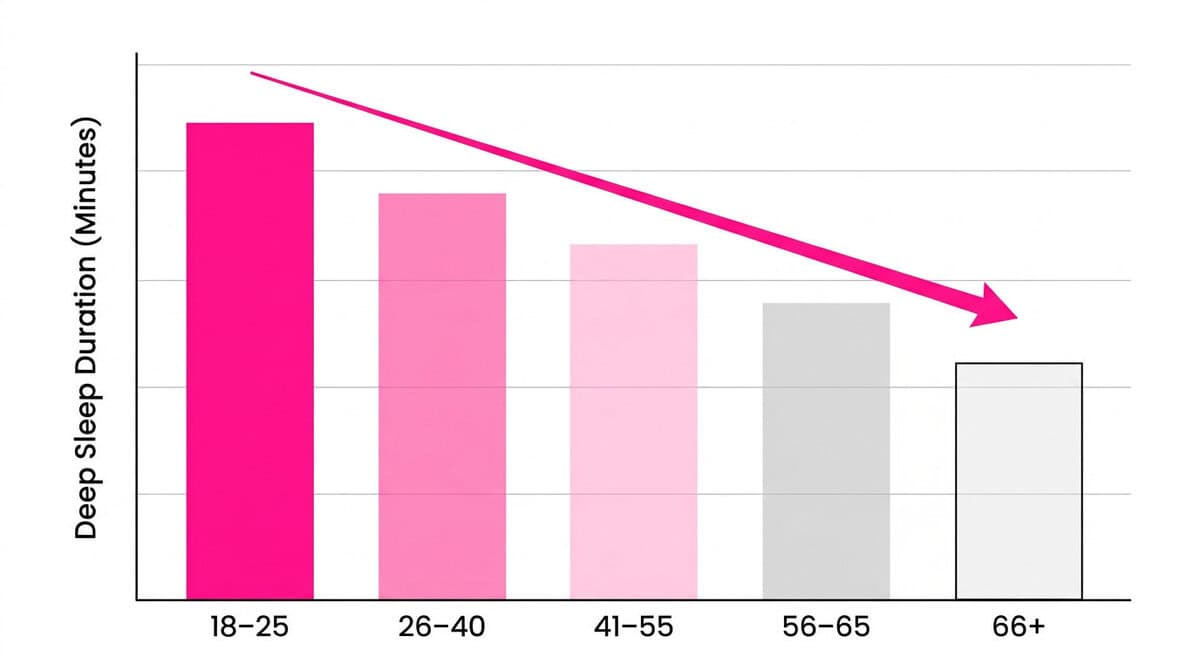
The decline after 40 is real and measurable. By age 60, many adults are getting fewer than 15 minutes of actual slow-wave sleep per night, a dramatic departure from the 90+ minutes common in young adults. This is a primary biological mechanism behind the muscle weakness, abdominal fat accumulation, cognitive slowing, reduced immune response, and emotional volatility that are routinely mistaken for “normal aging.”
The important counterpoint: this decline is not inevitable. Consistent sleep hygiene, resistance exercise, magnesium supplementation, cooler bedroom temperature, and alcohol avoidance can meaningfully reverse age-related deep sleep suppression in many adults.
A note on wearable sleep trackers. Consumer devices (Apple Watch, Fitbit, Oura Ring) are better at detecting sleep versus wake than they are at distinguishing sleep stages. They tend to overestimate deep sleep duration. Use wearable data as a trend indicator, not a precise metric, and avoid the trap of “orthosomnia,” where obsessing over sleep scores paradoxically worsens sleep quality.
10 Science-Backed Ways to Get More Deep Sleep
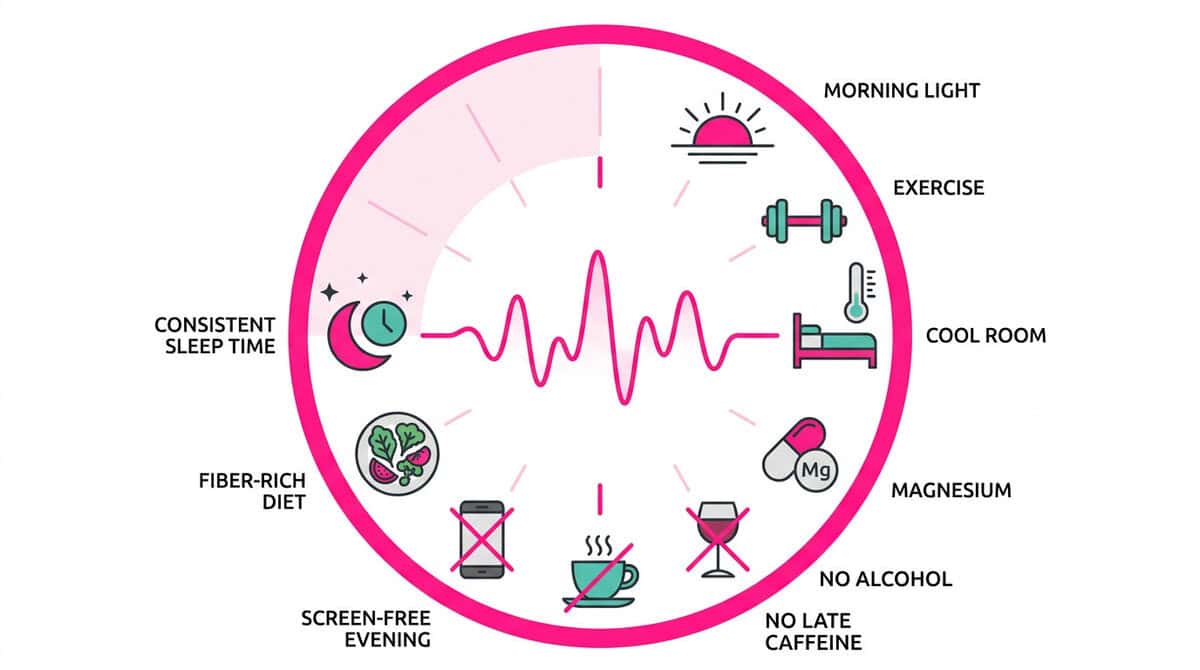
These are not generic sleep hygiene tips. Each connects directly to the biological mechanisms the UC Berkeley study identified.
1. Maintain Consistent Sleep and Wake Times (Single Most Powerful Habit)
Going to bed and waking at the same time every day, including weekends, anchors the circadian rhythm that determines when GHRH levels rise and somatostatin falls. Irregular schedules suppress slow-wave activity regardless of total hours spent in bed. Consistency is the foundation everything else rests on.
2. Get Morning Sunlight Within 30 Minutes of Waking
Ten to thirty minutes of natural light exposure in the morning calibrates the suprachiasmatic nucleus, the brain’s master clock, setting the precise timing of cortisol morning peak and melatonin evening rise. This circadian anchor determines when your body creates the neurochemical conditions for deep sleep approximately 16 hours later.
3. Exercise Regularly — Especially Resistance Training
Regular aerobic and resistance exercise is one of the most consistently documented ways to increase slow-wave sleep duration and efficiency. Exercise raises core body temperature and increases adenosine accumulation (the sleep-pressure molecule) throughout the day, both of which drive deeper sleep. Timing matters: morning or afternoon exercise provides the greatest benefit, while working out within two hours of bedtime can delay sleep onset and reduce early-night deep sleep. This is the direct fitness and sleep synergy that makes exercise doubly valuable for anyone over 40.
4. Keep Your Bedroom Between 65–68°F (18–20°C)
Core body temperature must drop 1–2°F to initiate deep slow-wave sleep. The GHRH-somatostatin circuit cannot produce its deep sleep signal in a warm environment because the thermal drop is part of the biological trigger. A cool, dark room is not a comfort preference, it is a physiological prerequisite.
5. Take Magnesium Glycinate or L-Threonate Before Bed
Magnesium activates GABA receptors, the primary inhibitory neurotransmitter system that slows electrical brain activity into the delta wave patterns that define slow-wave sleep. This is the direct biological bridge between magnesium and the deep sleep circuit. Magnesium glycinate is the most bioavailable form for sleep quality specifically and the one with the strongest clinical evidence for improving sleep onset and sleep depth in adults over 40.
6. Eliminate Alcohol Entirely (The Silent Deep Sleep Destroyer)
Alcohol is the most commonly misunderstood sleep disruptor. It accelerates sleep onset (making it feel beneficial) while suppressing slow-wave sleep in the second half of the night through its effect on GABA pathways, the same system magnesium supports. Even one drink reduces deep sleep efficiency by up to 24% in studies. The growth hormone surge that should occur in deep sleep is specifically impaired by alcohol’s somatostatin-elevating effect, essentially keeping the brake engaged when it should be releasing.
7. Stop Caffeine Intake After 12pm (Noon)
Caffeine blocks adenosine A1 and A2A receptors for 5 to 7 hours. Afternoon caffeine consumption keeps adenosine artificially low at bedtime, reducing the homeostatic sleep pressure that drives deep sleep initiation. The half-life of caffeine is 5–7 hours, a 3pm coffee still has significant receptor occupancy at 9pm.
8. Screen-Free Wind-Down for 90 Minutes Before Bed
Blue light from screens suppresses melatonin production and keeps the visual cortex in an alert, processing state that competes with the wind-down into slow-wave sleep. Replacing screen time with low-stimulation alternatives, reading physical books, gentle stretching, restorative yoga poses, or breathwork, allows the cortisol-melatonin handoff to occur on schedule.
9. Eat a High-Fiber Diet Earlier in the Day
Research consistently shows that high-fiber dietary patterns, centered on whole fruits, vegetables, legumes, and whole grains, increase time spent in slow-wave sleep. The mechanism involves short-chain fatty acids produced by gut fermentation of fiber, which modulate the HPA axis and support stable overnight blood glucose, both of which influence deep sleep quality. This is another thread connecting gut health to brain and sleep quality.
10. Consider Pink Noise
Multiple studies have found that low-frequency pink noise, which resembles rainfall or rustling leaves, played during sleep can enhance slow-wave activity and improve memory consolidation upon waking. It’s one of the few non-pharmacological interventions with consistent mechanistic data, and it is entirely risk-free to test.
What Destroys Deep Sleep — and Why It’s Making You Fatter, Weaker, and More Vulnerable
Each of these factors specifically suppresses slow-wave sleep, either by preventing the somatostatin-GHRH balance from tilting toward the growth hormone-release phase, or by interrupting the sustained delta wave activity that phase requires.
Sleep Apnea (The #1 Destroyer of Deep Sleep). An estimated 70 million Americans have some form of sleep-disordered breathing, and most are undiagnosed. Every apnea event (a breathing pause) triggers a micro-arousal that interrupts delta wave activity and resets the slow-wave sleep cycle. People with untreated sleep apnea cycle through fragmented light sleep all night, never achieving the sustained slow-wave periods where growth hormone surges and glymphatic clearance occurs. CPAP therapy dramatically restores slow-wave sleep in documented cases. If you snore, gasp, or wake unrefreshed after a full night’s sleep, this is the first thing to investigate. Muscle repair during deep sleep is critically relevant to back pain recovery, and untreated sleep apnea may be silently undermining every other pain management or fitness strategy.
Elevated Evening Cortisol. Chronic stress keeps cortisol elevated into the evening, competing directly with the GHRH-mediated growth hormone signal. This is the same cortisol pathway that drives visceral belly fat accumulation, the two processes are biologically linked. Ashwagandha supplementation is one evidence-based strategy for HPA axis regulation and evening cortisol reduction.
Late Eating. Post-meal insulin spikes interfere with the overnight metabolic state required for clean growth hormone pulsatility. Eating within two hours of sleep onset elevates insulin at exactly the moment the body is trying to initiate the fasting-state hormonal conditions that deep sleep depends on.
Room Temperature Above 70°F (21°C). Blocks the core temperature drop that initiates slow-wave sleep. Widely underestimated as a sleep disruptor.
Alcohol. Addressed above, but worth reinforcing: alcohol is the most common deep sleep suppressor that is simultaneously marketed as a sleep aid.
Deep Sleep, Alzheimer’s, and Parkinson’s: The 2026 Connection
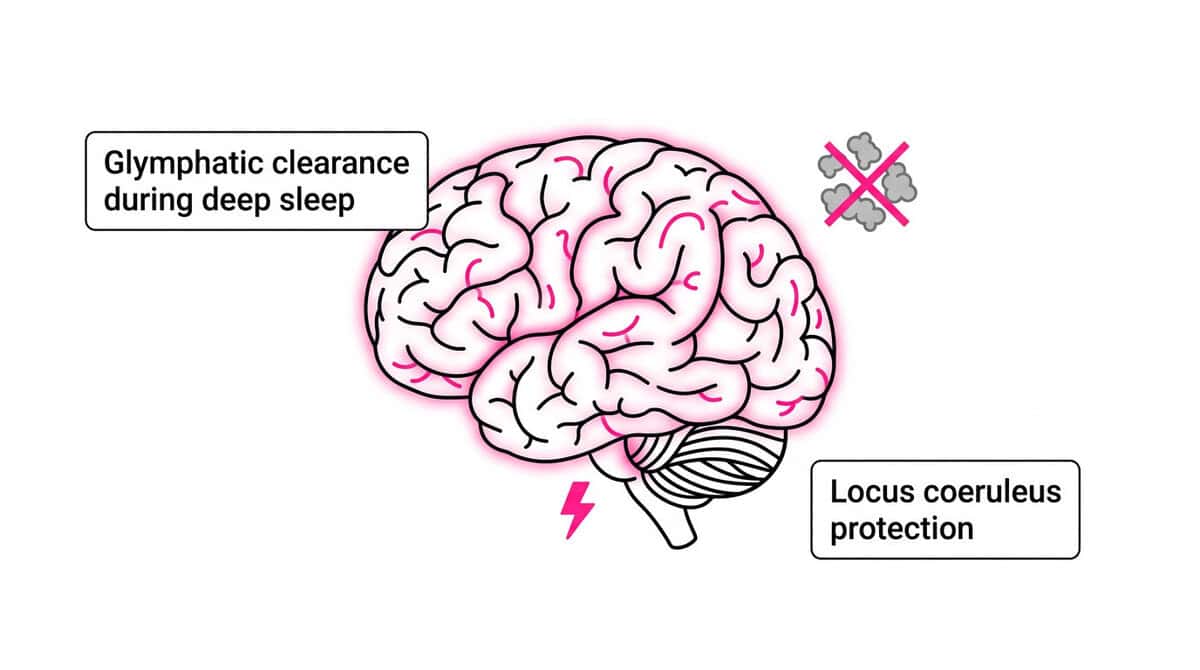
This is where the UC Berkeley study intersects most directly with BillboardHealth’s entire brain health research cluster.
The two-pathway connection is now clear:
Pathway 1 — Glymphatic Amyloid Clearance. The brain accumulates amyloid-beta and tau proteins during every waking hour as metabolic byproducts of neuronal activity. During deep slow-wave sleep, the glymphatic system activates and cerebrospinal fluid pulses through brain tissue, clearing these proteins. This overnight detox is the brain’s primary defense against Alzheimer’s pathology accumulating over decades. Disrupted deep sleep means incomplete clearance, and studies confirm that a single night of total sleep deprivation measurably increases amyloid-beta burden in the human brain.
Pathway 2 — Locus Coeruleus Protection. The deep sleep circuit the Berkeley team mapped connects to the locus coeruleus, a brainstem nucleus that is one of the first regions damaged in both Alzheimer’s and Parkinson’s disease, often decades before clinical diagnosis. The locus coeruleus produces norepinephrine, which is essential for attention, arousal, and cognitive flexibility. Poor deep sleep may accelerate locus coeruleus neurodegeneration through both the oxidative stress pathway and through disruption of the GHRH circuit that normally restores it.
This brings deep sleep into direct alignment with every article in BillboardHealth’s July 2026 brain protection cluster:
- Vitamin B12 sufficiency protects white matter and prevents the neural lesions that are the structural markers of early cognitive decline, B12 deficiency is commonly mistaken for aging
- Dietary omega-3 from whole fish (not supplements) is associated with better cognitive outcomes, the evidence from the USC 2026 trial is covered in detail in the fish oil and brain health guide
- Vitamin C directly correlates with greater gray matter volume and stronger default mode network connectivity on MRI, the 2026 PLOS One findings are in the vitamin C and brain health article
- Glucosamine is associated with a 25% higher risk of Alzheimer’s progression in people already cognitively impaired, the glucosamine brain health risk article covers who this affects
Deep sleep is the infrastructure that makes all of these nutritional interventions more effective, the glymphatic clearance and locus coeruleus protection that sleep provides create the biological conditions in which vitamin C, B12, omega-3, and other brain-supportive nutrients can do their protective work.
When to See a Doctor About Deep Sleep
Poor sleep is not merely an inconvenience, it is a modifiable health risk. These are the signals that require medical evaluation rather than lifestyle optimization alone.
Seek medical evaluation if you experience:
- Loud snoring, gasping, or choking during sleep, the hallmark signs of obstructive sleep apnea, which is both treatable and life-changing in its impact on deep sleep quality
- Regular morning headaches, which can indicate overnight oxygen desaturation from sleep-disordered breathing
- Consistently waking unrefreshed despite seven or more hours in bed
- Persistent daytime sleepiness that affects your work, driving safety, or concentration
- Restless leg sensations or periodic limb movements that disrupt sleep onset or maintenance
Medical conditions that destroy deep sleep and require treatment:
Obstructive sleep apnea is the most prevalent and most consequential. CPAP therapy, when used consistently, dramatically restores slow-wave sleep in affected patients, often within the first week. Many people report the most vivid, deepest sleep of their adult lives within days of starting CPAP, because their brain is finally completing the slow-wave cycles it has been interrupted out of for years.
Restless legs syndrome, circadian rhythm disorders (common in shift workers), and clinical depression and anxiety also significantly suppress slow-wave sleep and respond well to treatment, including with evidence-based interventions. Untreated depression is directly associated with slow-wave sleep suppression, creating a self-reinforcing cycle that worsens both conditions simultaneously.
If you experience persistent unrefreshing sleep, loud snoring, insomnia lasting more than three weeks, or daytime sleepiness affecting your safety, speak with your doctor before making further lifestyle changes. Sleep disorders require diagnosis, and diagnosis changes treatment.
This article is for informational purposes and does not replace medical advice.
FAQs About Deep Sleep Benefits
What are the most important deep sleep benefits for adults over 40? For adults over 40, the critical deep sleep benefits are growth hormone release for muscle repair and fat metabolism, glymphatic brain waste clearance (removing amyloid-beta and tau proteins linked to Alzheimer’s), immune system restoration, memory consolidation, and regulation of cortisol, leptin, ghrelin, and insulin sensitivity. These benefits diminish as deep sleep naturally declines with age, making sleep hygiene increasingly important after 40, not less.
How does deep sleep help you lose weight? Growth hormone released during deep slow-wave sleep signals fat cells to release stored fatty acids for energy. It also regulates leptin (satiety) and ghrelin (hunger). Insufficient deep sleep disrupts both signals simultaneously, increasing appetite, reducing fat metabolism, and elevating cortisol, which specifically redirects fat storage into the visceral abdominal area.
Does deep sleep really build muscle? Yes. The largest natural growth hormone surge of the entire day occurs during the first deep slow-wave sleep period, within the first two to three hours of the night. Without adequate deep sleep, muscle protein synthesis after training is significantly impaired, making deep sleep as important to muscle building as the training itself.
What did the 2026 UC Berkeley study discover about deep sleep? Berkeley neuroscientists mapped a feedback loop in the hypothalamus where GHRH (the accelerator) and somatostatin (the brake) orchestrate growth hormone release during deep non-REM sleep. During slow-wave sleep, somatostatin drops while GHRH rises modestly, producing a hormone surge. That hormone then signals the brain toward wakefulness, creating a self-regulating sleep-hormone cycle that explains both the benefits of deep sleep and why it naturally ends.
How do I know if I’m getting enough deep sleep? Target: 50–90 minutes per night (10–15% of total sleep). Key signs of insufficient deep sleep include waking unrefreshed after 7+ hours, daytime fatigue and brain fog, slow post-exercise recovery, increased appetite and cravings, frequent illness, and poor retention of new information. Wearable trackers give estimates, not precise measurements, use them as trends, not absolutes.
Does alcohol ruin deep sleep? Yes. Alcohol accelerates sleep onset while suppressing slow-wave sleep in the second half of the night, specifically the phase where the deepest restorative sleep and the largest growth hormone surge occur. Even a single drink reduces deep sleep efficiency by up to 24% in some studies. It is the single most common and underappreciated deep sleep disruptor in adults.
Can magnesium improve deep sleep quality? Yes. Magnesium glycinate activates GABA receptors, the same inhibitory neurotransmitter system that slows brain activity into delta wave patterns required for slow-wave sleep. This is the direct biological mechanism connecting magnesium supplementation to the GHRH-somatostatin circuit identified in the UC Berkeley study.
What is the glymphatic system and why does it need deep sleep? The glymphatic system is the brain’s overnight waste-clearance network, in which cerebrospinal fluid pulses through brain tissue and flushes out amyloid-beta and tau proteins, the hallmarks of Alzheimer’s pathology. It activates almost exclusively during deep slow-wave sleep. Sleep deprivation interrupts this clearance, allowing proteins to accumulate over years.
Does deep sleep protect against Alzheimer’s? The evidence strongly suggests yes, through two mechanisms. First, glymphatic amyloid clearance requires deep sleep, and even one night of deprivation measurably increases brain amyloid burden. Second, the 2026 Berkeley study’s circuit connects to the locus coeruleus, whose early degeneration is among the first biomarkers of both Alzheimer’s and Parkinson’s disease.
How much deep sleep do adults over 60 actually get? On average, adults over 60 get 5 to 20 minutes of actual slow-wave sleep per night, compared to 90 to 120 minutes in young adults. This decline drives much of what is attributed to normal aging: muscle loss, fat accumulation, cognitive slowing, immune decline, and emotional fragility. Consistent sleep hygiene, resistance training, magnesium, cooler bedroom temperature, and alcohol avoidance can meaningfully slow this decline.