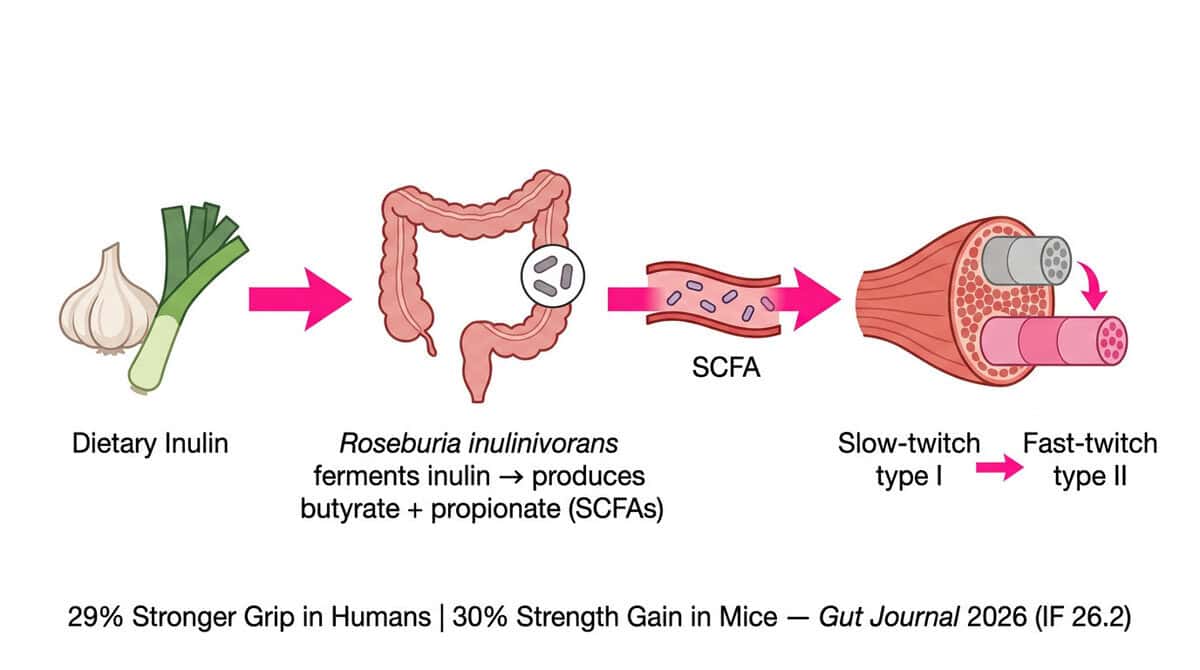
The connection between gut bacteria and muscle strength just became the most specific and actionable in the history of microbiome research, a study published in Gut (Impact Factor 26.2, D1 in Gastroenterology and Hepatology globally) and re-highlighted by ScienceDaily on August 21, 2026 identified a single bacterial species, Roseburia inulinivorans, whose presence in older adults is associated with 29% greater handgrip strength and whose supplementation in mice increased grip strength by 30% while growing larger, more powerful fast-twitch muscle fibers. For anyone over 50 wondering why they’re losing strength despite exercising and eating well, or for anyone looking for an additional evidence-based tool to maintain muscle into old age, this gut bacteria and muscle strength discovery may be the most practically important fitness finding of August 2026.
The finding overturns a central assumption in sports science and geriatrics: that muscle strength is determined entirely by exercise, protein intake, and hormones. A third pillar, your gut microbiome, now enters the picture, identified at the most specific level science has ever achieved in this space: a single named bacterial species, a defined food that feeds it, and a measurable causal outcome.
This article is for informational purposes. The human evidence is observational; human RCTs for Roseburia supplementation have not yet been conducted. Do not replace medical care or prescribed exercise programs with dietary changes alone.
The 2026 Gut Journal Study: How Gut Bacteria and Muscle Strength Are Directly Connected
The research was conducted by scientists at Leiden University Medical Center (LUMC, Netherlands), the University of Granada (Spain), and the University of Almería (Spain), led by first author Borja Martinez-Tellez and senior author Professor Jonatan R. Ruiz (University of Granada), together with Professor Patrick CN Rensen (LUMC). Published in Gut 2026 (DOI: 10.1136/gutjnl-2025-336980).
The study design. Researchers analyzed stool samples and physical performance data from two Spanish cohorts: 33 older adults aged 65 and over, and 90 young adults aged 18–25. Bacterial DNA sequencing provided complete gut microbiome profiles. Participants’ physical capacity was measured comprehensively: handgrip strength (both hands), leg press strength, bench press strength, and VO2 max (cardiovascular fitness).
The bacterial candidate. From all bacterial species detected across both cohorts, only the Roseburia genus showed consistent positive associations with muscle outcomes. Within Roseburia, only one species showed the specific muscle-strength link: Roseburia inulinivorans.
The human findings:
- Older adults carrying higher R. inulinivorans abundance had 29% greater handgrip strength than older adults with lower abundance
- The bacterium was also significantly less common in older adults than in young adults, suggesting its natural decline with age contributes to age-related muscle loss
- In younger adults, higher R. inulinivorans abundance was associated with both greater grip strength AND higher VO2 max, suggesting the gut-muscle effect extends to cardiovascular fitness in younger populations
The mouse experiment, causal evidence. The research team went beyond correlation to establish causation. They fed Roseburia species once per week for eight weeks to 32 mice whose gut microbiomes had been depleted with antibiotics:
- Compared with the control group, R. inulinivorans induced a 30% increase in forelimb grip strength after four, six, and eight weeks of treatment
- Treated mice developed larger, more powerful fast-twitch (type II) muscle fibers, the fiber type responsible for strength, power, and explosive movement
- Metabolomic analysis of muscle tissue revealed activation of the purine pathway and pentose phosphate pathway, both central to ATP energy production, redox balance, and nucleotide biosynthesis in muscle cells
The bidirectional discovery. Strength training has been shown to selectively increase Roseburia abundance, creating the bidirectional gut-muscle axis that makes this finding uniquely actionable: exercise feeds Roseburia, which builds stronger muscles, which makes exercise more effective, which feeds more Roseburia.
Professor Ruiz’s summary. “Taken together, our findings provide robust evidence supporting a gut-muscle axis in which R. inulinivorans positively modulates muscle metabolism and muscle strength.”
Gut Bacteria and Muscle Strength: Why Roseburia Inulinivorans Declines With Age, and What to Do
Why the decline matters. The study confirms that R. inulinivorans abundance is significantly lower in older adults than in young adults, a finding replicated across 3,512 publicly available human gut metagenomes (p=0.016). This age-related decline closely parallels the trajectory of sarcopenic muscle loss: both begin in the 40s and accelerate after 65.
Why does Roseburia decline with age?
| Factor | Effect on Roseburia |
| Reduced dietary fiber intake | Removes primary food source |
| Reduced gut motility (slower transit) | Favors different bacterial competitors |
| Antibiotic history | Roseburia is antibiotic-sensitive |
| Reduced physical activity | Loses the selective exercise-driven enrichment |
| Age-related gut pH changes | Shifts environment away from Roseburia |
| Increased inflammation | Disrupts the gut ecological conditions Roseburia needs |
The conditions beyond age that deplete it: Roseburia genus is specifically depleted in obesity, type 2 diabetes, inflammatory bowel disease, and other metabolic conditions, making it a broad marker of metabolic health status. The same individuals most at risk for sarcopenia (older, sedentary, metabolically disrupted) are those least likely to carry adequate Roseburia.
Why grip strength is a longevity biomarker, not just a fitness metric. Grip strength is one of the strongest predictors of all-cause mortality, cardiovascular outcomes, and disability in older adults across virtually every longitudinal study conducted globally. A 29% higher grip strength in Roseburia-positive older adults represents a clinically and statistically meaningful difference in survival, fall risk, and functional independence, not merely athletic performance.
The strength training Harvard longevity study found grip strength to be the single most consistent biomarker of all-cause longevity across demographics. The biological aging research identified muscle preservation as one of the most direct lifestyle paths to slowing DunedinPACE biological aging rate. Roseburia inulinivorans now connects gut health to both simultaneously.
The Gut-Muscle Axis — Why Your Gut Has Always Been a Muscle-Building Organ
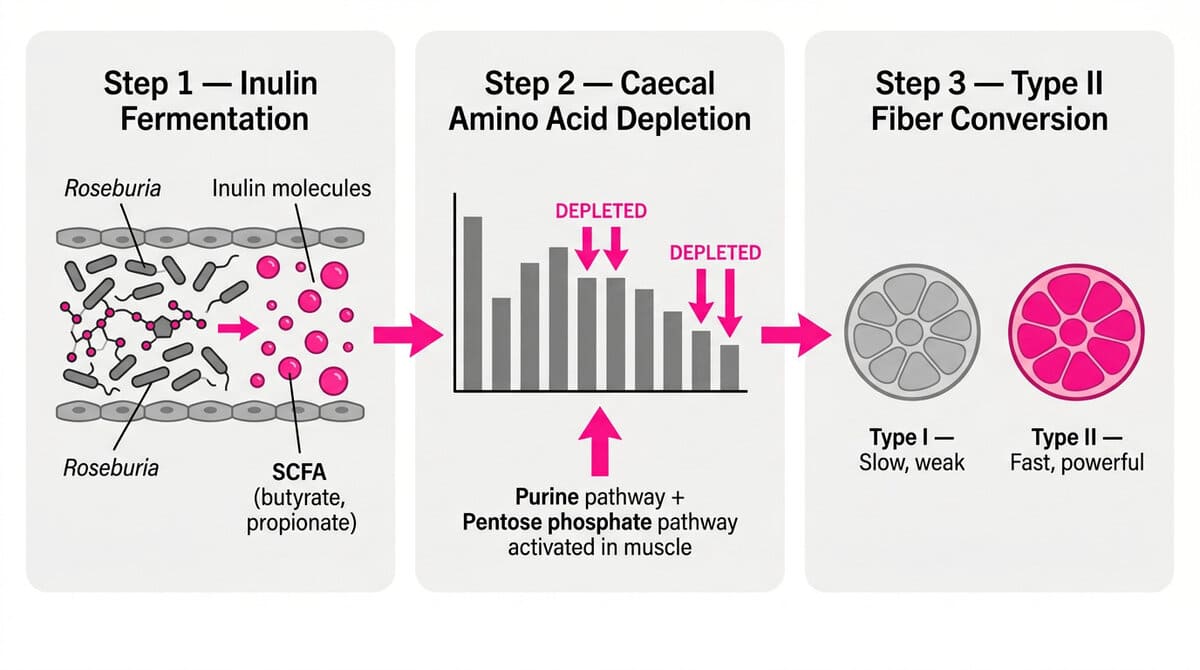
The gut bacteria and muscle strength connection operates through a surprisingly specific biological pathway, Roseburia inulinivorans doesn’t build muscle by producing any hormone or growth factor directly, but instead by fundamentally altering the metabolic environment inside muscle tissue through three sequential steps.
Step 1 — Inulin Fermentation to SCFAs
Roseburia inulinivorans is named for its primary metabolic function: fermenting inulin-type fructan fibers in the colon. When dietary inulin (from garlic, leeks, chicory, Jerusalem artichoke, asparagus) reaches the large intestine, R. inulinivorans breaks it down through fermentation, producing:
- Butyrate, the primary energy source for colonocytes (gut lining cells), and a potent anti-inflammatory SCFA that reduces the gut barrier permeability driving systemic inflammation
- Propionate, travels to the liver, where it influences gluconeogenesis and lipid metabolism
These SCFAs enter the bloodstream and reach muscle tissue, where their anti-inflammatory effects reduce the chronic low-grade inflammation (inflammaging) that accelerates sarcopenia. But this is only part of the muscle-building story, the more novel mechanism operates at the amino acid level.
Step 2 — Caecal Amino Acid Depletion and Metabolic Pathway Activation
The unique finding from the mouse metabolomics analysis: R. inulinivorans depletes specific amino acid concentrations in the caecum and plasma. This amino acid depletion appears to signal muscle tissue to activate alternative energy and biosynthesis pathways:
- Purine pathway activation, purines (adenine, guanine) are essential for ATP synthesis; activating this pathway in muscle cells increases their energy production capacity
- Pentose phosphate pathway activation, this pathway generates NADPH for redox balance and ribose-5-phosphate for nucleotide biosynthesis, supporting the DNA replication and protein synthesis needed for muscle fiber growth
These pathway activations create a metabolic environment in muscle that is more conducive to fiber development and strength generation.
Step 3 — Fast-Twitch Type II Fiber Conversion
The downstream result of the purine and pentose phosphate pathway activation is a shift in muscle fiber composition from slow-twitch (type I) to fast-twitch (type II) fibers. R. inulinivorans converts muscle fibres to fast-twitch (type II), designed for short intensive movement such as sprinting and weights.
Type II fibers generate more force per unit area, respond more dramatically to strength training, and are the primary fibers lost in sarcopenia. Normally, this fast-twitch fiber composition is maintained only through high-intensity strength training, the discovery that a gut bacterium independently drives the same adaptation is unprecedented in muscle biology.
The bidirectional gut-muscle dialogue. The full picture:
- Dietary inulin feeds R. inulinivorans
- R. inulinivorans produces SCFAs and creates the amino acid depletion signal
- Muscle responds by activating purine/pentose phosphate pathways and converting to type II fibers
- Stronger type II muscles respond better to strength training
- Strength training selectively increases R. inulinivorans abundance
- More Roseburia → more SCFA → more type II fiber conversion → cycle continues
This is the first confirmed bidirectional gut-muscle axis at the species level, and it gives the same dietary fiber recommendation (daily inulin from garlic, leeks, and chicory) dual purpose: feeding the prebiotic strategy that reduced knee arthritis pain in the INSPIRE trial AND the muscle-building gut bacterium now confirmed in this Gut journal study.
The gut health and memory study documented that junk food permanently damages the gut-brain signaling pathway through the vagus nerve. The same dietary disruption, ultra-processed food, low fiber, artificial sweeteners, depletes the Roseburia that the gut-muscle axis depends on. Poor gut health doesn’t just impair memory; it impairs muscle simultaneously, through parallel pathways.
Sarcopenia: Why Roseburia Inulinivorans Is Its Emerging Natural Countermeasure
Sarcopenia, the progressive, age-related loss of skeletal muscle mass, strength, and function, is one of the most consequential and least-discussed health crises of aging.
The numbers: approximately 10% of adults over 60, 20–30% of adults over 70, and over 50% of adults over 80 meet clinical criteria for sarcopenia. Its consequences include elevated fall risk, fractures, loss of independence, impaired immune function, and significantly higher all-cause mortality.
Current treatment gaps. The established sarcopenia protocol, resistance exercise + adequate protein + vitamin D, works well when implemented, but faces a critical barrier: the frailest elderly patients who need it most are often too weak, too pain-limited, or too cognitively impaired to maintain adequate exercise. A gut-microbiome intervention that provides partial muscle-preserving benefit without requiring exercise addresses a genuinely unmet clinical need.
The “exercise mimetic” framing. The study authors specifically propose that R. inulinivorans holds promise as a nutraceutical probiotic for treating age-related muscle wasting disease, an “exercise mimetic” that partially replicates the type II fiber conversion effects of strength training through gut-mediated metabolic signaling.
This framing is important: it positions Roseburia supplementation not as a replacement for exercise but as a complementary strategy particularly valuable for those with exercise limitations. For the type 2 diabetes population (where Roseburia is specifically depleted and sarcopenia risk is elevated) and for adults with severe knee arthritis limiting exercise capacity, the gut-muscle axis provides a meaningful additional tool.
How to Boost Gut Bacteria and Muscle Strength Together: The Evidence-Based Protocol
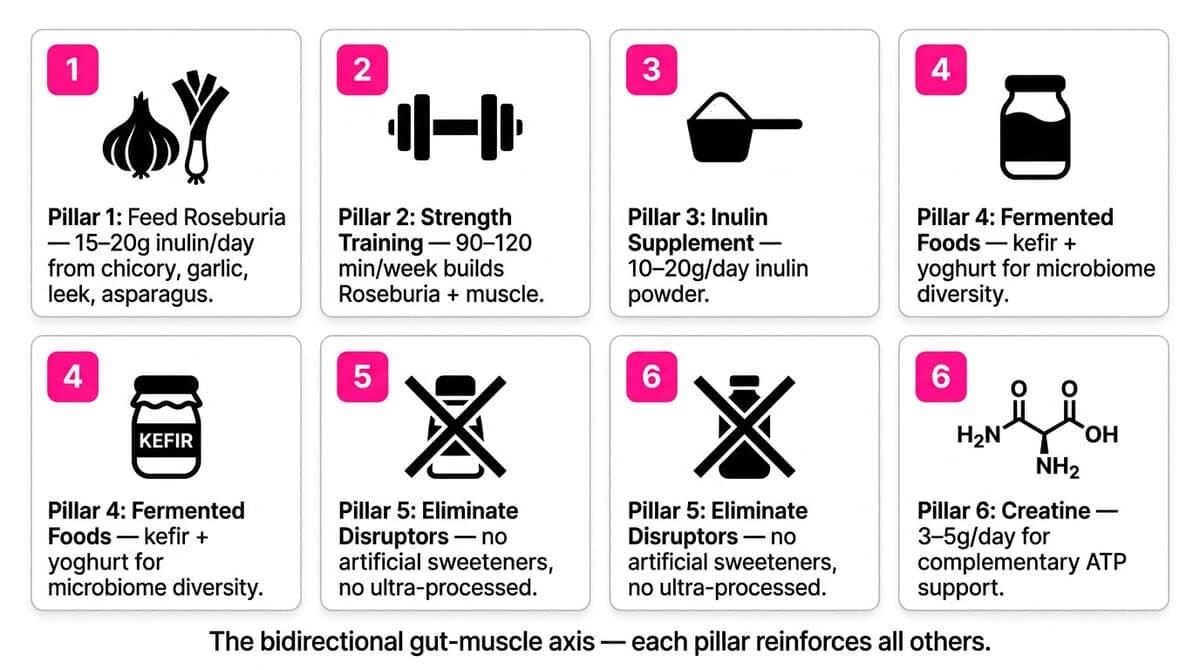
Pillar 1 — Feed Roseburia With Its Preferred Foods
Roseburia inulinivorans thrives on inulin-type fructan fibers, the same prebiotic that reduced knee arthritis pain by 23% in the University of Nottingham INSPIRE trial. The identical dietary strategy now delivers two documented benefits simultaneously: joint pain relief and muscle strength.
The inulin food hierarchy:
| Food | Inulin Content (per 100g) | Practical Daily Serving |
| Chicory root (raw) | 41g | 2 tbsp as coffee substitute (~5g) |
| Jerusalem artichoke | 18g | 100g roasted = ~18g |
| Dandelion greens | 13g | 80g in salad = ~10g |
| Garlic | 12g | 3–4 cloves = ~3g |
| Onion | 7g | 1 medium = ~5g |
| Leek | 6g | 1 medium = ~6g |
| Asparagus | 4g | 8 spears = ~4g |
| Underripe banana | 1g | 1 banana = ~1g |
Daily target: 15–20g inulin, achievable from chicory root coffee + Jerusalem artichoke as a side dish + garlic/onion/leek in cooking. This is also the dose used in the knee arthritis INSPIRE trial and consistent with research on Roseburia-favoring prebiotic amounts.
Gradual ramp-up: Start at 5g/day and increase by 2–3g per week to allow the gut microbiome to adapt without excessive bloating or gas during weeks 1–2 of the transition.
Pillar 2 — Strength Training (Build Roseburia Through Exercise)
Strength training is bidirectionally linked to R. inulinivorans, it is both a consequence of higher Roseburia (more powerful type II fibers respond better to training) and a cause (exercise selectively increases Roseburia abundance). The Harvard 147,000-person strength training study’s 90–120 minutes per week recommendation now carries an additional mechanistic dimension: it is a direct gut microbiome optimization strategy as much as a musculoskeletal intervention.
For older adults who cannot maintain 90 minutes weekly: even 30–45 minutes twice weekly at moderate resistance provides the exercise stimulus that increases Roseburia, the threshold for gut microbiome response is lower than the threshold for full sarcopenia prevention. Start with bodyweight exercises if equipment is unavailable.
Pillar 3 — Inulin Supplementation
Inulin powder (chicory root-derived) at 10–20g/day provides the most reliable path to Roseburia-feeding fiber levels, particularly for people who struggle to consume adequate inulin from food alone. The powder is virtually tasteless, dissolves in water, coffee, or yoghurt, and is the same supplement used in the knee arthritis INSPIRE trial.
Take with a meal rather than on an empty stomach to minimize GI discomfort during the adaptation period.
Pillar 4 — Add Fermented Foods for Broader Microbiome Diversity
While R. inulinivorans is the specific muscle-strength bacterium, broader microbiome diversity supports the ecological conditions in which Roseburia thrives by preventing competitive displacement by less beneficial species. Daily fermented foods from plain full-fat dairy (kefir delivers 30–50 microbial species; full-fat plain yoghurt provides additional species and intact MFGM compounds) provide the most bioavailable combination of probiotic diversity and dairy matrix benefits.
The brain inflammation and neuroinflammation research identified fermented foods as part of the anti-neuroinflammatory dietary protocol, the same dietary pattern that reduces brain inflammation also maintains the gut ecosystem that R. inulinivorans needs to thrive.
Pillar 5 — Eliminate Microbiome Disruptors
The Cambridge artificial sweetener study found 75% of sweeteners disrupted at least one gut bacteria species, Roseburia is among the genera most sensitive to these disruptions. The same ultra-processed foods that deplete Roseburia also deprive it of the prebiotic fiber it ferments. Eliminating these creates the ecological space for R. inulinivorans to expand when inulin is added.
Pillar 6 — Combine With Creatine Monohydrate
Creatine monohydrate 3–5g daily enhances muscle protein synthesis efficiency and phosphocreatine regeneration, the primary ATP pathway during high-intensity muscle contractions. Combining creatine (optimizing the phosphocreatine energy system) with Roseburia-feeding inulin (optimizing the purine/pentose phosphate energy pathways discovered in the mouse metabolomics) provides complementary energy system support at both the supplement and microbiome levels.
The protein intake research identified that gut bacteria influence how protein is metabolized and used by muscles, Roseburia‘s amino acid depletion mechanism in the caecum is precisely the kind of gut-mediated protein handling effect the protein review identified as important. Active adults optimizing their protein intake alongside inulin for Roseburia may find their protein efficiency increases as the gut-muscle axis optimizes.
The 8-Week Gut-Muscle Optimization Protocol
Based on the mouse study’s 8-week timeline and the INSPIRE knee arthritis trial’s 6-week inulin protocol:
Weeks 1–2 (Microbiome Preparation Phase):
- Inulin: 5g/day → 10g/day (gradual increase)
- Eliminate ultra-processed foods and artificial sweeteners
- Add one serving of fermented food daily (kefir or full-fat plain yoghurt)
- Begin daily stair climbing as a baseline activity, 6+ flights daily provides the cardiovascular and gut-motility stimulus that supports Roseburia
Weeks 3–4 (Roseburia Building Phase):
- Reach 15–20g/day inulin (food + optional powder)
- Begin or intensify strength training (2× weekly minimum)
- Add creatine monohydrate 3–5g/day with a meal
- Add once-weekly interval walking, the 75-minute HKU protocol provides the catecholamine and gut-motility stimulus that complements Roseburia growth
Weeks 5–6 (Integration Phase):
- Maintain inulin + fermented foods + strength training combination
- The mouse study showed grip strength gains emerging at week 4; human timelines are likely 8–12 weeks for meaningful changes
- Informally assess grip: can you squeeze harder, hold longer, open jars more easily than 4 weeks ago?
Weeks 7–8 (Assessment Phase):
- Self-measure grip strength: commercial grip dynamometers cost 20–40 and provide objective baseline tracking
- Consider a consumer gut microbiome test (limitations acknowledged, they detect Roseburia but cannot quantify it at clinical precision)
- Discuss with your GP if strength loss is progressing despite intervention, clinical sarcopenia assessment by the European Working Group criteria (grip strength + muscle mass by DXA) may be appropriate
Snack strategy. BillboardHealth’s healthy snacks guide covers prebiotic-rich options that feed gut bacteria throughout the day. The inulin from snacking on apple slices (pectin + mild inulin), carrot sticks with hummus (chickpea fiber feeds related microbiome species), and dandelion tea (dandelion root is an inulin source) provides continuous fiber substrate across the day rather than a single large bolus, supporting steadier Roseburia growth conditions.
What We Still Don’t Know, The Research Gaps
Responsible health communication requires addressing what this study does not yet establish:
The observational human data limitation. The human study had 123 participants (33 older adults, 90 young adults) from two Spanish cohorts, a relatively small sample that requires replication in larger, more diverse populations including non-European demographics.
No human RCT yet. The mouse experiment establishes causation in a controlled animal model. Translating this to humans requires a randomized controlled trial in which Roseburia is specifically supplemented and muscle outcomes measured prospectively. This has not yet been done.
The probiotic formulation challenge. Human strains of R. inulinivorans did not permanently colonize the mouse intestine in the supplementation experiments, the bacteria provided a transient metabolic stimulus rather than long-term colonization. Long-term research will be necessary to determine whether changes in R. inulinivorans levels cause improvements in muscle function or are a consequence of them.
The confounding factor concern. People who eat more inulin-rich foods and exercise more are already healthier in many ways, the study adjusted for confounders, but observational data cannot fully exclude the possibility that Roseburia is partly a marker of healthy behavior rather than an independent muscle-building intervention.
The practical bottom line. The dietary interventions recommended in this article, inulin from whole plant foods, strength training, fermented foods, elimination of artificial sweeteners and ultra-processed food, are independently validated as beneficial for multiple health outcomes regardless of the Roseburia hypothesis. The Gut 2026 study adds a specific mechanistic explanation and amplifies the importance of these strategies, particularly for older adults concerned about sarcopenia. Even if the exact Roseburia mechanism is subsequently refined, the dietary interventions remain sound.
Measuring Your Own Grip Strength, The Sarcopenia Self-Assessment
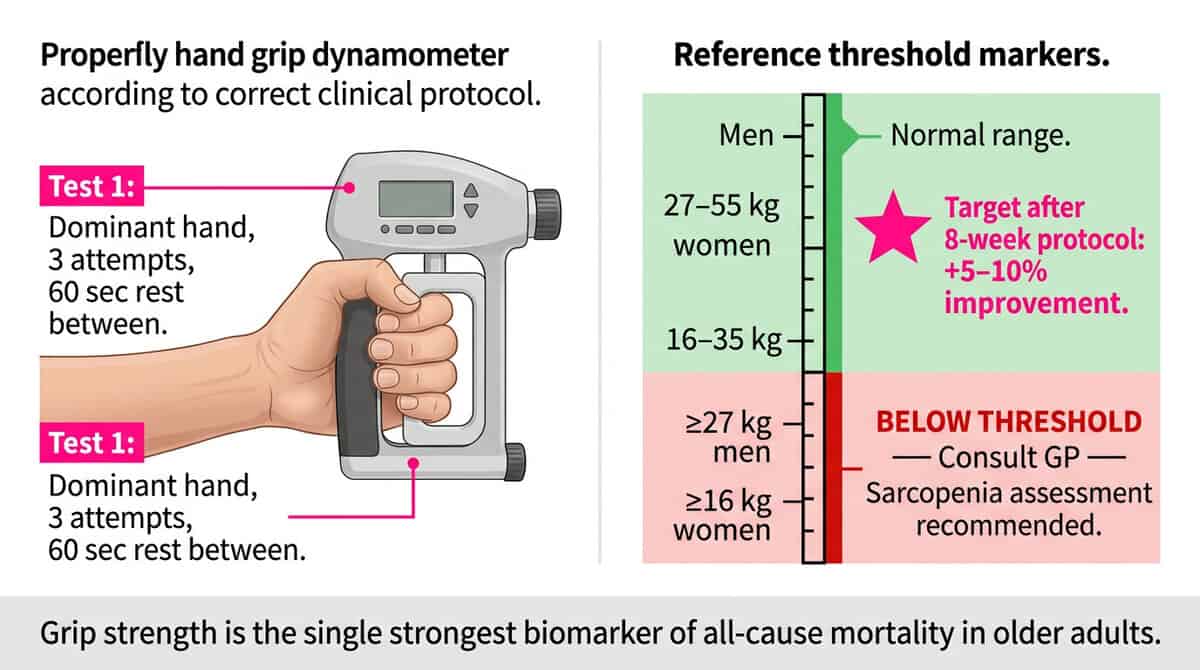
Why measure it. Grip strength is one of the simplest and most validated biomarkers of biological aging and sarcopenia risk available without a doctor’s visit.
Clinical thresholds (European Working Group on Sarcopenia in Older People 2019):
- Men: below 27 kg = low muscle strength — clinical concern
- Women: below 16 kg = low muscle strength — clinical concern
At home without a dynamometer:
- Squeeze a firm rubber ball for 5 seconds, maximum effort, both hands alternately
- Note fatigue onset and subjective comparison to 4 weeks ago
- Open a medium-resistance jar lid, track improvement over weeks
With a grip dynamometer (widely available online or at pharmacies for 20–40):
- Standard protocol: standing, dominant hand, elbow slightly bent, 3 attempts with 60 seconds rest between
- Best result is the official measurement
Tracking the 8-week protocol:
- Baseline: measure before starting the inulin + strength training protocol
- Week 4: remeasure, the mouse study showed improvements at 4 weeks; human timelines may require 6–8 weeks
- Week 8: final measurement, a 5–10% improvement in grip strength over 8 weeks is a reasonable expectation from the combined inulin + exercise protocol
If grip strength is below the clinical thresholds above or declining over time despite the protocol: discuss with your GP. Clinical sarcopenia assessment (grip strength + DXA muscle mass measurement) can establish a diagnosis and guide more intensive intervention including physiotherapy, nutritional support, and investigation for treatable underlying causes.
FAQs About Gut Bacteria and Muscle Strength
How are gut bacteria and muscle strength connected through Roseburia inulinivorans? The 2026 Gut journal study found older adults with R. inulinivorans had 29% greater handgrip strength, while mice given it gained 30% more grip strength over 8 weeks. The mechanism: the bacterium ferments inulin into SCFAs, depletes specific caecal amino acids, and activates purine and pentose phosphate pathways in muscle that drive conversion from slow-twitch to fast-twitch (type II) muscle fibers, the more powerful fiber type responsible for strength and explosive movement.
What is Roseburia inulinivorans and what does it do for muscles? An anaerobic gut bacterium that ferments inulin prebiotic fiber, producing butyrate and propionate (SCFAs). Its muscle-building mechanism involves amino acid depletion and pathway activation in muscle cells that drives type II fiber conversion, an adaptation normally achieved only through high-intensity resistance training.
How much inulin should I eat to increase Roseburia? 15–20g daily from chicory root, Jerusalem artichoke, garlic, leeks, onions, asparagus, and dandelion greens, or inulin powder supplementation. Start at 5g/day and increase gradually over 2–3 weeks to minimize GI adaptation symptoms.
Can gut bacteria supplements replace strength training for muscle? No, they should complement it. Strength training is the primary muscle stimulus and also selectively increases Roseburia abundance, creating the bidirectional gut-muscle loop. For people who cannot exercise adequately, Roseburia feeding may provide partial muscle-preserving benefit.
Which foods are highest in inulin to feed muscle-building gut bacteria? Chicory root (41g/100g), Jerusalem artichoke (18g/100g), dandelion greens (13g/100g), garlic (12g/100g), onion (7g/100g), leek (6g/100g), asparagus (4g/100g), the same foods that feed the prebiotic for knee arthritis pain relief. One dietary strategy, two documented benefits.
How quickly can you increase Roseburia inulinivorans in your gut? Microbiome shifts begin within 2–4 weeks of fiber increase; more durable Roseburia enrichment takes 6–12 weeks. The mouse study showed grip strength improvements at 4 weeks; human muscle strength timelines likely require 8–12 weeks minimum.
Does strength training increase gut bacteria? Yes, strength training selectively increases Roseburia abundance, creating the bidirectional loop where exercise feeds the bacterium that builds stronger muscles for better exercise.
Is there a Roseburia inulinivorans probiotic supplement available? Not yet as a commercially validated product, R. inulinivorans is strictly anaerobic and technically challenging to manufacture. The most reliable current strategy is feeding existing gut Roseburia with high-inulin foods and protecting it from disruptors.
Can gut bacteria help prevent sarcopenia? The 2026 Gut study provides mechanistic evidence that restoring R. inulinivorans through inulin feeding and strength training addresses one of the gut microbiome mechanisms contributing to sarcopenic muscle loss. It should be considered alongside the established protein + exercise + vitamin D protocol.
Why does grip strength predict lifespan? Grip strength is a proxy for total skeletal muscle quality, reflecting neuromuscular integrity, fiber type composition, protein synthesis capacity, and systemic metabolic health. Consistently one of the strongest predictors of all-cause mortality, cardiovascular events, and functional independence across every demographic studied globally.
This article is for informational purposes. The human evidence is observational; no human RCT for Roseburia supplementation exists yet. Do not replace medical care or prescribed treatments with dietary changes alone. Consult your GP if grip strength is below clinical thresholds or declining.