The connection between low-carb diet and cholesterol just became far more complicated, and far more urgent, with a landmark study published in the European Heart Journal Cardiovascular Pharmacotherapy and highlighted by ScienceDaily on August 25, 2026, finding that a low-carb diet may raise LDL cholesterol much more sharply in people who are genetically predisposed to high cholesterol, particularly when they consume lots of saturated fat. If you have tried keto or a low-carb diet and watched your LDL numbers climb while a friend on the exact same plan saw their cholesterol improve, the 2026 genetic study finally explains why, and why the difference could be the most important dietary safety question you ask your doctor this year.
The finding doesn’t mean low-carb diets are dangerous for everyone, most people experience genuinely beneficial cholesterol changes on low-carb eating. It means that a significant minority of low-carb dieters have a genetic profile that makes the same diet produce the opposite cholesterol outcome, and most of them have no idea.
This article is for informational purposes. Do not stop or start any diet, statin, or cholesterol medication without consulting your doctor. If you are concerned about your cholesterol on a low-carb diet, discuss it with your GP before making any changes.
The August 2026 Study: The Genetic Reason Low-Carb Diet and Cholesterol React So Differently in Different People
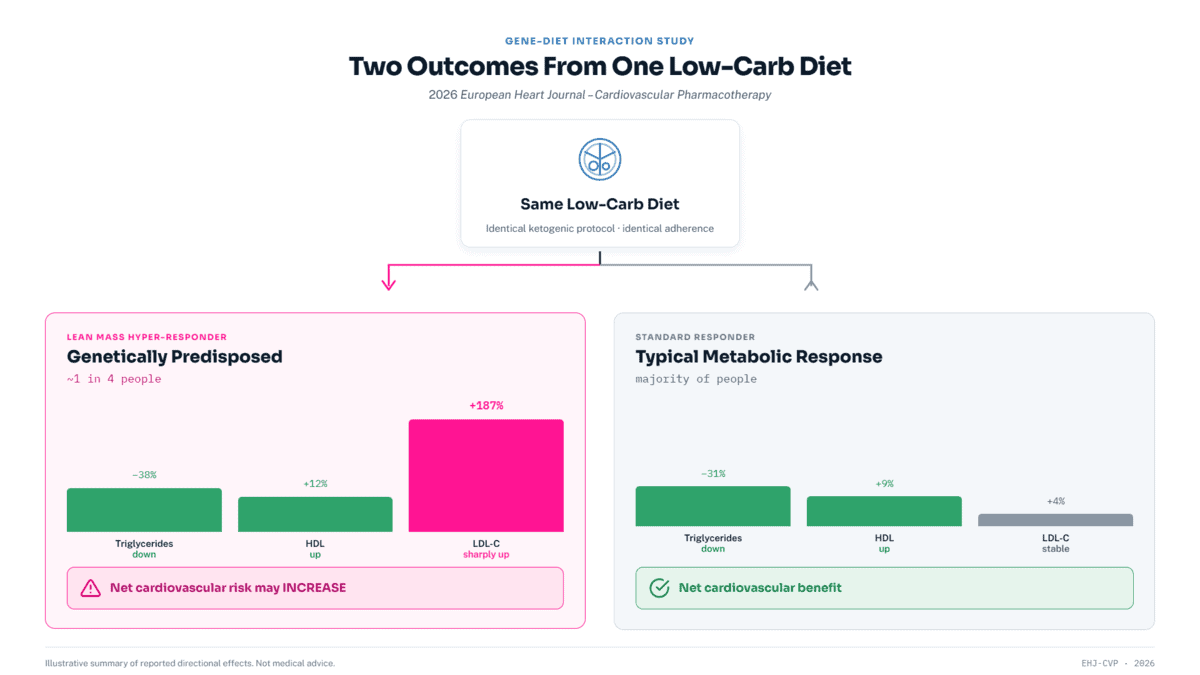
The research was published in the European Heart Journal Cardiovascular Pharmacotherapy, a peer-reviewed journal of the European Society of Cardiology, indexed in PubMed, highlighted by ScienceDaily on August 25, 2026.
The core finding. A low-carb diet may raise LDL cholesterol much more sharply in people who are genetically predisposed to high cholesterol, particularly when they consume lots of saturated fat. The findings could help explain why people following seemingly similar diets get very different cholesterol results.
Why this matters for millions. At an estimated 40–60 million Americans currently following low-carb or ketogenic diets, the question “what does keto do to my cholesterol?” is one of the most searched dietary health queries of 2026. The answer was previously “it depends”, with no clear explanation for why it depended. The 2026 study answers: it depends on your genetics.
The genetic basis. The study identified that people carrying genetic variants which impair LDL clearance from the bloodstream experience disproportionately large LDL increases on high-fat, low-carb eating patterns, specifically when that fat is predominantly saturated. Their genetic baseline creates a vulnerability that saturated fat amplifies dramatically.
The paradox at the heart of keto. Low-carb diets consistently produce two genuinely beneficial cardiovascular effects: lower triglycerides and higher HDL (“good cholesterol”). For most people, these improvements more than offset any LDL change. But for people with genetic LDL hypersensitivity, the LDL elevation may be so extreme, rising from borderline to severely elevated, that it overwhelms the triglyceride and HDL benefits, increasing net cardiovascular risk despite improved metabolic markers.
The affected population. Familial hypercholesterolemia (FH), the most serious form of genetic LDL elevation, affects approximately 1 in 250 people severely. But broader polygenic predisposition to LDL elevation from saturated fat affects a substantially larger proportion: an estimated 20–25% of the population. Approximately 1 in 4 low-carb dieters may experience this genetic cholesterol vulnerability to varying degrees.
Study limitation — important context. The study is an association study, it documents the gene-diet interaction but does not provide a definitive clinical threshold for every population. Individual responses vary substantially based on specific genetic variants, degree of carbohydrate restriction, composition of dietary fat, exercise habits, and other metabolic factors. This guidance is probabilistic, not deterministic.
How Low-Carb Diet and Cholesterol Interact — The Biology Explained
Why low-carb diets typically improve some cholesterol markers.
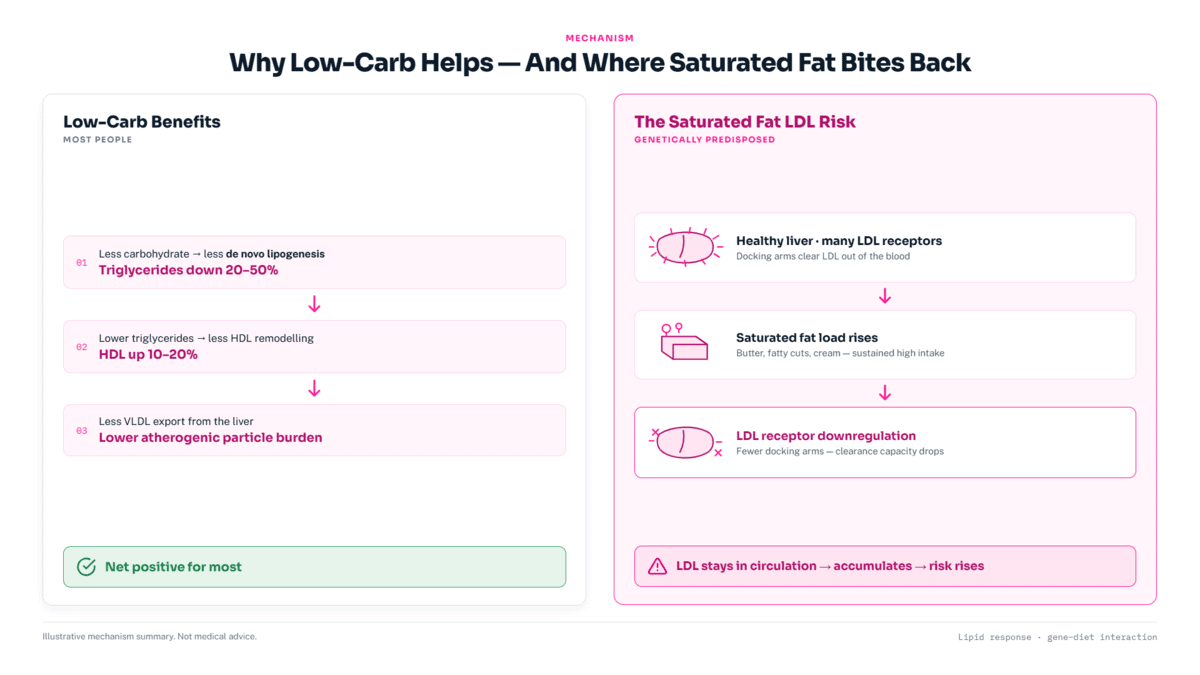
Removing dietary carbohydrates produces three beneficial lipid effects through related mechanisms:
- Triglycerides fall. The liver synthesizes triglycerides primarily from excess dietary carbohydrate through de novo lipogenesis (fat manufacturing). On a low-carb diet, this pathway is dramatically reduced. Most people see triglyceride reductions of 20–50% within weeks, a genuine cardiovascular benefit, as elevated triglycerides are an independent cardiovascular risk factor.
- HDL rises. High triglycerides typically suppress HDL production, as triglycerides fall, HDL cholesterol typically rises 10–20%. Higher HDL is associated with reduced cardiovascular risk in large observational studies.
- VLDL particles decrease. The liver exports fewer VLDL (very low-density lipoprotein) particles when triglyceride production falls, reducing the overall atherogenic particle burden for most people.
Why LDL rises in genetically predisposed people — the saturated fat mechanism.
On a typical ketogenic diet, fat replaces carbohydrates as the primary energy source. For most people, this means a significant increase in saturated fat intake from sources like butter, bacon, full-fat dairy, coconut oil, and fatty processed meats.
Saturated fat has a specific biochemical effect on the liver: it downregulates LDL receptor expression. LDL receptors are the liver’s primary mechanism for removing LDL particles from the bloodstream, pulling them out of circulation and breaking them down. When saturated fat reduces LDL receptor density, LDL remains in circulation longer and accumulates to higher concentrations.
The genetic amplification mechanism.
In people with genetic variants that already impair LDL receptor function, saturated fat’s effect on LDL receptor downregulation is dramatically amplified:
- Familial hypercholesterolemia (FH) is caused by mutations in the LDL receptor gene, ApoB gene, or PCSK9 gene, resulting in LDL receptors that already work at 50% or less of normal capacity. Adding saturated fat’s receptor-downregulating effect to an already impaired receptor pushes LDL clearance toward near-zero, producing extreme LDL elevation
- APOE ε4 carriers have a variant that makes LDL particles bind less effectively to LDL receptors, the same gene variant that is also the strongest genetic risk factor for Alzheimer’s disease (documented in BillboardHealth’s brain inflammation research)
- High polygenic LDL risk scorers carry combinations of common variants that each modestly reduce LDL receptor efficiency or increase LDL production, cumulatively producing significant saturation fat hypersensitivity
The low-carb diet and cholesterol relationship is not a simple cause-and-effect, it is a gene-diet interaction, where the same dietary change produces completely opposite cardiovascular outcomes depending on a person’s inherited LDL metabolism.
The Lean Mass Hyper-Responder (LMHR) phenomenon. Some lean, metabolically healthy adults on keto develop very high LDL (above 200 mg/dL, sometimes above 300 mg/dL) while simultaneously having very low triglycerides and very high HDL. One hypothesis: lean individuals restricting carbohydrates cause the liver to increase VLDL export to deliver fatty acids to energy-starved peripheral tissues, as VLDL converts to LDL in circulation, LDL rises dramatically. Whether LMHR represents genuine cardiovascular risk (given the favorable triglyceride and HDL context) or benign physiological adaptation remains actively debated in the research community. The 2026 finding suggests genetic profile is the critical distinguishing variable.
Low-Carb Diet and Cholesterol: Who Is at Risk of a Dangerous LDL Spike?
The highest-risk population profiles, get tested before starting a low-carb diet if any of these apply:
Familial Hypercholesterolemia (FH)
The most critical high-risk group. FH mutations in the LDL receptor, ApoB, or PCSK9 genes result in LDL receptors that function at 50% or less of normal, or in some cases, near-zero. People with FH already have LDL levels 2–3× normal; adding saturated fat’s receptor-downregulating effect can push LDL to catastrophic levels (400–600 mg/dL or higher). FH affects approximately 1 in 250 people but is severely underdiagnosed, most of the estimated 34 million Americans with FH don’t know it. Tell-tale signs: LDL consistently above 190 mg/dL, family history of heart attack before 55 (men) or 65 (women), or xanthomas (cholesterol deposits in tendons or skin).
APOE ε4 Carriers
The APOE ε4 allele impairs LDL clearance and makes carriers especially sensitive to dietary saturated fat’s LDL-raising effect. Approximately 25% of the population carries at least one ε4 allele; approximately 2–3% carries two (ε4/ε4 homozygotes, who face dramatically amplified risk). APOE genotype is identifiable through widely available consumer genetic tests.
Elevated Lp(a) Carriers
People with high Lp(a), as covered in BillboardHealth’s Lp(a) article, carry an additional LDL-like particle that standard LDL tests may undercount. On a low-carb diet, both LDL and Lp(a) may rise simultaneously (Lp(a) is largely diet-insensitive but rises modestly in some individuals on high-fat diets), creating compounded cardiovascular risk not captured by standard LDL testing. Lp(a) testing is recommended at least once in a lifetime for any adult, especially before dietary interventions expected to change lipid profiles.
High Polygenic LDL Risk Score
Many people carry combinations of common genetic variants that each modestly impair LDL clearance or increase LDL production. The cumulative polygenic effect can produce significant LDL hypersensitivity to saturated fat without meeting the FH threshold. Polygenic cardiovascular risk panels are increasingly available through clinical genetics services and some consumer testing platforms.
Personal History Risk Indicators (Without Genetic Testing)
Even without formal genetic testing, these clinical signs suggest elevated genetic LDL risk:
- LDL above 160 mg/dL before starting any dietary changes
- Family history of heart attack or stroke before age 55 (men) or 65 (women)
- Personal history of cardiovascular disease, heart attack, or stroke
- Prior statin use for high cholesterol
- LDL that has historically been elevated despite healthy diet and exercise
Low-Carb Diet and Cholesterol Safety: How to Test Your Genetic Risk Before Starting Keto
Step 1 — Standard Fasting Lipid Panel (Required for Everyone)
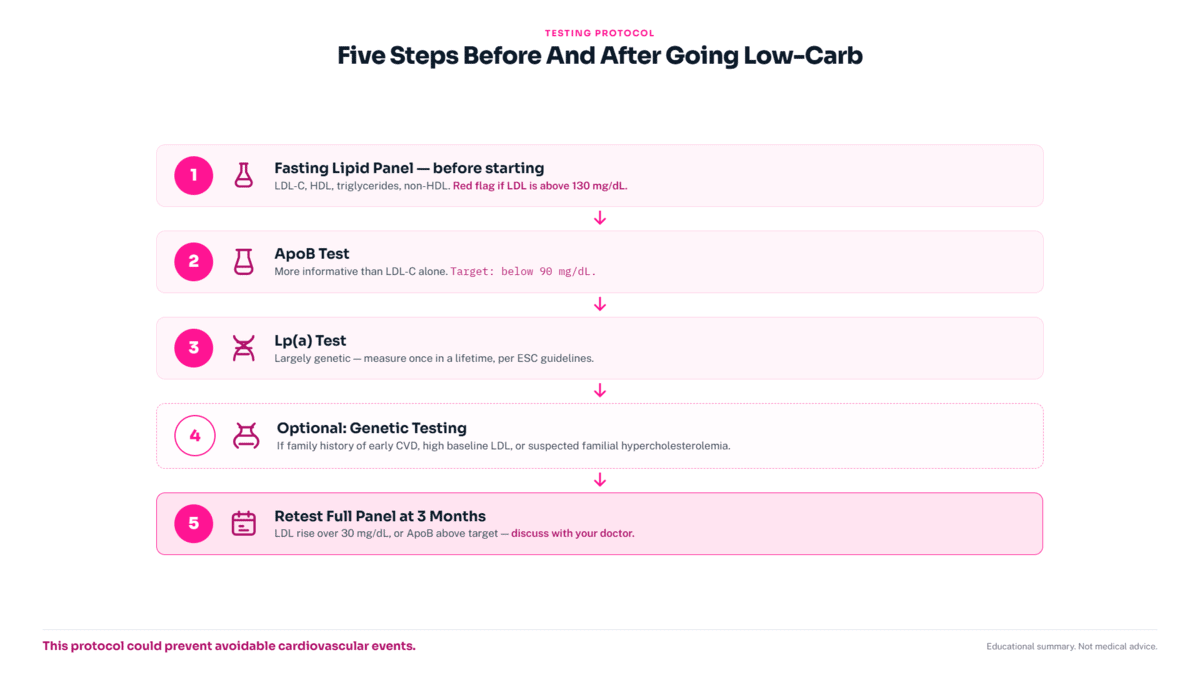
Request before starting any low-carb diet: total cholesterol, LDL-C, HDL-C, triglycerides, and non-HDL cholesterol. If LDL-C is above 130 mg/dL before starting, discuss the 2026 European Heart Journal findings with your GP before proceeding. This establishes the baseline that will allow meaningful comparison at 3 months.
Step 2 — ApoB Measurement (Strongly Recommended)
ApoB (apolipoprotein B) is a superior cardiovascular risk marker to LDL-C for people on low-carb diets, it counts every atherogenic particle (LDL + VLDL + IDL + Lp(a)) regardless of their cholesterol content. Low-carb diets can lower LDL-C while raising LDL particle number (captured by ApoB), making standard LDL-C a potentially misleading measure in either direction.
Target ApoB: below 90 mg/dL for most adults; below 70 mg/dL for people with existing cardiovascular disease or diabetes.
Step 3 — Lp(a) Testing (Once Per Lifetime)
Per European Society of Cardiology guidelines, Lp(a) should be measured at least once in every adult’s lifetime, particularly before major dietary interventions expected to change the lipid profile. Elevated Lp(a) combined with a low-carb LDL spike is a compounded cardiovascular risk combination requiring medical discussion. This is a separate test from the standard lipid panel, specifically request it by name.
Step 4 — Optional Genetic Testing (For High-Risk Individuals)
Priority indications: family history of early cardiovascular disease; baseline LDL above 160 mg/dL; suspected FH; prior statin use; personal history of cardiovascular events. Consumer genetic tests (23andMe with health reports, AncestryDNA) identify APOE genotype. Clinically ordered polygenic cardiovascular risk panels provide a more comprehensive LDL polygenic risk score.
Step 5 — Retest the Full Panel at 3 Months
After starting the low-carb diet: retest fasting lipid panel + ApoB at 3 months. Key thresholds that warrant immediate physician discussion:
- LDL-C rise of more than 30 mg/dL from baseline
- ApoB rise above 90 mg/dL (or above 70 mg/dL for high-risk individuals)
- Total cholesterol rise above 200 mg/dL from previously lower baseline
If none of these occur: the low-carb diet is likely safe to continue with annual monitoring.
What the Full Low-Carb Diet and Cholesterol Evidence Shows
For most metabolically healthy adults without genetic LDL risk: The complete low-carb diet cholesterol profile is net cardiovascular positive:
| Lipid Marker | Typical Low-Carb Effect | Cardiovascular Significance |
| Triglycerides | Reduce 20–50% | Major independent cardiovascular risk reduction |
| HDL cholesterol | Rise 10–20% | Protective, reduced cardiovascular risk |
| LDL cholesterol | Variable: may rise, fall, or hold | The key genetic variable |
| ApoB | Variable — must monitor | More important than LDL-C alone |
| Blood pressure | Typically improves | Reduced cardiac workload |
| Fasting insulin | Typically reduces | Improved insulin sensitivity |
| HbA1c | Typically improves in diabetics | Major glycemic benefit |
For people with genetic LDL risk: The LDL elevation may substantially outweigh the triglyceride and HDL benefits, especially if the LDL rise is large and ApoB rises with it.
Why this doesn’t mean everyone should avoid low-carb diets. The 2026 study’s most important message for public health communication is not that low-carb diets are dangerous, it is that they require individualized genetic and lipid assessment before and during use. The full-fat dairy research similarly found population-level safety with individual variation, the theme of 2026 nutrition science is precision, not universal prohibition.
For type 2 diabetes specifically: low-carb diets dramatically improve blood sugar control, reduce HbA1c, and reduce medication requirements for many patients, metabolic benefits that are genuinely transformative. The 2026 cholesterol finding adds an essential caveat: get ApoB and Lp(a) tested before starting, and retest at 3 months. The diabetic kidney disease article documented that which medication you use matters; the same precision principle applies to which dietary approach is optimal for a given genetic profile.
The protein intake research found that high-protein low-carb diets carry both protein excess risks and, for genetically predisposed people, the cholesterol risks documented here. For people with genetic LDL sensitivity, a plant-forward protein approach simultaneously addresses both concerns, connecting to the plant-based diet weight loss study that documented automatic calorie reduction alongside gut microbiome benefits without any saturated fat LDL risk.
What to Do If Your LDL Spiked on Low-Carb
Option 1 — Modify the Fat Profile First (Most Effective Adjustment)
The most impactful and least disruptive change: replace saturated fat sources with monounsaturated and polyunsaturated fats while maintaining carbohydrate restriction.
Replace these saturated fat sources:
- Butter → extra virgin olive oil
- Bacon → salmon, sardines, or mackerel
- Coconut oil → avocado oil or macadamia oil
- Full-fat hard cheese → small amounts of softer cheese with avocado
- Processed fatty meats → walnuts, almonds, or Brazil nuts
This switch maintains low carbohydrate intake while dramatically reducing the saturated fat that downregulates LDL receptors. For many genetically predisposed individuals, this modification alone stabilizes or reduces LDL while preserving all the metabolic benefits.
Option 2 — Shift to Mediterranean-Style Low-Carb
The Mediterranean diet is naturally moderate-to-low in refined carbohydrates while emphasizing olive oil, fatty fish, nuts, legumes, and vegetables, achieving most of keto’s metabolic benefits without the saturated fat volume. For people with genetic LDL sensitivity, Mediterranean low-carb is the safest long-term dietary approach. The flavanol research, 500mg daily from dark chocolate, berries, and cocoa, provides cardiovascular protection that is especially important for those managing LDL risks. Beetroot juice dietary nitrate supports blood pressure and vascular function as part of the Mediterranean-style protocol.
Option 3 — Plant-Forward Low-Carb
For people with the highest genetic LDL sensitivity: low-carbohydrate eating with predominantly plant protein and fat sources (tofu, tempeh, nuts, seeds, avocado, olive oil, legumes) provides metabolic benefits without any saturated fat risk. The plant-based energy density principle from the JAMA 2026 study produces automatic calorie deficit while simultaneously eliminating the dietary saturated fat that triggers genetic LDL hypersensitivity.
Option 4 — Reintroduce Moderate Complex Carbohydrates
If LDL remains elevated despite fat source modification: consider adding complex carbohydrate sources (oats, legumes, root vegetables, whole grains) that actively lower LDL through soluble fiber and beta-glucan mechanisms, while replacing refined carbohydrates and processed food. This moves toward a Mediterranean or whole-food plant-forward approach.
Option 5 — Medical Management
If LDL-C exceeds 190 mg/dL on repeated testing, or if ApoB remains above 100 mg/dL despite dietary modification, discuss statin therapy or PCSK9 inhibitor therapy with your cardiologist. For people with FH or very high Lp(a), medication may be necessary regardless of dietary pattern. Never adjust statin or lipid medication without medical guidance.
The Cholesterol Numbers That Actually Matter on a Low-Carb Diet
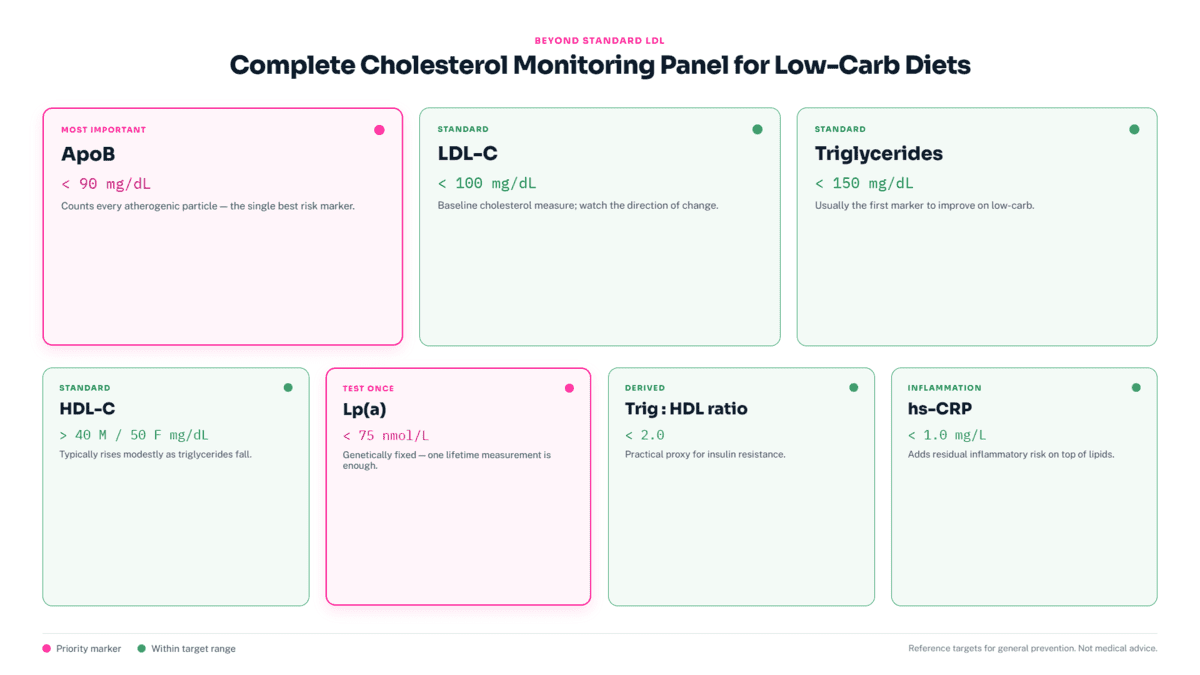
Most people monitor only total cholesterol and LDL-C, but these are insufficient for assessing low-carb cardiovascular safety. The complete monitoring panel:
| Marker | Why It Matters on Low-Carb | Target | How to Get It |
| ApoB | Counts total atherogenic particles — more sensitive than LDL-C | Below 90 mg/dL (70 for high-risk) | Standard blood test |
| LDL-C | Standard LDL — can mislead on low-carb in either direction | Below 100 mg/dL (70 for high-risk) | Standard lipid panel |
| Triglycerides | Key metabolic benefit — should fall significantly | Below 150; ideally below 100 | Standard lipid panel |
| HDL-C | Should rise — indicates metabolic improvement | Above 40 (men), 50 (women) mg/dL | Standard lipid panel |
| Lp(a) | Independent risk, not lowered by statins — test once | Below 75 nmol/L | Separate specific test |
| Triglyceride:HDL ratio | Best predictor of insulin resistance | Below 2.0 | Calculate from panel |
| hs-CRP | Systemic inflammation — should improve on low-carb | Below 1.0 mg/L | Additional blood test |
The clinical interpretation principle. A person whose LDL rises from 120 to 160 mg/dL but whose triglycerides fall from 200 to 80 mg/dL, HDL rises from 40 to 60 mg/dL, and ApoB stays below 90 mg/dL may have a net cardiovascular benefit from low-carb eating. A person whose LDL rises from 130 to 220 mg/dL with rising ApoB, elevated Lp(a), and a family history of FH has a clear warning requiring medical attention, regardless of triglyceride improvement.
The Lp(a) article documented that Lp(a) is the single most underappreciated cardiovascular risk marker, “the hidden heart risk”, and its combination with a low-carb-induced LDL spike represents one of the highest-risk combinations in dietary medicine. Biological aging research shows that elevated LDL and cardiovascular risk accelerate the DunedinPACE biological aging clock making cardiovascular risk management a longevity strategy, not just a heart health concern.
FAQs About Low-Carb Diet and Cholesterol
Does a low-carb diet and cholesterol always interact badly? No, for most metabolically healthy adults, low-carb diets produce net cardiovascular benefit: lower triglycerides (20–50%), higher HDL (10–20%), improved insulin sensitivity. The adverse LDL interaction is specific to people with genetic impairment of LDL clearance, an estimated 20–25% of the population.
Why did my LDL go up so much on keto? Saturated fat (which increases on typical keto) downregulates hepatic LDL receptor expression, reducing the liver’s ability to clear LDL from circulation. In people with genetic LDL receptor impairment (FH, APOE ε4, polygenic LDL risk), this effect is dramatically amplified. Check ApoB and Lp(a); modify fat sources; discuss with your doctor.
Should I stop my low-carb diet if my LDL rose? Not necessarily, and not without medical guidance. The appropriate response depends on the magnitude of rise, ApoB, Lp(a), and cardiovascular risk factors. Modest rises with favorable other markers may not require stopping. Significant rises with elevated ApoB, high Lp(a), or FH indicators require medical attention.
What genetic test tells me if low-carb will raise my cholesterol? Consumer tests (23andMe) identify APOE genotype. Clinical polygenic cardiovascular risk panels provide LDL polygenic scores. A baseline ApoB + Lp(a) test provides practical risk stratification without formal genetic testing.
Is ApoB or LDL-C more important on a low-carb diet? ApoB, it counts every atherogenic particle regardless of cholesterol content, and better reflects cardiovascular risk when LDL-C and particle number diverge (common on low-carb diets). Target below 90 mg/dL.
Can I do low-carb if I have familial hypercholesterolemia? With modifications and close supervision: yes. Shift to Mediterranean-style low-carb (olive oil, avocado, fatty fish, nuts, not butter and bacon). Monitor LDL every 3 months. Statin or PCSK9 inhibitor therapy may still be required.
Does the type of fat on keto matter for cholesterol? Critically. Saturated fat → LDL receptor downregulation → LDL rises. Monounsaturated fat (olive oil, avocado) → neutral or mildly LDL-lowering. Polyunsaturated fat (fatty fish, walnuts) → actively LDL-lowering. Replacing saturated with monounsaturated/polyunsaturated on low-carb dramatically attenuates LDL elevation in genetically predisposed individuals.
What is the LMHR phenomenon? Lean Mass Hyper-Responder: lean, metabolically healthy keto dieters who develop very high LDL with very low triglycerides and high HDL. Cause unclear but may involve increased hepatic VLDL export on low-glucose intake. Whether this represents genuine cardiovascular risk depends significantly on ApoB level and genetic profile.
Should I get genetics tested before starting keto? Priority indications: family history of early cardiovascular disease, LDL above 160 mg/dL at baseline, suspected FH, prior statin use. For others: baseline ApoB + Lp(a) + lipid panel before starting, retest at 3 months, a practical safety net without formal genetic testing.
Is Mediterranean diet safer than keto for people with high cholesterol? For people with genetic LDL sensitivity, yes, Mediterranean achieves most of keto’s metabolic benefits (lower triglycerides, improved insulin sensitivity, weight management) without the saturated fat volume that triggers genetic LDL hypersensitivity. Multiple large RCTs confirm cardiovascular event reduction in high-risk populations on Mediterranean diet.
This article is informational and does not replace medical advice. Discuss any significant cholesterol changes or dietary modifications with your GP or cardiologist. Do not stop statin or lipid medication without physician guidance.