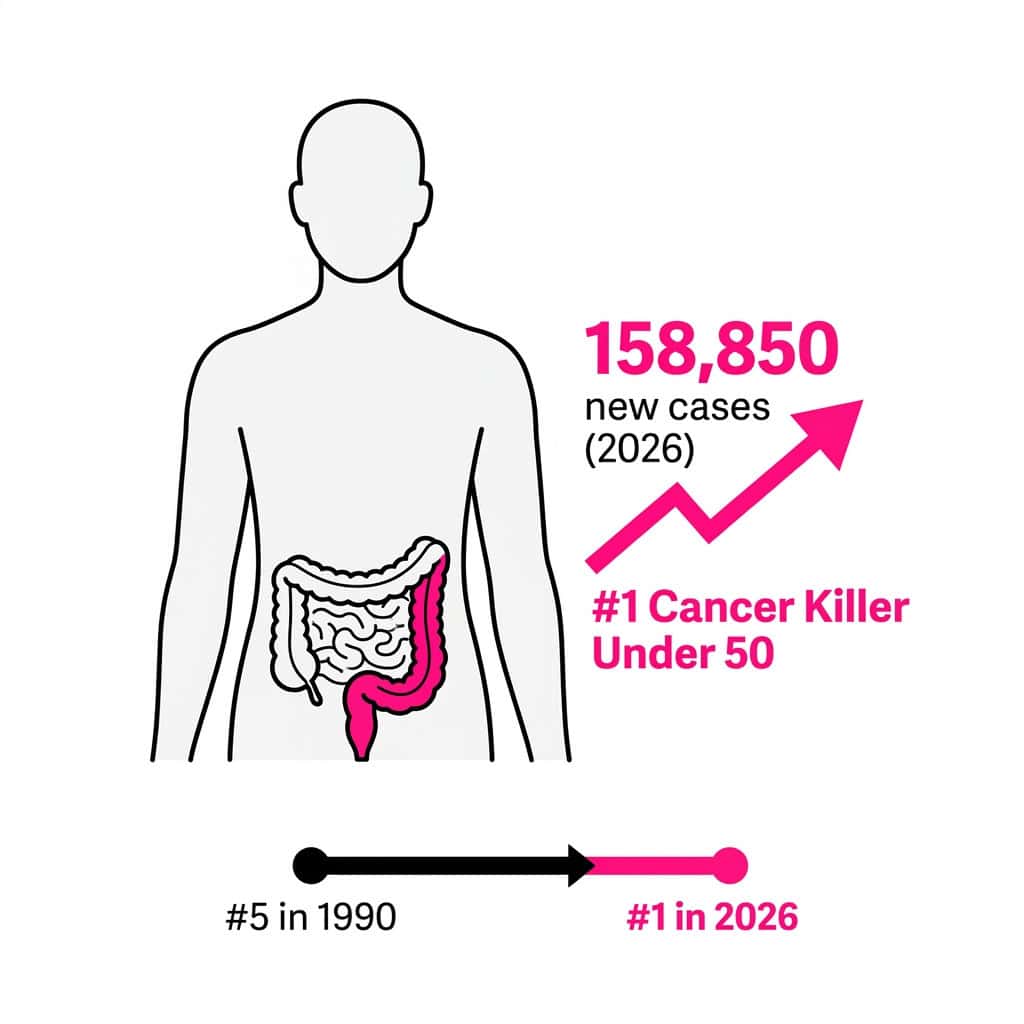
Colorectal cancer in young adults has reached a public health crisis point, three major 2026 studies published between March and July confirm it is now the number one cause of cancer-related death among people under 50 in the United States, rising at 3% per year in the 20–49 age group at a time when virtually every other major cancer in this demographic is declining. In 2026 alone, an estimated 158,850 new cases of colorectal cancer will be diagnosed and 55,230 people will die from the disease. If you are under 50 and have dismissed symptoms like rectal bleeding, persistent bowel changes, or unexplained fatigue as “probably nothing”, this article may be the most important one you read this year.
This is a YMYL health article covering serious medical conditions. The information is for educational purposes only and does not replace evaluation by a qualified healthcare provider. If you are experiencing the warning signs described here, please seek medical attention.
The 2026 Evidence: Why Colorectal Cancer in Young Adults Has Become a Public Health Crisis
The data that emerged in 2026 represents the most alarming single generational shift in cancer epidemiology in decades.
The scale of the crisis. In 2026, an estimated 158,850 new cases of colorectal cancer will be diagnosed in the United States, and 55,230 people will die from the disease. These numbers include a rising proportion of people under 50, a demographic that should be seeing declining cancer mortality alongside every other major cancer type. Instead, colorectal cancer incidence in adults under 65 is rising by 3% per year in the 20–49 age group and 0.4% per year in the 50–64 age group, driven by increases in distal colon and rectal cancer specifically.
From fifth to first in one generation. A landmark JAMA study published in 2026 quantified the full magnitude of this shift: while overall cancer mortality decreased by 44% in people younger than 50 between 1990 and 2023, colorectal cancer increased by 1.1% each year since 2005, going from the fifth leading cause of cancer deaths in the under-50 age group to the first. Fifth to first. In one generation. While virtually everything else improved.
Adults under 65 are nearly half of all new cases. Adults 65 and younger now comprise approximately 45% of all new colorectal cancer cases, up from 27% in 1995. This is not a young adult disease that is emerging; it is a population-wide disease that is systematically shifting younger.
The Swiss longitudinal confirmation. Researchers at the University of Geneva and Geneva University Hospitals published a major analysis in the European Journal of Cancer, examining nearly 100,000 colorectal cancer cases over a 40-year period. The findings confirmed: diagnoses in the under-50 age group have been steadily rising for decades, and younger patients are also more likely to receive a late-stage diagnosis, the combination that produces the worst outcomes.
The demographic universality. Colorectal cancer incidence among adults younger than 50 rose between 2013 and 2022 across all racial and ethnic groups, and incidence is 32% higher in men than in women overall.
As Rebecca Siegel, senior scientific director of surveillance research at the American Cancer Society, stated in the March 2026 CA: A Cancer Journal for Clinicians report: “After decades of progress, the risk of dying from colorectal cancer is climbing in younger generations of men and women, confirming a real uptick in disease because of something we’re doing or some other exposure.”
Colorectal Cancer in Young Adults: The Warning Signs That Are Being Dismissed and Misdiagnosed
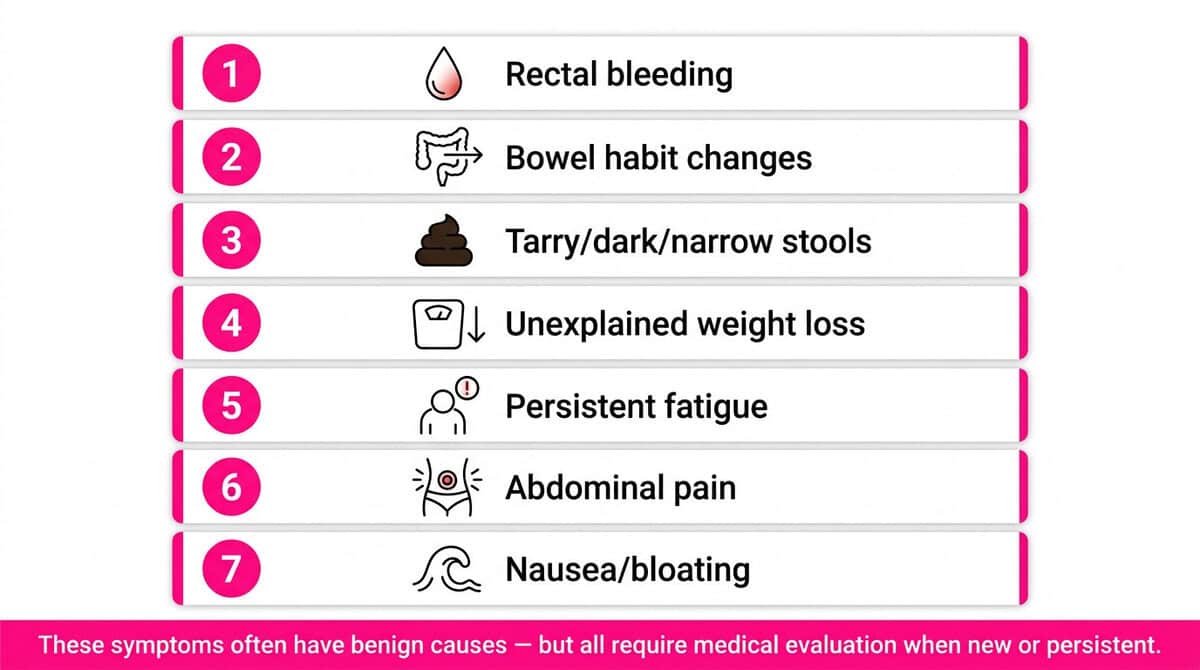
The colorectal cancer in young adults crisis is compounded by a dangerous diagnostic gap, the very symptoms that should trigger investigation are being routinely dismissed as hemorrhoids, IBS, dietary intolerance, or anxiety in patients under 50. In younger patients, bleeding is frequently dismissed as hemorrhoids and can go undiagnosed for many months before anyone considers cancer. Similarly, stomach cramps might be attributed to diet, food intolerances, irritable bowel syndrome, or even anxiety.
The problem is not that younger patients experience different symptoms. It is that those symptoms are less likely to be taken seriously when they occur in a 32-year-old versus a 62-year-old. Sometimes the first sign taken seriously is obstruction, a tumor that has grown large enough to block the intestine.
Every one of the following warning signs deserves medical evaluation when it is new, persistent (lasting more than 2 weeks), or recurring. They do not mean you have cancer, most of the time they do not. But they must not be dismissed.
Warning Sign #1 — Rectal Bleeding or Blood in Stool
Recurring rectal bleeding is one of the most important warning signs, and the most consistently misattributed. Bright red blood on toilet paper or in the toilet bowl is most commonly caused by hemorrhoids or anal fissures, but these benign causes should be confirmed, not assumed. Rectal bleeding in the absence of known, examined hemorrhoids; bleeding that persists or recurs over weeks; and dark red blood mixed throughout the stool (rather than on the toilet paper surface) all require medical evaluation without delay.
Dark red or maroon blood mixed throughout the stool is particularly concerning and requires urgent assessment, it indicates bleeding higher in the colorectal tract rather than at the anal margin.
Warning Sign #2 — Persistent Changes in Bowel Habits
Persistent bowel changes lasting more than two weeks deserve attention. This includes new constipation, new diarrhea, alternating constipation and diarrhea that wasn’t present before, the persistent sensation of incomplete emptying after bowel movements, or stools that are consistently narrower than usual, the so-called “pencil stools” caused by a tumor partially obstructing the bowel lumen. Any of these patterns that is new, unexplained, and persistent warrants evaluation.
Warning Sign #3 — Dark, Tarry, or Narrow Stools
Black, tarry stools (medically called melena) indicate bleeding occurring higher in the digestive tract, the colon or above, rather than at the anal margin. Melena typically has a distinctive appearance: extremely dark, almost black, with a tar-like consistency and often a distinctive odor. This is a red-flag symptom requiring same-day or next-day medical evaluation regardless of age. Do not wait to see if it resolves.
Warning Sign #4 — Unexplained Weight Loss
Losing 10 or more pounds over six months without trying, particularly when accompanied by any of the bowel symptoms above, is a significant red flag for colorectal cancer or another serious gastrointestinal condition. Cancer-related weight loss occurs through metabolic reprogramming driven by the tumor and reduced nutrient absorption from affected bowel tissue.
Warning Sign #5 — Persistent Fatigue
This is the warning sign most frequently attributed to lifestyle factors, stress, or iron deficiency in young adults, without investigating the source of the iron deficiency. Chronic, low-level rectal bleeding from a colorectal tumor may be entirely invisible to the naked eye (occult bleeding) while progressively depleting iron stores and causing iron-deficiency anemia. Fatigue, breathlessness on mild exertion, and pallor are classic presentations of this anemia, and in young adults, these are sometimes treated with iron supplements for months without anyone investigating why the iron levels keep falling.
If you have been prescribed iron supplementation for unexplained iron-deficiency anemia without a clear identified cause, ask about a fecal occult blood test.
Warning Sign #6 — Persistent Abdominal Pain or Cramping
New, persistent abdominal pain, particularly in the lower left quadrant (descending colon) or lower right quadrant (ascending colon), that does not resolve within two weeks and has no obvious dietary explanation requires medical evaluation. This pain may be cramping or intermittent, and may worsen before bowel movements. The critical distinction from dietary intolerance is persistence: food-related symptoms typically resolve when the triggering food is avoided; colorectal tumor-related symptoms do not.
Warning Sign #7 — Nausea, Vomiting, or Feeling Bloated
Persistent nausea, bloating, or episodes of vomiting in conjunction with other GI symptoms may indicate partial or complete bowel obstruction from an advanced tumor. This is the most common way that colorectal cancer first presents dramatically in young adults who have had earlier symptoms dismissed for months, a partial obstruction becomes a complete one, creating an acute surgical emergency. Do not let any of the above symptoms progress to this point.
The Diagnostic Delay Crisis: Why Young Adults Are Diagnosed Too Late
The warning signs listed above are not subtle. But they are consistently dismissed in young patients, and the resulting delays cost lives.
The hemorrhoid assumption. The single most common diagnostic error in young-adult colorectal cancer is rectal bleeding attributed to hemorrhoids without any physical examination of the bowel. Hemorrhoids are far more common than colorectal cancer in young adults, making the reflex diagnosis understandable, but dangerous when it becomes a substitute for investigation. Colorectal surgeons at Stanford Medicine have specifically identified this pattern: rectal bleeding in younger adults is disproportionately likely to go uninvestigated for months before cancer is considered.
The IBS misdiagnosis. Altered bowel habits, abdominal cramping, and bloating are the cardinal symptoms of irritable bowel syndrome, which is far more common than colorectal cancer in adults under 40. But an IBS diagnosis should be a diagnosis of exclusion, made after more serious conditions have been ruled out, not a reflexive label applied to bowel symptoms in a young adult without investigation.
The “you’re too young” assumption. Both patients and clinicians carry an unconscious bias that colorectal cancer is a disease of older adults. Today, 1 in 5 people diagnosed with colorectal cancer is under age 55, and 1 in 25 men and 1 in 26 women will develop colorectal cancer in their lifetime. The “too young for cancer” assumption directly contradicts these statistics.
What to do if your symptoms are dismissed. You are your own best medical advocate. Request a fecal immunochemical test (FIT) as a first-line, non-invasive investigation, it detects blood in stool with no preparation required. If the test is positive, a colonoscopy referral should follow regardless of age. If your doctor is reluctant to investigate recurring bowel symptoms, you are entitled to a second medical opinion. Say specifically: “I am aware that colorectal cancer is now the #1 cancer killer under 50. I have [symptoms] that have been present for [duration], and I would like a stool blood test as a starting point.”
Why Is Colorectal Cancer Rising in Young Adults? The 2026 Theories
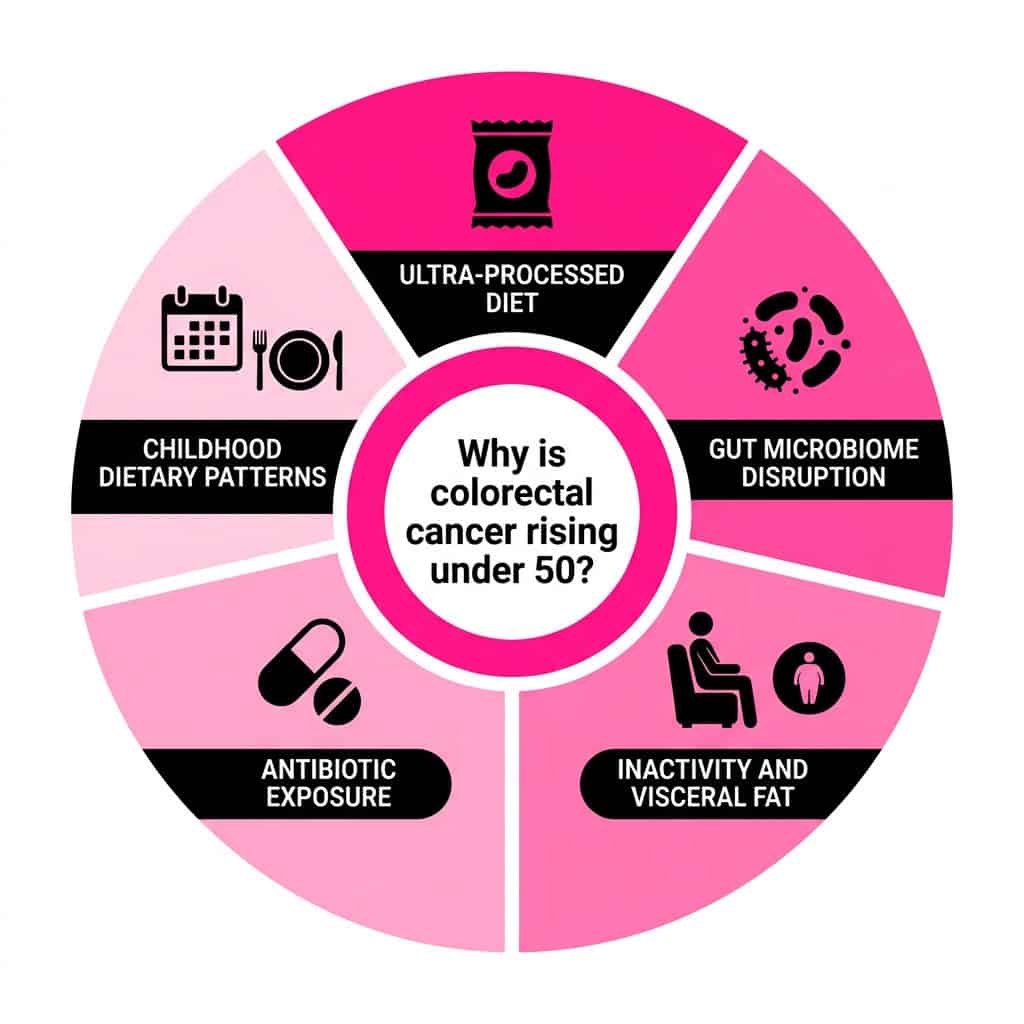
Researchers have not identified a single definitive cause, several exposures are under active investigation, none yet proven as the primary driver. But the converging evidence points to a cluster of overlapping, largely dietary and lifestyle factors.
Theory #1 — Ultra-Processed Food Consumption
The rise in early-onset colorectal cancer directly parallels the rise of ultra-processed food consumption since the 1980s in Western countries, the formative dietary years of today’s 30–50-year-olds. The WHO classifies processed meats (hot dogs, deli meats, sausages, bacon) as Group 1 carcinogens, proven causes of colorectal cancer. Red meat at high consumption is a Group 2A probable carcinogen. High heat processing of meats creates carcinogenic compounds (N-nitroso compounds, heterocyclic amines) that directly damage colorectal epithelial cells. The generation that grew up on fast food, processed snacks, and high-meat diets is now in the age range where those exposures are manifesting as cancer.
Theory #2 — Gut Microbiome Disruption
Some researchers believe changes to gut bacteria are central to the early-onset colorectal cancer story. Specific bacteria, particularly Fusobacterium nucleatum, Peptostreptococcus anaerobius, and certain Bacteroides fragilis strains, are now found consistently inside colorectal tumors and may actively promote tumor development. Gut microbiome disruption in the current generation has been driven by: antibiotic overuse from childhood onward, ultra-processed low-fiber diets that starve beneficial bacteria, artificial sweetener consumption that disrupts gut bacteria, sedentary lifestyle, and chronic stress.
Theory #3 — Sedentary Lifestyle and Obesity
Physical inactivity is an established independent colorectal cancer risk factor, reduced intestinal transit increases the contact time between the bowel lining and carcinogens in stool. The sedentary lifestyle data from the USC brain health study showed that passive behavior erodes multiple health outcomes simultaneously; colorectal cancer risk follows the same sedentary behavior pattern.
Visceral obesity, especially abdominal fat accumulation that increases with age, elevates insulin, IGF-1, and pro-inflammatory cytokines that stimulate colorectal epithelial cell proliferation. Type 2 diabetes shares multiple risk factors with colorectal cancer through this same insulin-resistance pathway, people with insulin resistance are at meaningfully higher colorectal cancer risk than those with normal glucose metabolism.
Theory #4 — Antibiotic Exposure History
Several studies have found elevated colorectal cancer risk in people with high historical antibiotic use, potentially through permanent alterations in gut microbiome composition that create conditions favorable to pro-oncogenic bacterial colonization. Millennials and Gen Z grew up in the era of peak antibiotic prescription in pediatric care, which may have permanently altered their gut microbiome composition in cancer-relevant ways.
Theory #5 — Childhood and Early-Adult Dietary Patterns
The 20–40-year latency between carcinogen exposure and detectable tumor development means that the colorectal cancer cases occurring in 30–45-year-olds today reflect dietary and environmental exposures from the 1980s and 1990s, the era of maximum fast food expansion, processed food proliferation, and dramatically reduced dietary fiber in Western diets. This generational dietary inheritance may be the single most important driver of the early-onset epidemic.
Colorectal Cancer Screening: What Young Adults Need to Know in 2026
When to start screening. The USPSTF and American Cancer Society updated their guidance specifically in response to the early-onset data: colorectal cancer screening now begins at age 45 for adults at average risk, reduced from 50 in previous guidelines. This is not a precaution; it is a response to a documented epidemiological shift.
If you have symptoms before 45: Do not wait for your routine screening age. Seek evaluation now. Symptoms are the clinical signal; age is a population-level guideline.
Screening tests available in 2026:
| Screening Method | How It Works | Frequency | Best For |
| Colonoscopy (gold standard) | Direct visual exam of entire colon; removes polyps during procedure | Every 10 years (average risk; normal findings) | Comprehensive detection and prevention |
| FIT (Fecal Immunochemical Test) | Non-invasive stool test for blood | Annually | First-line test; non-invasive; positive result requires colonoscopy |
| Stool DNA (Cologuard) | Detects blood AND abnormal DNA from polyps/tumors | Every 1–3 years | Higher sensitivity than FIT; positive requires colonoscopy |
| CT Colonography | Radiation-based imaging of colon | Every 5 years | Those unable to tolerate colonoscopy |
Who should begin screening before age 45:
- Anyone with a first-degree relative diagnosed with colorectal cancer before age 60: start 10 years before the relative’s diagnosis age, or at 40, whichever comes first
- Known Lynch syndrome or familial adenomatous polyposis (FAP) carriers: begin at age 20–25 with annual surveillance
- History of inflammatory bowel disease (Crohn’s or ulcerative colitis): begin 8 years after IBD onset
Why early detection is the difference between life and death. The 5-year survival rates by stage make the case for screening without any further argument needed:
| Stage | 5-Year Survival Rate |
| Stage I (localized) | 90%+ |
| Stage II (regional spread to bowel wall) | 72–83% |
| Stage III (spread to lymph nodes) | 42–83% |
| Stage IV (metastatic) | ~13% |
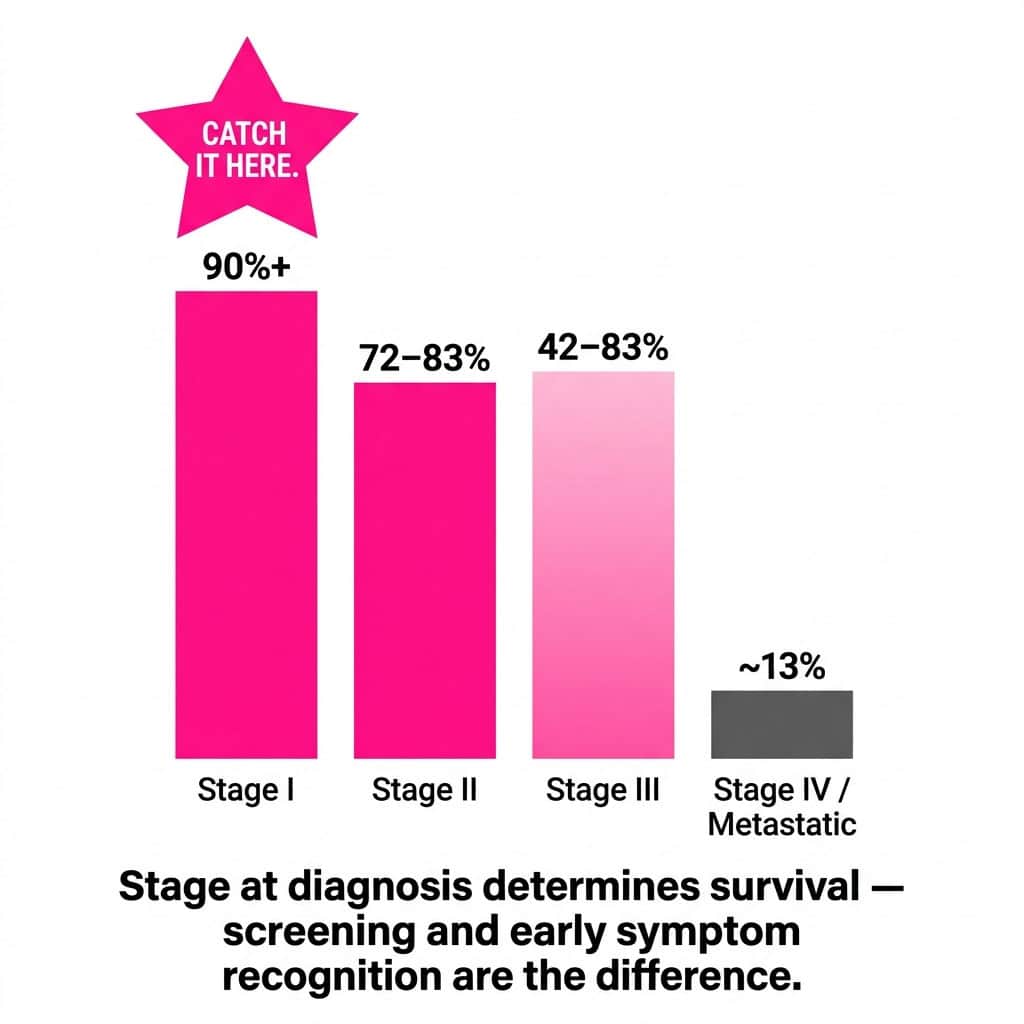
Early detection can dramatically improve treatment outcomes. The difference between a Stage I and Stage IV diagnosis is, in most cases, the difference between a curable procedure and a terminal prognosis.
Diet and Lifestyle Changes That Reduce Colorectal Cancer Risk
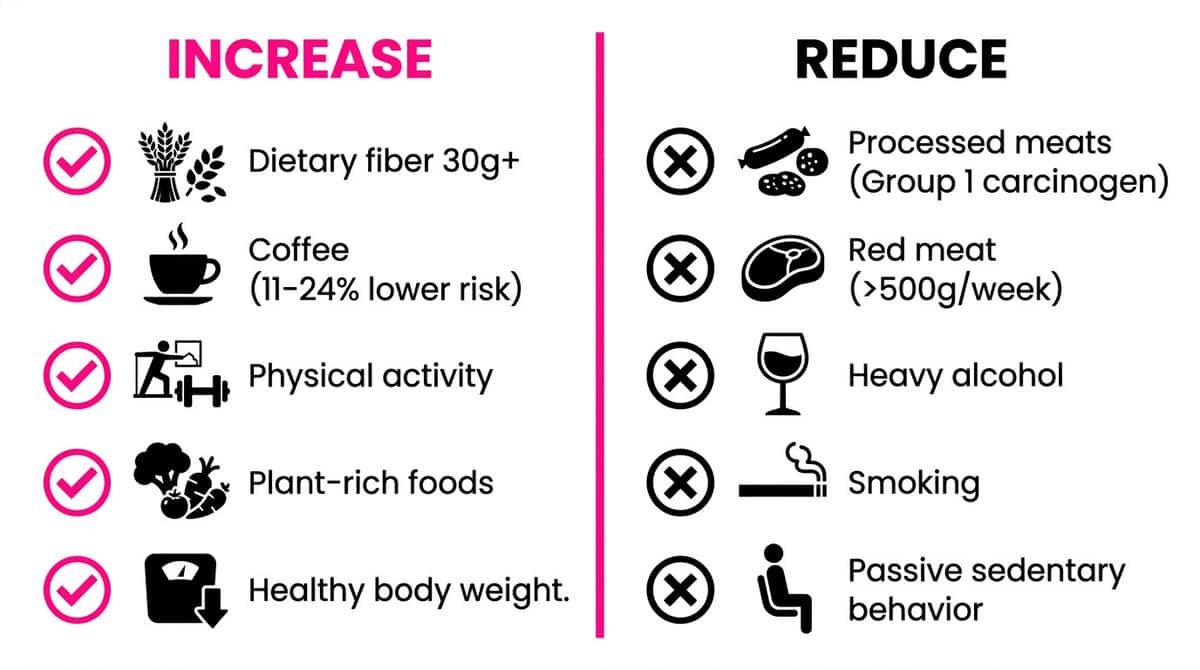
This is where the connection to the rest of BillboardHealth’s 2026 health research series becomes concrete, because the interventions that reduce colorectal cancer risk are the same interventions that the entire series has been documenting as beneficial for biological aging, brain health, metabolic health, and longevity.
High-fiber diet, the strongest dietary evidence. Dietary fiber reduces colorectal cancer risk by approximately 10–20% per 10g daily increase above baseline. The mechanisms are multiple: fiber speeds intestinal transit, reducing the contact time between the bowel lining and fecal carcinogens; fiber is fermented by gut bacteria into butyrate, a short-chain fatty acid that protects colonocytes from malignant transformation; fiber reduces bile acid concentration and secondary bile acid production (known promoters of colorectal cancer). Target: 30g or more of daily fiber from whole grains, legumes, vegetables, and fruit. Most Western adults consume 10–15g daily, less than half the protective target.
Limiting red and processed meat. The WHO’s Group 1 (proven carcinogen) classification of processed meats is the most definitive dietary cancer evidence available. Limit processed meats to occasional consumption; limit red meat to below 500g cooked per week. This single dietary change could substantially reduce colorectal cancer risk at the population level.
Coffee consumption. Coffee reduces colorectal cancer risk by 11–24% across multiple large studies, one of the most consistent single-food cancer prevention findings in nutritional epidemiology. Three to four cups of filtered coffee daily appears to capture most of the protective effect, through chlorogenic acid and caffeic acid anti-inflammatory mechanisms.
Regular physical exercise. Regular physical activity reduces colorectal cancer risk by approximately 24% compared to sedentary individuals, through multiple mechanisms: improved insulin sensitivity (reducing the mitogenic insulin/IGF-1 signal), lower visceral fat (reducing chronic inflammation), improved immune surveillance, and faster intestinal transit. The Harvard strength training longevity data that showed 27% lower neurological disease death is part of the same exercise-longevity evidence base as the colorectal cancer risk reduction.
Maintaining healthy weight. Obesity independently increases colorectal cancer risk by 30–70% through visceral fat-driven insulin, IGF-1, and inflammatory cytokine elevations. Every intervention that reduces visceral fat, strength training, diet, intermittent fasting, also reduces this cancer risk component.
Plant-rich dietary pattern. A plant-based dietary pattern rich in fiber, antioxidants, and anti-inflammatory polyphenols consistently shows lower colorectal cancer risk in large prospective studies. This is not about eliminating all animal products but about making plant foods the foundation of the daily diet. Flavanol-rich foods, dark chocolate, berries, tea, apples, contribute to the anti-inflammatory and antiproliferative protection that characterizes plant-heavy dietary patterns.
What to minimize or avoid:
- Heavy alcohol: each daily drink increases colorectal cancer risk by approximately 7%
- Smoking: independently increases colorectal cancer incidence and mortality
- Sedentary passive behavior: sitting without cognitive or physical engagement reduces intestinal transit, reduces immune surveillance, and increases inflammation — all cancer-promoting conditions
- Ultra-processed foods: the strongest population-level dietary risk factor for early-onset colorectal cancer based on current evidence
Aspirin, discuss with your doctor. Regular low-dose aspirin is associated with a significant reduction in colorectal cancer incidence and mortality in prospective studies. However, it also carries bleeding risks that require individualized risk-benefit assessment. This decision should always be made with a physician, do not self-prescribe aspirin for cancer prevention.
The Gut Microbiome and Colorectal Cancer: The Emerging Science
The gut microbiome’s role in overall health extends to colorectal cancer in ways that were not clearly understood a decade ago but are now actively studied.
Specific bacteria are consistently found inside colorectal tumors in higher concentrations than in healthy bowel tissue, Fusobacterium nucleatum and Peptostreptococcus anaerobius are the most studied. Whether these bacteria cause cancer, promote established cancer growth, or simply thrive in the tumor microenvironment is still under investigation, but their consistent presence has established gut microbiome composition as a genuine colorectal cancer research priority.
What is clear is that chronic gut microbiome dysbiosis, a state of reduced diversity and excess of potentially harmful bacterial populations, promotes the chronic intestinal inflammation that is a recognized driver of colorectal adenoma (polyp) and carcinoma development. The factors that cause dysbiosis, ultra-processed diets, antibiotic overuse, artificial sweeteners, reduced fiber intake, sedentary behavior, poor sleep, are precisely the factors associated with the early-onset colorectal cancer epidemic.
The protective factors for the gut microbiome overlap almost exactly with colorectal cancer protective factors: high fiber, fermented foods, plant-rich diet, physical exercise, and adequate sleep. Supporting gut microbiome diversity is not a separate strategy from colorectal cancer prevention, it is the same strategy at the cellular level.
When to See a Doctor Immediately — Red Flags Requiring Urgent Evaluation
Seek same-day or emergency evaluation for:
- Large amounts of bright red rectal bleeding (soaking a pad, continuous bleeding)
- Black, tarry stools (melena), indicating significant bleeding in the colon or above
- Severe abdominal pain with bloating and inability to pass stool or gas, possible bowel obstruction
- Rectal bleeding accompanied by dizziness, lightheadedness, or fainting, indicating significant blood loss
Book an urgent appointment within 1–2 weeks for:
- Any rectal bleeding without a clear, confirmed benign cause, even if hemorrhoids are suspected
- Any persistent change in bowel habits lasting more than 2 weeks
- Unexplained weight loss of 5+ pounds over 6 weeks
- Persistent fatigue alongside any bowel symptom
- New abdominal pain that doesn’t resolve within 2 weeks
- Unexplained iron-deficiency anemia without a confirmed cause
What to say at your appointment. Be direct and specific. “I am aware that colorectal cancer is now the number one cancer killer of adults under 50. I have [symptom] that has been present for [duration]. I would like to start with a fecal immunochemical test. If that is positive, I would like a referral for colonoscopy.” Being specific, and citing the 2026 data, significantly improves the chance of being taken seriously by a clinician who may be operating on an older mental model of who gets colorectal cancer.
The 90%+ survival rate at Stage I is the most important number in this article. Recognizing these symptoms and acting on them is not about causing alarm. It is about catching a curable cancer before it becomes an incurable one.
This article is for educational purposes only. Any symptoms described should be evaluated by a qualified healthcare provider. Do not use this article to self-diagnose.
FAQs About Colorectal Cancer in Young Adults
What are the earliest warning signs of colorectal cancer in young adults? Recurring rectal bleeding (even if attributed to hemorrhoids), persistent changes in bowel habits lasting more than 2 weeks, dark or tarry stools, pencil-thin stools, unexplained fatigue that may indicate occult blood loss and iron-deficiency anemia, unexplained weight loss of 10+ pounds over 6 months, and persistent abdominal cramping without a clear dietary cause.
Why is colorectal cancer rising in people under 50? The leading theories point to ultra-processed food consumption in the formative dietary years of today’s under-50s, gut microbiome disruption from antibiotic overuse and reduced dietary fiber, obesity and visceral fat-driven insulin/IGF-1 signaling, physical inactivity, and a 20–40-year latency between dietary exposures and cancer development. No single cause has been confirmed.
At what age should I start colorectal cancer screening? Age 45 for average-risk adults, per current ACS and USPSTF guidelines. Earlier if you have a first-degree relative diagnosed before 60, Lynch syndrome, FAP, or inflammatory bowel disease. Any age if you have warning symptoms, do not wait for routine screening age.
Can colorectal cancer be cured if caught early? Yes. Stage I colorectal cancer has a 5-year survival rate of over 90%. Stage IV (metastatic) is approximately 13%. Early detection through symptom recognition and screening is the most powerful tool available.
Is rectal bleeding always a sign of colorectal cancer? No, most rectal bleeding has benign causes. But recurring or unexplained rectal bleeding in the absence of confirmed hemorrhoids requires evaluation to exclude more serious causes. The dangerous error is assuming all rectal bleeding in young adults is hemorrhoidal without investigation.
What are the main risk factors for colorectal cancer under 50? Family history, Lynch syndrome or FAP, inflammatory bowel disease, high processed meat consumption, obesity, physical inactivity, heavy alcohol, smoking, ultra-processed low-fiber diet, and possibly gut microbiome disruption from antibiotic overuse.
Can diet prevent colorectal cancer in young adults? Diet is one of the most powerful modifiable risk factors. High fiber (30g+ daily), limiting processed meat, regular coffee consumption (11–24% risk reduction), maintaining healthy weight, and regular exercise (24% risk reduction) collectively represent a substantial cancer prevention strategy.
Does family history affect colorectal cancer risk? Yes, significantly. One first-degree relative with colorectal cancer roughly doubles your lifetime risk. Two or more relatives or a relative diagnosed before 60 raises it further. Family history determines when screening should start, not just whether to screen.
What is Lynch syndrome and should I be tested? Lynch syndrome is an inherited DNA repair gene mutation causing 40–80% lifetime colorectal cancer risk. Testing is recommended for anyone with a strong family history, diagnosis before 50, or a tumor showing microsatellite instability. Genetic counseling is recommended before and after testing.
Is colorectal cancer more aggressive in younger adults? Most often no, it is diagnosed at later stages due to longer diagnostic delays, not inherently more aggressive biology. When caught at equivalent stages, survival rates are broadly similar across age groups. Stage at diagnosis is the primary outcome determinant.
If you are experiencing any of the warning signs described in this article, please see a healthcare provider. Early colorectal cancer has a 90%+ survival rate. Don’t wait.