The relationship between coffee and health just received its most definitive scientific explanation yet, a Texas A&M University study published in Nutrients and highlighted by ScienceDaily on July 19, 2026 identified the specific cellular receptor through which coffee compounds protect the body from aging, inflammation, and disease, finally answering a question that has puzzled scientists for decades. While coffee has long been associated with reduced risk of Alzheimer’s disease, Parkinson’s disease, and metabolic conditions, most prior studies were observational, leaving scientists without a clear biological mechanism to explain the protection. The 2026 NR4A1 discovery changes that, and when layered onto a European Heart Journal study of 40,000 Americans showing morning coffee drinkers are 31% less likely to die of heart disease, the coffee and health science of 2026 has never been more compelling or more actionable.
The July 2026 Discovery: How Coffee and Health Are Linked at the Cellular Level
For the first time, researchers have identified the precise molecular switch that coffee compounds appear to activate, and the finding reframes everything we thought we understood about why coffee is good for you.
The discovery. A research team at the Texas A&M College of Veterinary Medicine and Biomedical Sciences, led by Dr. Stephen Safe, published a paper titled “Brewed Coffee and Its Components Act Through Orphan Nuclear Receptor 4A1 (NR4A1)” in Nutrients (2026, Volume 18, Issue 6, Article 877). Their finding: multiple compounds in brewed coffee, particularly polyphenolic and polyhydroxy compounds like caffeic acid, bind to and activate NR4A1, a nuclear receptor increasingly recognized for its central role in aging, inflammatory regulation, and disease protection.
What NR4A1 does. NR4A1 functions as an internal cellular regulator, a protein that controls how cells respond to damage, inflammation, and metabolic stress. It does not fight disease directly; it mediates the cell’s capacity to protect and repair itself. As Dr. Safe explained: “If you damage almost any tissue, NR4A1 responds to bring that damage down. If you take that receptor away, the damage is worse.”
The aging dimension is particularly significant. NR4A1 levels appear to decline with age, meaning older adults lose progressively more of this protective cellular regulator at exactly the stage of life when exposure to oxidative stress, inflammation, and metabolic dysfunction peaks. Coffee, through its polyphenol content, may partially compensate for this age-related NR4A1 decline.
The caffeine counterintuition. Here is the finding that will surprise most coffee drinkers: plant-based compounds like caffeic acid appeared far more active than caffeine itself in activating NR4A1. This means that decaffeinated coffee, which retains most of its polyphenol content through the decaffeination process, may provide the primary anti-aging cellular benefit even without the stimulant effect.
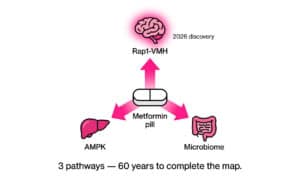
The broader mechanism picture. The NR4A1 finding is one piece of a larger mechanistic picture that the Nutrients paper explored. Compounds in coffee have been found to exert health effects through multiple pathways: directly inhibiting inflammatory enzymes, mediating immune signaling, altering the gut microbiome, and activating antioxidant pathways. The convergence of these mechanisms in regular coffee drinkers appears to confer health benefits similar in profile to those observed in vegetarian and Blue Zone populations, people with the longest, healthiest lives on earth.
The Morning Timing Revelation: When You Drink Coffee Changes Everything
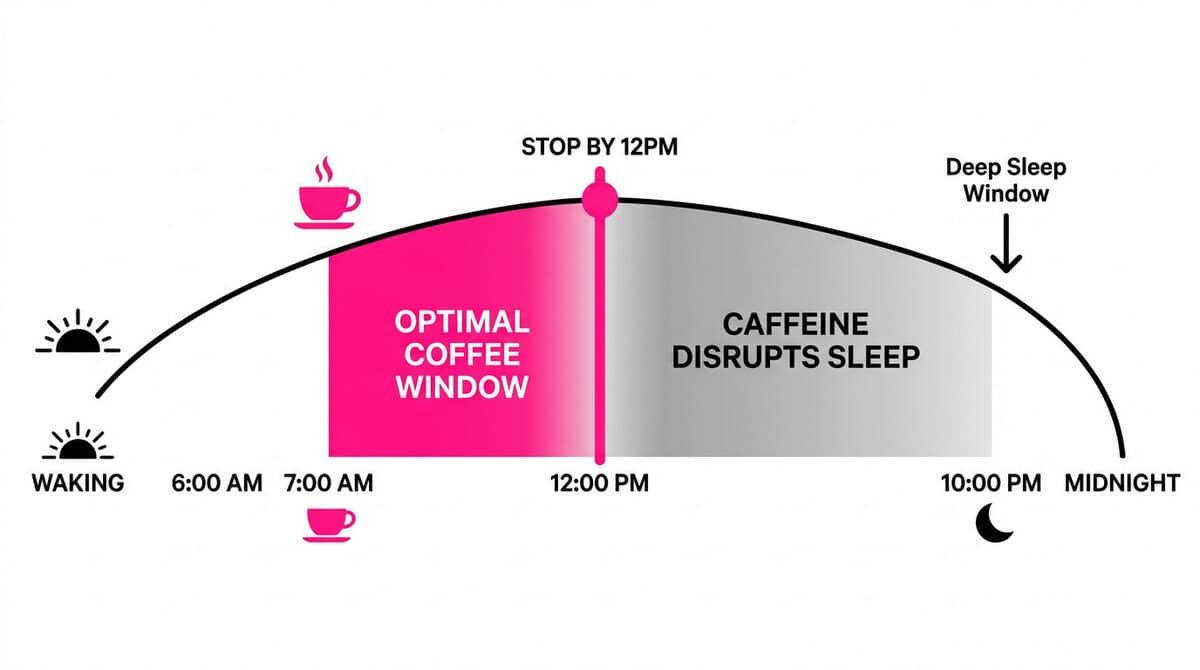
The NR4A1 discovery answers why coffee is healthy. A separate large-scale study answers when it’s most protective, and the answer is specific enough to be immediately actionable.
The European Heart Journal finding. A study of 40,000 Americans tracked over 10 years found that morning coffee drinkers were 16% less likely than non-drinkers to die from any cause and 31% less likely to die from heart disease during the follow-up period. Afternoon and evening coffee drinkers did not experience the same mortality benefit. The cardiovascular protection was specific to morning consumption.
Why morning timing matters: the circadian biology. Your body has a built-in alerting system in the morning. Cortisol, the primary stress and arousal hormone, peaks 30–45 minutes after waking as part of the cortisol awakening response (CAR). Adenosine, the sleep-pressure molecule that makes you feel groggy, builds up overnight and creates a morning fog that cortisol naturally helps clear. When you drink coffee during this circadian window (roughly 60–120 minutes after waking), caffeine’s adenosine receptor blockade works synergistically with your natural cortisol rhythm, enhancing alertness without disrupting the underlying biological clock.
Why afternoon coffee costs you at night. Caffeine’s half-life is 5–7 hours. An afternoon coffee consumed at 2pm still has approximately 50% of its caffeine actively blocking adenosine receptors at 7–9pm, precisely when adenosine accumulation is needed to signal the brain into the slow-wave sleep transition. This is the direct mechanism by which afternoon caffeine suppresses deep slow-wave sleep, the phase where growth hormone is released, fat metabolism is regulated, and glymphatic amyloid clearance occurs. The person who sacrifices afternoon decaf for an afternoon caffeinated coffee is trading a transient energy boost for measurably worse metabolic repair overnight.
The practical protocol from the 2026 evidence:
- Drink your first coffee 60–120 minutes after waking (not immediately, let your natural cortisol awakening response peak first)
- Keep total daily coffee consumption to 3–4 cups
- Stop caffeinated coffee by 12–1pm
- Consider switching to decaf after 1pm for continued NR4A1 polyphenol benefit without the sleep disruption
Coffee and Health: The Complete Disease-by-Disease Evidence in 2026
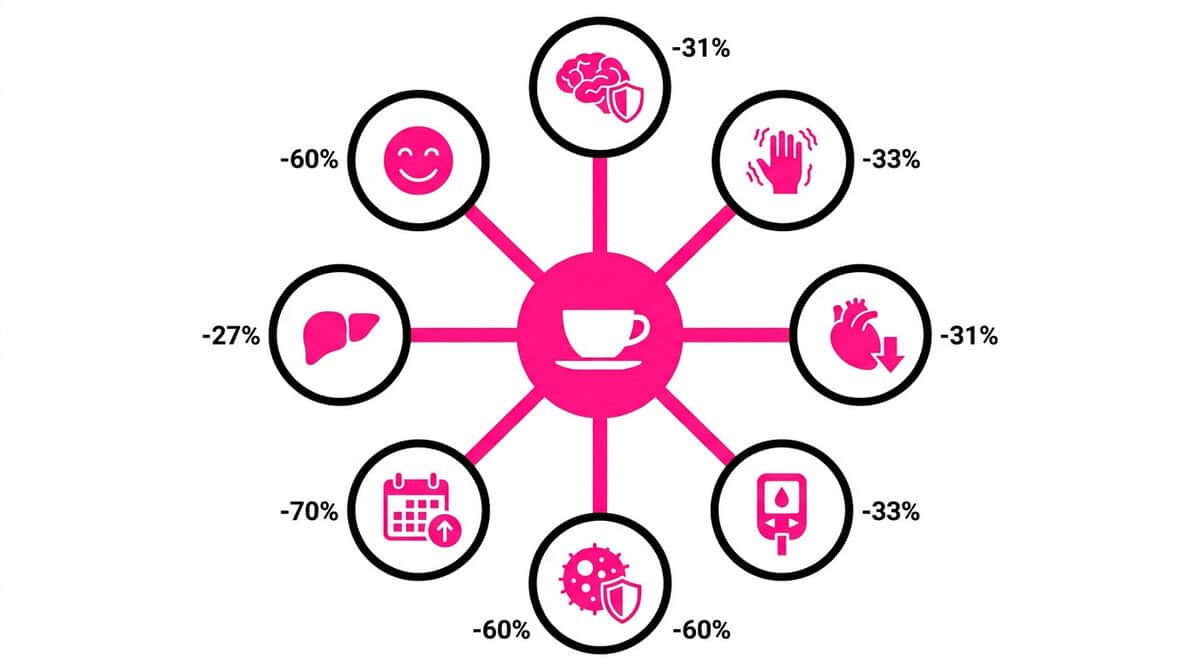
The coffee and health connection operates through multiple converging biological pathways, each documented in large-scale human studies and now confirmed at the cellular level by the 2026 Texas A&M NR4A1 discovery. Here is the complete picture by condition.
Coffee and Alzheimer’s Disease
A Harvard University study found that drinking three cups of coffee daily was associated with an 18% lower risk of dementia, alongside slower cognitive decline over time. A separate longitudinal study found that adults drinking two or more cups per day were less likely to develop cerebral amyloid deposition, the protein plaques that define Alzheimer’s disease pathology at the molecular level.
The NR4A1 mechanism provides a plausible explanation: NR4A1 activation reduces neuroinflammatory signaling in brain tissue, potentially slowing the inflammatory cascade that accelerates amyloid plaque formation. This positions coffee as a complementary intervention alongside vitamin C’s gray matter protection and the vitamin B12 white matter integrity findings, multiple nutritional interventions converging on the same goal of preserving aging brain structure.
Coffee and Parkinson’s Disease
Studies consistently find that coffee consumption reduces the risk of developing Parkinson’s disease by 30–60%, one of the most consistent dose-response relationships in the epidemiology of neurodegenerative disease. Caffeine specifically is implicated here (unlike the NR4A1 benefit, where caffeic acid dominates): caffeine’s adenosine A2A receptor blockade in the striatum appears to be neuroprotective for the dopaminergic neurons that Parkinson’s destroys. Research also shows that people who already have Parkinson’s disease and consume caffeine regularly demonstrate better movement control than those who do not.
Coffee and Heart Disease
A meta-analysis of 36 prospective human studies including nearly 1.3 million participants found that cardiovascular disease risk was lowest among those consuming 3–5 cups of coffee per day, corresponding to approximately 300–500mg of daily caffeine, with nearly a 15% reduction in risk. The European Heart Journal morning timing finding adds a crucial layer: even within regular coffee drinkers, those consuming it primarily in the morning showed 31% lower cardiovascular mortality, suggesting circadian alignment is itself a cardiovascular variable, not merely a byproduct of the coffee’s chemical composition. For everyone focused on cardiovascular health, coffee timing is now a relevant dietary variable.
Coffee and Type 2 Diabetes
Multiple large-scale studies indicate that regular coffee consumption reduces the risk of developing type 2 diabetes by approximately 33%. The mechanism is more completely understood here than for most conditions: chlorogenic acids (a family of polyphenols abundant in coffee) slow intestinal glucose absorption, improve insulin sensitivity at the cellular level, and reduce inflammatory signaling in adipose tissue. This effect is observed with both caffeinated and decaffeinated coffee, reinforcing the polyphenol mechanism over caffeine. For anyone managing type 2 diabetes risk or already living with the condition, daily coffee is one of the most evidence-supported dietary interventions available.
Coffee and Cancer
Studies show that coffee consumption reduces the risk of colorectal cancer by 11–24% and endometrial cancer by 19%. Both caffeinated and decaffeinated coffee provide liver protection, coffee drinkers are more likely to have liver enzyme levels within the healthy range than non-drinkers, and a 2006 study found that coffee specifically protects against liver cirrhosis, particularly in people at elevated risk from alcohol use disorder or fatty liver disease. The cafestol and kahweol compounds found in unfiltered coffee have demonstrated anti-tumor activity in preclinical studies, adding a mechanism to complement the broader cancer prevention research.
Coffee and Longevity
Compared to non-drinkers, people who drank one cup per day were 8% less likely to die during follow-up periods; those drinking six to seven cups daily showed 16% lower all-cause mortality, though at those volumes, the sleep, anxiety, and blood pressure trade-offs become significant. A review of 40 studies concluded that 2–4 cups of coffee daily was associated with lower mortality risk regardless of age, weight status, and alcohol consumption. This is the same longevity signaling that comprehensive biological aging research attributes to inflammation reduction, and the NR4A1 mechanism connects coffee directly to the cellular anti-aging machinery now measurable by epigenetic clocks.
Coffee and Depression
Regular coffee intake is consistently linked to lower risk of depression in prospective studies. The mechanism: caffeine blocks adenosine receptors, which beyond promoting alertness, increases the signaling efficiency of dopamine and norepinephrine in limbic circuits. This produces measurable mood elevation through pathways partially overlapping with antidepressant mechanisms. Depression risk reduction from coffee is a real effect, not simply a consequence of alert people having better moods.
Coffee and the Gut Microbiome
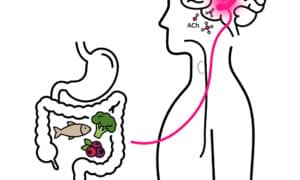
Coffee is now recognized as one of the most significant dietary sources of prebiotic compounds for gut bacteria, specifically compounds that nourish Bifidobacterium species associated with reduced systemic inflammation and better mental health outcomes. Coffee’s melanoidins (formed during roasting), chlorogenic acids, and fiber-like compounds act as fermentable substrates for beneficial gut bacteria. Regular coffee consumption is associated with increased gut microbiome diversity, itself directly correlated with slower biological aging rates. This gut-microbiome-brain connection means coffee’s benefits extend well beyond the caffeine mechanism most people focus on.
Why Caffeic Acid — Not Caffeine — May Be Coffee’s Real Health Hero
This is the most scientifically novel finding of the July 2026 Texas A&M study, and the one most likely to reshape how people think about coffee, decaf, and health.
The conventional wisdom has always been that caffeine is coffee’s primary active compound. The NR4A1 research directly challenges this: caffeic acid and related polyphenolic compounds appeared far more active than caffeine itself in activating the receptor. This finding has several immediate implications.
Decaf is not a lesser coffee. If caffeic acid is the primary anti-aging compound, decaffeinated coffee, which retains most of its polyphenol content through the decaffeination process, may provide the same NR4A1-mediated cellular protection as regular coffee. Both caffeinated and decaffeinated coffee consistently show liver protection benefits in clinical research, consistent with the polyphenol hypothesis. This aligns with the broader lesson from fish oil research, the specific molecular form of a bioactive compound matters as much as its presence, and the food source often outperforms the isolated supplement.
What other compounds in coffee matter:
- Chlorogenic acid: the most abundant polyphenol in coffee, responsible for much of the anti-diabetic and antioxidant effect; depleted by dark roasting
- Trigonelline: a neuroprotective compound found to protect against Alzheimer’s in preclinical models; breaks down with roasting, so lighter roasts preserve more
- Cafestol and kahweol: diterpenes found in unfiltered coffee (French press, espresso, Turkish); have anti-cancer properties in preclinical studies but also raise LDL cholesterol, the net effect for heart health favors filtered coffee
- Melanoidins: formed during roasting, these function as prebiotic fiber, feeding beneficial gut bacteria
The roast implication. Dark roasting degrades chlorogenic acid content substantially while increasing NMP (N-methylpyridinium, another anti-cancer compound). Light-to-medium roast coffee preserves the highest total polyphenol content, and therefore the most robust NR4A1 activation potential. If maximizing anti-aging and anti-inflammatory benefits is the goal, light-to-medium roast is the evidence-based choice.
How Many Cups of Coffee Per Day Is Optimal? The 2026 Evidence Table
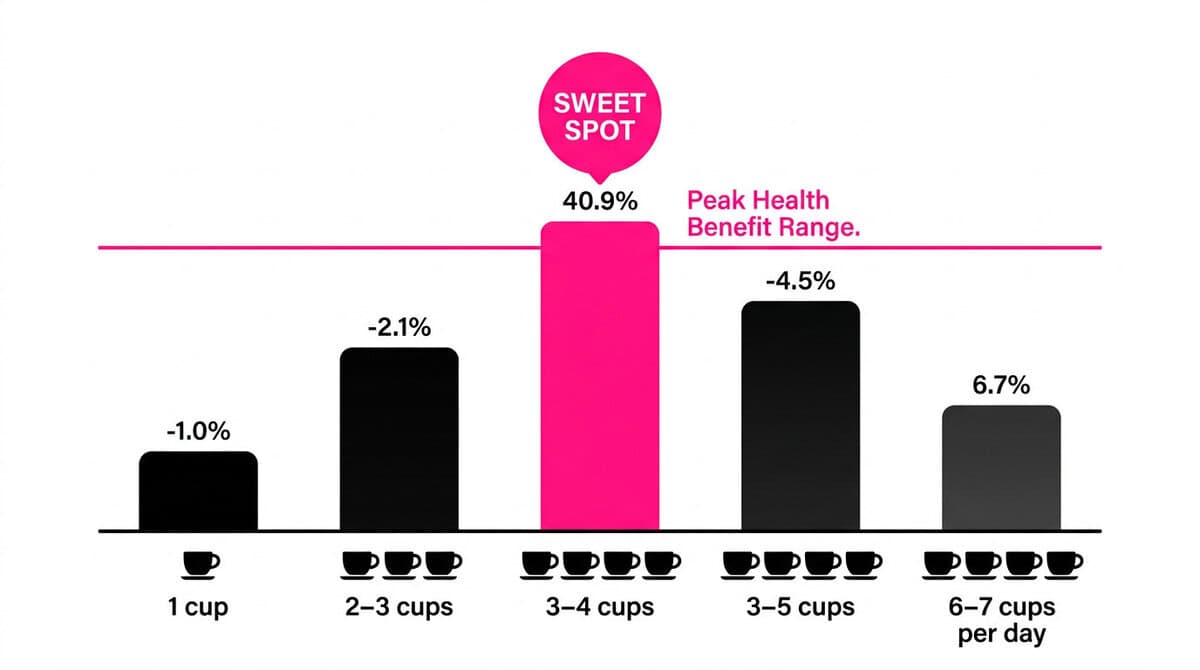
This is the most-searched coffee health question, and the evidence is now specific enough to answer it clearly.
| Daily Coffee Intake | Associated Health Outcomes |
| 1 cup/day | 8% lower all-cause mortality vs. non-drinkers |
| 2–3 cups/day | Lower Parkinson’s risk, lower heart failure and stroke risk |
| 3–4 cups/day | Peak cardiovascular protection (~15% lower risk); 18% lower dementia risk (Harvard); optimal liver protection |
| 3–5 cups/day | Lowest all-cause mortality per 40-study meta-analysis; lowest cardiovascular disease risk overall |
| 6–7 cups/day | 16% lower all-cause mortality; but sleep disruption, anxiety, and blood pressure risks rise |
| 8+ cups/day | Benefits plateau; negative effects increasingly likely for most people |
The evidence-based sweet spot: 3–4 cups of coffee daily, consumed before 1pm, capturing maximum disease protection while preserving sleep architecture.
This dosage delivers approximately 300–400mg of caffeine and roughly 1,000–1,500mg of chlorogenic acid and related polyphenols, the range associated with peak NR4A1 activation, optimal gut microbiome diversity, and the mortality risk reductions documented across the literature.
Think of it alongside the flavanol research covering 500mg daily for heart health and the beetroot juice nitrate protocols, a morning routine of 3–4 cups of filtered coffee, alongside flavanol-rich dark chocolate and a beetroot juice shot, stacks cardiovascular-protective compounds efficiently within a single morning food window.
How to Maximize the Health Benefits of Your Coffee
Strategy 1 — Drink It in the Morning (60–120 Minutes After Waking)
The European Heart Journal 31% cardiovascular mortality reduction was specific to morning drinkers. This is not a minor practical preference, it is a meaningful modifier of coffee’s protective effect. Wait 60–120 minutes after waking to allow your natural cortisol awakening response to peak before caffeine compounds it; this preserves caffeine sensitivity over time and aligns with the circadian biology behind the morning timing finding.
Strategy 2 — Choose Light-to-Medium Roast for Maximum Polyphenols
Light-to-medium roasts preserve the most chlorogenic acid, caffeic acid, and trigonelline, the compounds most responsible for NR4A1 activation and the anti-diabetic, neuroprotective, and anti-inflammatory effects. Dark roast increases NMP (anti-cancer) but sacrifices the majority of the health-protective polyphenol content.
Strategy 3 — Use a Paper Filter for Heart Health
Unfiltered coffee (French press, boiled, Turkish, some espresso) contains cafestol and kahweol diterpenes that raise LDL cholesterol in a dose-dependent way. Paper filters remove approximately 80% of these compounds. For anyone with elevated LDL cholesterol or elevated cardiovascular risk, paper-filtered coffee is the evidence-based brewing choice.
Strategy 4 — Drink It Black or with Minimal Additives
Adding sugar and cream to coffee may reduce the net health benefit, particularly the metabolic and anti-inflammatory effects. Adding 2 teaspoons of sugar to 3 daily cups contributes 24g of added sugar daily, approaching the full recommended daily limit for adults. Evidence-supported additions: a pinch of ground cinnamon (improves insulin sensitivity, adds sweetness without sugar), a splash of full-fat milk (minimal glycemic impact, adds calcium), or unsweetened plant-based milk.
Strategy 5 — Pair Morning Coffee with Magnesium-Rich Foods
Coffee promotes urinary magnesium excretion. Heavy daily coffee drinkers may have meaningfully lower magnesium status over time, a concern given that magnesium is essential for deep sleep quality and the GABA-mediated slow-wave sleep that the UC Berkeley circuit study identified as the growth hormone release window. Pairing morning coffee with magnesium-rich foods (pumpkin seeds, almonds, dark leafy greens, dark chocolate) or a magnesium glycinate supplement taken at bedtime compensates for the increased excretion. This connection is one of the most commonly overlooked interactions between coffee and sleep quality.
Strategy 6 — Add Cinnamon for Synergistic Anti-Diabetic Effect
Ground cinnamon in coffee adds virtually zero calories while contributing its own insulin-sensitizing compounds (cinnamaldehyde and related polyphenols) that directly complement coffee’s chlorogenic acid mechanism. Combined, they may produce a more robust post-meal blood glucose response than either alone. Particularly relevant for anyone in the 33% of the adult population with prediabetes.
Strategy 7 — Switch to Decaf After 1pm for Continued NR4A1 Benefit
Afternoon decaf retains the polyphenol content, including caffeic acid, responsible for NR4A1 activation, without the sleep-disrupting caffeine. An afternoon decaf coffee represents an effective strategy for doubling the daily NR4A1 polyphenol dose while keeping sleep architecture intact. This is also the right choice for anyone with anxiety, GERD, or caffeine sensitivity who wants to retain the gut microbiome and anti-inflammatory benefits of coffee.
Strategy 8 — Pre-Workout Coffee as a Performance Tool
Caffeine consistently improves both aerobic endurance performance and strength output in research studies, reducing perceived effort and increasing time to fatigue. The Harvard strength training longevity study documented that 90–120 minutes of weekly resistance training reduced neurological disease mortality by 27%; pre-workout coffee amplifies the performance output of those sessions, potentially allowing greater training volume and adaptation within the same time investment.
Brewing Methods Compared: Which Coffee Is Healthiest?
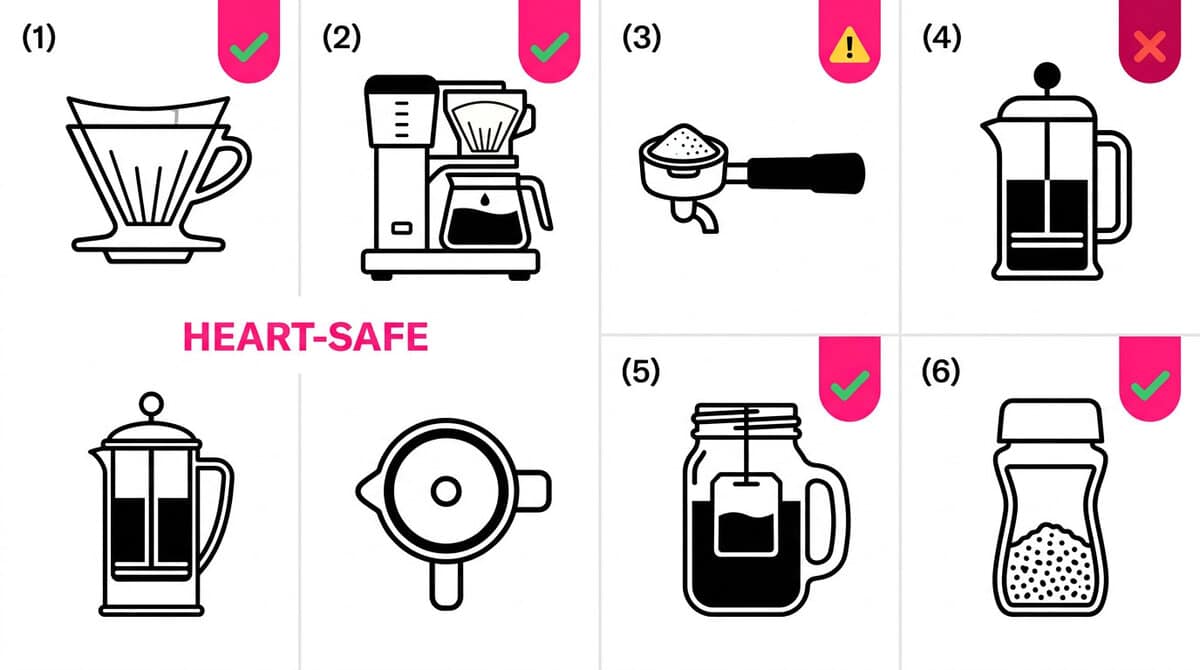
How you brew your coffee affects which bioactive compounds you get, and which you’d rather avoid.
| Brewing Method | Polyphenol Retention | Cafestol/Kahweol (LDL risk) | Best For |
| Pour-over (paper filter) | High | Very low | Heart health, daily volume drinking |
| Drip coffee (paper filter) | High | Very low | Heart health, convenience |
| Espresso | High | Moderate | Concentrated antioxidants, occasional use |
| French press (no filter) | High | High | Avoid if LDL is elevated |
| Cold brew | Moderate | Low | Gentler on acidity; longer-lasting caffeine effect |
| Instant coffee | Moderate | Very low | Convenience; still provides NR4A1 polyphenol benefit |
| Decaf (paper-filtered) | High | Very low | Afternoon use; NR4A1 without sleep disruption |
The key takeaway: paper-filtered coffee is the optimal format for most daily coffee drinkers, it preserves polyphenol content while removing the LDL-raising diterpenes. If you drink French press or espresso daily and have elevated LDL cholesterol, switching to a paper-filtered brew is one of the simplest dietary changes with direct cardiovascular benefit.
Cold brew sits in a useful middle position: lower acidity (useful for those with GERD or acid sensitivity), low cafestol content, but slightly lower polyphenol concentration than hot extraction. The longer extraction window and higher water temperature in hot brewing more efficiently extracts chlorogenic acids, which is why hot-brewed filtered coffee leads the health evidence base.
Who Should Limit Coffee and How Much Is Too Much
Coffee is extraordinarily safe for most healthy adults, it has one of the most favorable safety profiles of any widely consumed psychoactive beverage. But the same properties that make it beneficial for most people create specific risks for certain populations.
Limit to 1–2 cups per day (or avoid) if:
- Pregnant or breastfeeding: caffeine crosses the placenta and appears in breast milk. The WHO recommends limiting caffeine to below 300mg/day during pregnancy (approximately 2–3 cups of filtered coffee); many guidelines now suggest below 200mg/day. Polyphenol benefits remain, but caffeine is the primary risk factor here.
- Unmanaged high blood pressure: caffeinated coffee can temporarily elevate blood pressure in caffeine-naive individuals, though tolerance typically develops within 1–2 weeks of regular consumption.
- Active anxiety disorder: caffeine amplifies sympathetic nervous system activation and can worsen generalized anxiety, panic disorder, and social anxiety. Even small amounts of caffeine can meaningfully worsen anxiety symptoms in sensitive individuals.
- Severe GERD or acid reflux: coffee relaxes the lower esophageal sphincter, worsening reflux. Cold brew or low-acid coffee formulations may be better tolerated; switching to decaf eliminates most of the sphincter-relaxation effect.
- Chronic insomnia: in people with slow caffeine metabolism (CYP1A2 polymorphism), even morning coffee can affect sleep quality through the night.
- Children and adolescents: no established safe dose exists for children. Caffeine affects the developing nervous system and should be avoided or minimized in this population.
Drug interactions worth noting:
- MAOIs (monoamine oxidase inhibitor antidepressants): dangerous interaction with caffeine, consult prescribing physician
- Adenosine (used in cardiac stress testing): caffeine blocks its effect; stop coffee 24 hours before cardiac adenosine procedures
- Fluoroquinolone antibiotics (ciprofloxacin): significantly slow caffeine clearance, potentially doubling effective caffeine dose, reduce coffee intake during fluoroquinolone courses
- Warfarin (blood thinner): very large amounts of coffee may affect warfarin metabolism; maintain consistent daily consumption while on warfarin
Coffee is not a cure or guaranteed preventive for any disease. The evidence summarized here reflects population associations and mechanistic research, individual responses vary considerably. If you have any health condition or take medications, discuss caffeine intake with your healthcare provider.
FAQs About Coffee and Health
What does the 2026 science say about coffee and health benefits? A July 2026 Texas A&M study published in Nutrients identified NR4A1 as the cellular receptor through which coffee’s polyphenols, particularly caffeic acid, exert their anti-aging, anti-inflammatory, and disease-protective effects. Separately, a European Heart Journal study of 40,000 Americans found morning coffee drinkers are 31% less likely to die of heart disease. Combined with decades of epidemiological evidence on diabetes, Parkinson’s, Alzheimer’s, cancer, and longevity, coffee has the most comprehensive disease-prevention evidence base of any commonly consumed beverage.
What is the NR4A1 receptor and why does coffee activate it? NR4A1 is a nuclear receptor that helps cells respond to damage, inflammation, and metabolic stress. When activated, it reduces cellular inflammatory signaling and protects tissues from stress-related damage. Coffee’s polyphenols, particularly caffeic acid, bind to and activate NR4A1. As lead researcher Dr. Stephen Safe explained: “If you damage almost any tissue, NR4A1 responds to bring that damage down.” Crucially, caffeic acid outperformed caffeine in NR4A1 activation, meaning decaf coffee provides this benefit.
Is coffee good or bad for you in 2026? Good, for most healthy adults. The evidence is now mechanistically explained and epidemiologically overwhelming for 3–4 cups per day consumed before 1pm. The caveats (anxiety, GERD, pregnancy, sleep disruption from afternoon consumption) are real but manageable.
How many cups of coffee per day is optimal for health? 3–5 cups per day is associated with the lowest all-cause mortality and cardiovascular risk in large-scale meta-analyses. Three to four cups is the practical sweet spot, maximum disease protection without meaningful sleep, anxiety, or blood pressure risk for most people.
Does decaf coffee have the same health benefits? For most benefits, yes. The 2026 NR4A1 finding specifically shows that caffeic acid (retained in decaf) is more active than caffeine in the anti-aging receptor pathway. Liver protection, gut microbiome diversity, anti-inflammatory, and anti-diabetic benefits all appear in decaf as well as regular coffee. Caffeine-specific benefits (Parkinson’s protection, adenosine blockade, alertness) are absent in decaf.
What is the best time of day to drink coffee for health? 60–120 minutes after waking, and stopping by 12–1pm. Morning coffee aligns with your circadian cortisol-adenosine rhythm and produced the 31% heart disease mortality reduction in the European Heart Journal study. Afternoon caffeine suppresses deep slow-wave sleep through its 5–7 hour half-life.
Does coffee actually protect against Alzheimer’s disease? The evidence is strongly associative: Harvard found 18% lower dementia risk with 3 cups/day. Longitudinal studies show lower amyloid plaque deposition in regular coffee drinkers. The NR4A1 mechanism, reducing neuroinflammation in brain tissue, provides a plausible biological explanation. Coffee complements other anti-Alzheimer’s strategies like strength training and vitamin C-rich diet.
Can coffee reduce the risk of type 2 diabetes? Yes. Multiple large studies document approximately 33% lower type 2 diabetes risk in regular coffee drinkers. The mechanism involves chlorogenic acids improving insulin sensitivity and slowing intestinal glucose absorption. Both caffeinated and decaffeinated coffee provide this benefit, it’s the polyphenols, not the caffeine. Coffee is one of the most evidence-supported dietary tools for diabetes risk reduction.
Does coffee affect magnesium levels? Yes, coffee increases urinary magnesium excretion. Heavy daily coffee drinkers may develop lower magnesium status over time. Compensating through magnesium-rich foods or magnesium glycinate supplementation before bed is the practical solution, particularly for people also concerned about sleep quality.
Is coffee good for the gut microbiome? Yes. Coffee is one of the most important dietary sources of prebiotics for Bifidobacterium, beneficial gut bacteria linked to lower inflammation and better mental health. Coffee’s melanoidins and chlorogenic acids act as fermentable prebiotic substrates. Regular coffee consumption is associated with greater gut microbiome diversity, which is itself linked to slower biological aging on epigenetic clocks.
This article is for informational purposes and does not constitute medical advice. If you have health conditions affected by caffeine or coffee, speak with your healthcare provider.