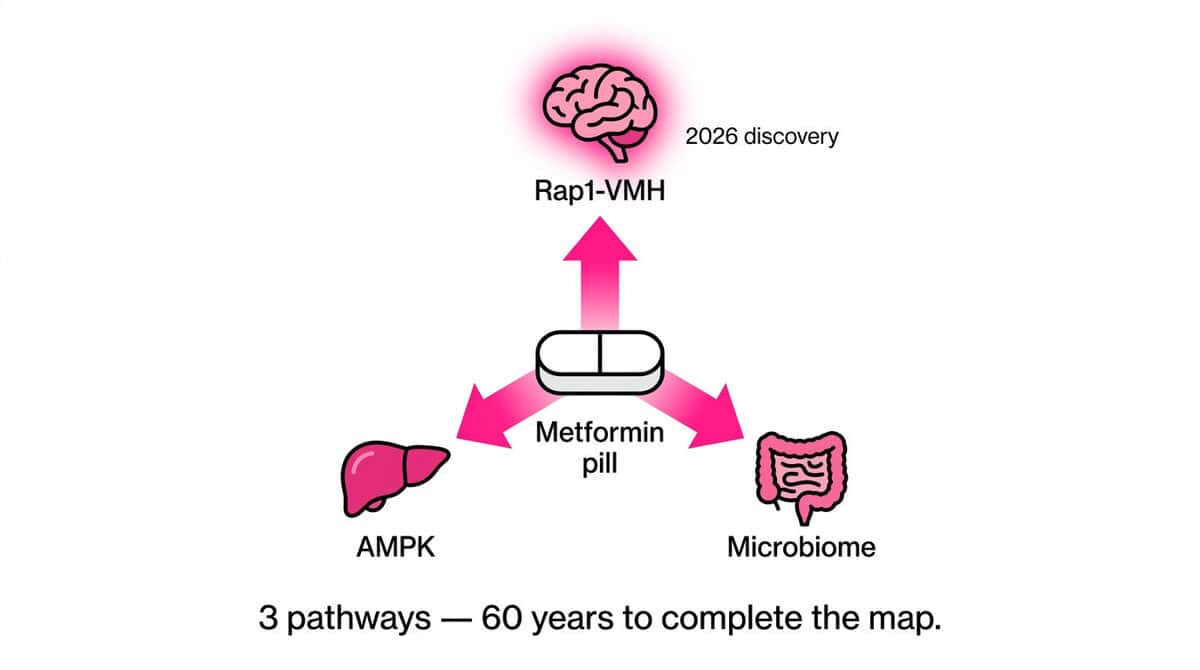
Metformin benefits just expanded in a way that 150 million global users never anticipated, a landmark Baylor College of Medicine study published in Science Advances and re-highlighted by ScienceDaily on July 25, 2026 discovered that metformin has been quietly acting inside the brain all along, through a previously unknown pathway that activates specific hypothalamic neurons to lower blood sugar at doses thousands of times smaller than those needed in the liver. For 60 years, textbooks taught that metformin works primarily in the liver and gut. That picture was incomplete. And this discovery may be only the beginning, researchers are now investigating whether the same brain mechanism explains metformin’s emerging benefits for aging, cognition, and cancer prevention.
Metformin is a prescription medication. This article documents its evidence-based benefits. Do not start, stop, or modify metformin without consulting your healthcare provider.
The 2026 Baylor Discovery: Metformin Benefits Extend Directly Into the Brain
This is the finding that reframes everything clinicians and patients thought they knew about the world’s most prescribed diabetes drug, and it came from one of America’s most prestigious research medical schools, published in the AAAS’s flagship clinical journal.
The research team. Scientists at Baylor College of Medicine in Houston, along with international collaborators from Louisiana State University, Nagoya University (Japan), and Meiji University (Japan), funded by the National Institutes of Health, the American Heart Association, and the American Diabetes Association.
The target: Rap1 in the brain’s glucose control center. The team focused on Rap1, a small signaling protein located in the ventromedial hypothalamus (VMH), a brain region that helps regulate blood sugar levels, appetite, and metabolic rate. The VMH is the brain’s metabolic command center, and Rap1 is a molecular switch within it.
The breakthrough finding. When researchers injected extremely small amounts of metformin directly into the brains of diabetic mice, doses thousands of times smaller than what is typically given by mouth, it still lowered blood sugar levels. The brain responds to metformin at approximately 1,000 times lower concentrations than the liver or intestines require. This means at standard oral doses, metformin has been acting on the brain all along, through a mechanism invisible to six decades of research.
The neuron mechanism — mechanistically precise. Metformin activates special brain cells called SF1 neurons in the VMH, but only when Rap1 is present. Without Rap1, SF1 neurons did not respond to metformin, and blood sugar levels remained unchanged. This confirms Rap1 as the molecular key that allows metformin to unlock the VMH’s glucose-regulating neurons.
The specificity proof — the experiment that clinches it. Researchers used genetically engineered mice lacking Rap1 specifically in their VMH neurons. In these mice, low-dose metformin failed to lower blood sugar, while other diabetes treatments like insulin and GLP-1 drugs still worked normally. This proves the Rap1-VMH pathway is metformin-specific, not a generic diabetes drug mechanism. No other drug in the diabetes pharmacopeia operates through this pathway.
Dr. Makoto Fukuda’s summary. “This discovery changes how we think about metformin. It’s not just working in the liver or the gut, it’s also acting in the brain. We found that while the liver and intestines need high concentrations of the drug to respond, the brain reacts to much lower levels,” said Dr. Fukuda, associate professor of pediatrics-nutrition and the study’s corresponding author.
What opens next. Fukuda has stated his team plans to investigate whether the same Rap1 signaling pathway is behind metformin’s reported effects on brain aging, connecting this discovery directly to the biological aging research and the TAME trial that BillboardHealth has been covering throughout the 2026 series.
Why This Discovery Matters — 60 Years of Incomplete Understanding
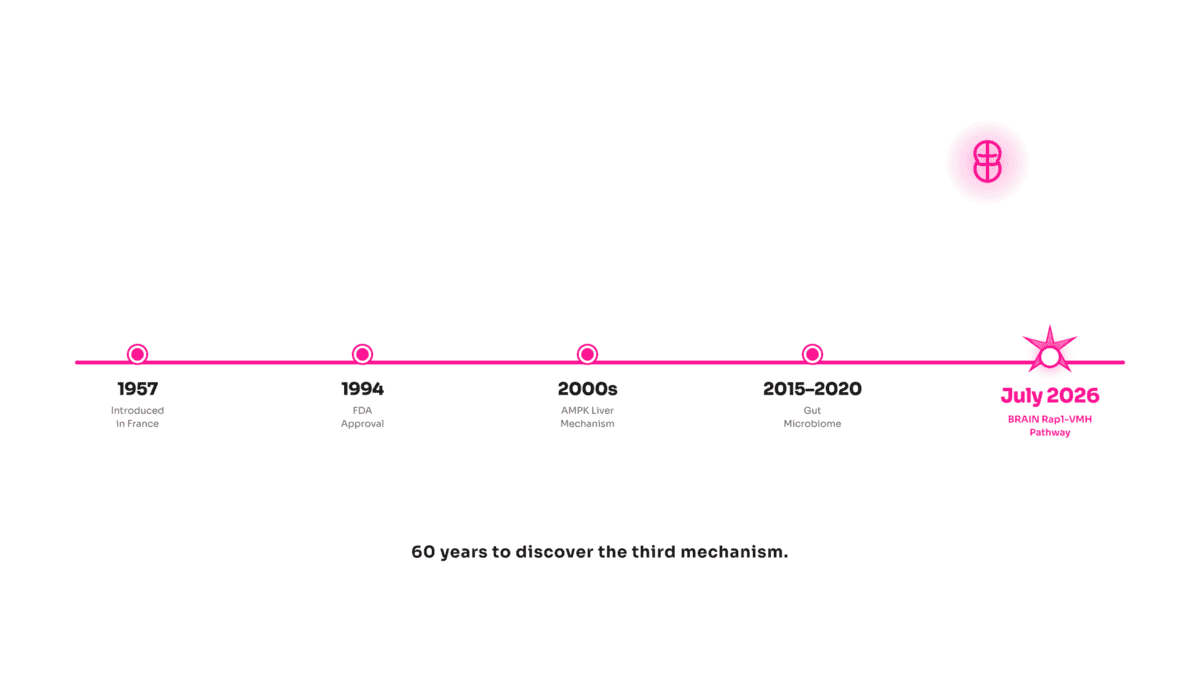
The significance of the Baylor finding is best understood through the timeline of metformin’s mechanistic understanding, and the 60-year gap it just filled.
1957: Metformin introduced in France for diabetes treatment. 1994: FDA approves metformin for the US market. 1990s–2000s: AMPK pathway in the liver identified as the primary glucose-lowering mechanism, activating the cell’s energy sensor to suppress hepatic glucose production. 2015–2020: Gut microbiome effects documented, metformin enriches Akkermansia muciniphila and other beneficial bacteria, contributing to metabolic improvement through the gut-brain axis. July 2026: Brain Rap1-VMH pathway identified by the Baylor team, metformin’s third major mechanism, operating at 1,000x lower doses than liver pathways.
Why incomplete understanding mattered for drug development. For 60 years, metformin derivatives and alternatives have been designed around liver and gut mechanisms. If the brain pathway had been discovered earlier, drug development could have targeted VMH neurons directly, potentially creating drugs thousands of times more potent at the same dose, with fewer gastrointestinal side effects, and more precisely targeted to glucose and appetite regulation.
The broader implication for diabetes treatment. “Most current treatments focus on organs like the pancreas, liver, or gut, very few target the brain directly. These findings open the door to developing new diabetes treatments that directly target this pathway in the brain,” said Dr. Fukuda. This positions the VMH-Rap1 pathway alongside the hypothalamic BRP discovery from the Stanford Ozempic alternatives research, two independent 2026 studies, both finding that the brain’s appetite and metabolic control center is a more powerful drug target than the peripheral organs traditionally targeted by diabetes pharmacology.
The Full Spectrum of Metformin Benefits Beyond Blood Sugar: Heart, Brain, Cancer, and Aging
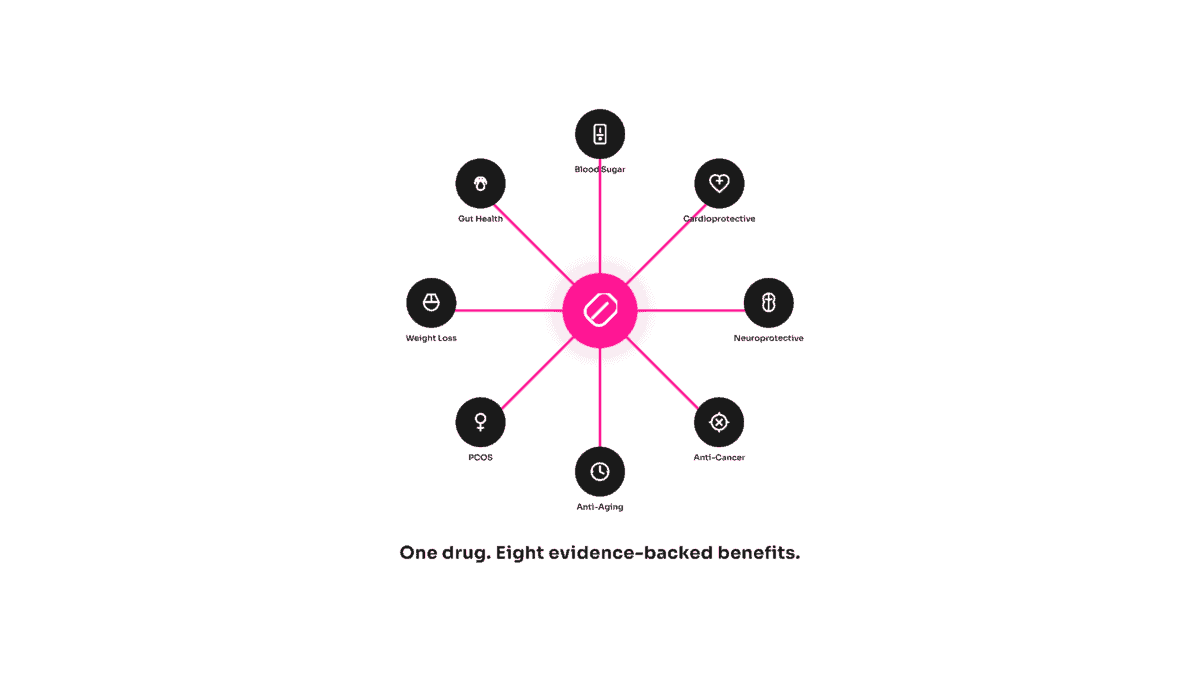
Understanding the complete picture of metformin benefits requires going well beyond its original blood sugar-lowering indication, decades of accumulating evidence now document effects on cardiovascular disease, cancer, neurodegeneration, and biological aging that make metformin arguably the most versatile drug in medicine.
Benefit #1 — Blood Sugar Control (60-Year Proven Foundation)
Metformin reduces HbA1c by 1–1.5 percentage points on average, lowers fasting glucose, and reduces diabetes complications including neuropathy, nephropathy, and retinopathy. The complete mechanism is now understood as three complementary pathways: liver AMPK activation (high doses), gut microbiome remodeling (medium doses), and brain VMH-Rap1 neuron activation (ultra-low doses, the 2026 discovery). This three-pathway model explains why metformin is more effective than any single-mechanism model would predict. For the complete type 2 diabetes management picture, metformin remains the universal first-line recommendation across virtually every international guideline.
Benefit #2 — Cardiovascular Protection (39% Lower Heart Attack Risk)
The UK Prospective Diabetes Study (UKPDS), the largest and longest diabetes treatment trial, found metformin reduced myocardial infarction risk by 39% and all-cause mortality by 36% in overweight type 2 diabetes patients, independent of blood sugar lowering. This cardiovascular benefit operates through AMPK activation in cardiac tissue, a separate pathway from the liver and brain mechanisms. Metformin’s heart protection is why it remains first-line even when newer drugs achieve better glucose control: no other diabetes drug matches its cardiovascular mortality reduction at this cost.
Benefit #3 — Cancer Risk Reduction (10–40% Across Multiple Types)
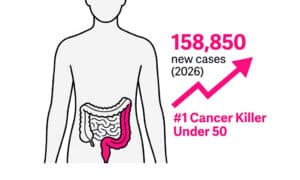
Observational studies consistently find lower cancer rates in metformin users: colorectal cancer (20–40% lower), breast cancer (particularly postmenopausal), pancreatic cancer, endometrial cancer, and liver cancer. The mechanism: AMPK activation inhibits mTOR, the cellular growth and aging accelerator that cancer cells depend on for rapid proliferation. This connects to the colorectal cancer in young adults crisis, while colorectal cancer is now the #1 cancer killer under 50, metformin users appear partially protected through AMPK-mediated mTOR suppression.
Benefit #4 — Anti-Aging / Longevity (The TAME Trial)
The most extraordinary finding in metformin epidemiology: a UK Biobank analysis found metformin users with diabetes had lower all-cause mortality than age-matched non-diabetic controls not taking metformin. Diabetics on metformin outlived healthy non-diabetics. This finding catalyzed the TAME trial, the first clinical trial in history specifically testing whether a drug can target biological aging (covered in detail in the next section). The 2026 brain discovery adds urgency: if the VMH-Rap1 pathway modulates aging-related metabolic processes (as Fukuda’s team is now investigating), metformin may slow biological aging through a central brain mechanism rather than just peripheral metabolic improvement.
Benefit #5 — Dementia and Brain Aging Protection
Multiple observational studies find 20–30% lower dementia risk in metformin users versus non-users. The Baylor discovery provides the first direct mechanistic explanation: metformin enters the brain at pharmacologically active concentrations and modulates VMH neurons through the Rap1 pathway. Fukuda is now directly investigating whether this same pathway explains metformin’s brain aging effects, connecting to the broader brain health cluster that includes B12 protection, vitamin C gray matter support, deep sleep glymphatic clearance, and shingles vaccine neuroinflammation prevention.
Benefit #6 — Weight Management (Modest but Meaningful)
Metformin is weight-neutral-to-mildly-beneficial, approximately 2–3kg (4–7 lbs) weight loss over 6–12 months. The brain pathway discovery may explain part of this: the VMH controls appetite regulation alongside glucose metabolism. Metformin’s hypothalamic action may provide appetite modulation alongside blood sugar control. Compared to GLP-1 drugs (12–20% weight loss but significant side effects and rebound), metformin’s modest weight benefit is sustained and does not reverse on discontinuation, supporting long-term weight management strategies.
Benefit #7 — PCOS Treatment
Metformin is one of the most commonly prescribed off-label treatments for polycystic ovary syndrome, improving ovulatory regularity, reducing androgen levels, and improving metabolic parameters through the same insulin sensitization pathway as its diabetes action.
Benefit #8 — Gut Microbiome Improvement
Metformin enriches beneficial gut bacteria, particularly Akkermansia muciniphila, strongly associated with metabolic health, reduced inflammation, and gut barrier integrity. This gut microbiome effect may independently contribute to cardiovascular and metabolic benefits and also explains metformin’s most common early side effect, GI discomfort, which occurs as the microbiome reshapes during the first 2–4 weeks.
How Metformin Works: The Complete 2026 Three-Pathway Mechanism Map
Now that the brain pathway has been identified, metformin’s complete mechanism is understood for the first time in 60 years.
In the Liver (primary traditional mechanism — high doses required):
- Activates AMPK → suppresses hepatic gluconeogenesis (the liver makes less sugar)
- Reduces fat accumulation in the liver (beneficial in NAFLD/NASH)
- Requires the highest metformin concentrations of any target tissue
In the Gut (secondary mechanism — medium doses):
- Alters bile acid metabolism, reducing glucose absorption
- Enriches Akkermansia muciniphila and other beneficial bacteria
- May stimulate gut GLP-1 release (complementary to GLP-1 drug effects)
In the Brain — VMH / Rap1 Pathway (NEW 2026 — ultra-low doses):
- Suppresses Rap1 activity in the ventromedial hypothalamus
- Rap1 suppression activates SF1 neurons
- Activated SF1 neurons signal peripheral tissues to improve glucose uptake
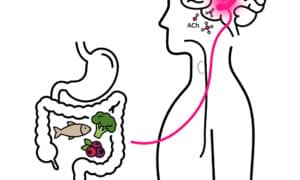
- Brain is approximately 1,000x more sensitive to metformin than liver or gut
- May also explain appetite modulation, brain aging protection, and some anti-cancer effects
The three-pathway model explains metformin’s clinical potency beyond what any single mechanism would predict, and opens entirely new research directions for next-generation diabetes and longevity drugs.
Metformin and the TAME Trial: Will It Become the First Anti-Aging Drug?
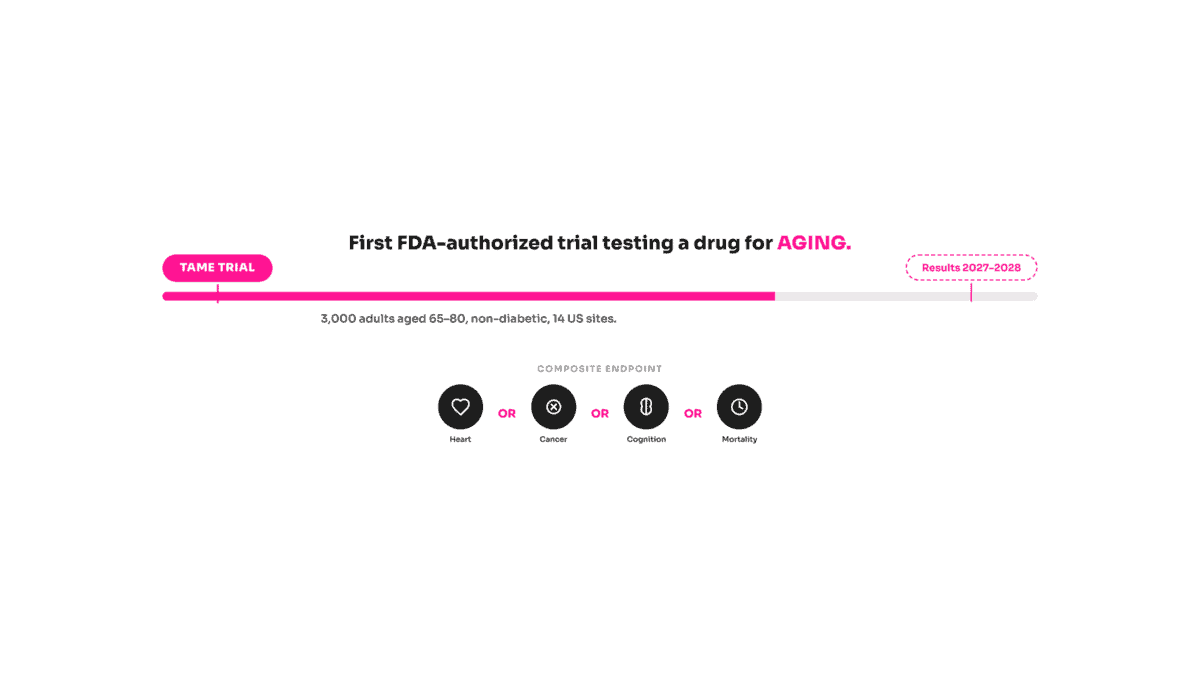
The Targeting Aging with Metformin (TAME) trial is the most important clinical trial in longevity medicine, and the Baylor brain discovery adds significant mechanistic weight to its hypothesis.
What TAME is. The first FDA-authorized clinical trial testing any drug specifically for aging as an indication, not for a single disease, but for the biological aging process itself. This regulatory precedent alone is historic: the FDA now recognizes “aging” as a targetable condition.
Who is enrolled. Approximately 3,000 adults aged 65–80 without diabetes, at 14 US sites, funded by the American Federation for Aging Research. Participants must have one or more age-related conditions or elevated risk.
What it measures. Time to first occurrence of cardiovascular disease, cancer, dementia, or death. By treating these as manifestations of a single underlying process (aging), TAME tests whether slowing the process slows all its outputs simultaneously.
Expected results. 2027–2028.
What the 2026 Baylor discovery adds. If Fukuda’s planned investigation confirms that the VMH-Rap1 pathway mediates metformin’s brain aging effects, the TAME trial may be demonstrating a brain-mediated longevity mechanism that was unknown when the trial was designed. This would mean metformin isn’t just slowing aging through peripheral metabolic improvement, it may be centrally commanding slower aging from the brain itself.
Connection to BillboardHealth’s biological aging hub: the epigenetic clock research on metformin shows measurable DunedinPACE reduction in some populations, consistent with an anti-aging mechanism that the VMH-Rap1 pathway may partially explain. Spermidine’s autophagy activation, strength training’s BDNF release, and metformin’s AMPK/Rap1 activation all converge on overlapping longevity pathways, the person implementing all three is running a comprehensive anti-aging intervention.
Metformin Benefits vs. GLP-1 Drugs: The Complete 2026 Comparison
| Factor | Metformin | GLP-1 Drugs (Ozempic/Wegovy) |
| Mechanism | Liver AMPK + gut microbiome + brain Rap1-VMH (2026) | GLP-1 receptor agonism throughout gut, pancreas, brain |
| Blood sugar | HbA1c ↓ 1–1.5% | HbA1c ↓ 1.5–2% |
| Weight | Neutral to mild loss (2–3kg) | 12–20% body weight loss |
| Cardiovascular | 39% lower MI risk (UKPDS) | 14–20% lower MACE (high-risk patients) |
| Cost | $4–$15/month (generic) | $800–$1,200/month |
| Side effects | GI (nausea/diarrhea — resolves 2–4 weeks); B12 depletion | Nausea 40–50%; muscle loss 25–39%; hair loss; gastroparesis |
| Anti-aging evidence | TAME trial underway; strongest observational data | UC San Diego DunedinPACE 2026 |
| Cancer prevention | 10–40% observational across multiple types | GLP-1 associated with thyroid C-cell risk (FDA warning) |
| Brain pathway | Rap1-VMH direct neural action (2026 Baylor) | No confirmed direct neural protective mechanism |
| Rebound on stopping | No significant rebound | 50–60% weight regain within 12 months |
| Safety record | 60+ years; extremely well-characterized | ~10 years; evolving understanding |
| Administration | Oral tablet 1–2x daily | Weekly injection |
The practical truth. Metformin and GLP-1 drugs are complementary, not competing. Most type 2 diabetes medication guidelines recommend starting with metformin and adding GLP-1 drugs when additional glycemic or weight control is needed. Patients on both simultaneously receive distinct benefits from each. For anyone exploring why GLP-1 drugs don’t work for some people, metformin’s continued role provides baseline protection regardless of GLP-1 response.
The Critical Metformin Side Effect Every Long-Term User Must Know
This section creates BillboardHealth’s single most important bidirectional internal link, because metformin’s most significant side effect directly undermines its brain benefits if left unmanaged.
Metformin depletes vitamin B12. Metformin impairs B12 absorption by disrupting calcium-dependent B12-intrinsic factor uptake in the ileum. This affects 10–30% of long-term users, developing gradually over years.
Why this is urgent, not routine. B12 deficiency causes fatigue, peripheral neuropathy (tingling, numbness), cognitive impairment (brain fog, memory problems), and megaloblastic anemia. These symptoms directly mimic diabetic neuropathy, meaning millions of metformin users may have their B12 deficiency misattributed to diabetes progression, delaying correct treatment for years. The 2026 UCSF study found that even “normal range” total B12 levels can mask functional deficiency affecting the brain, metformin users may need to maintain higher than standard B12 levels to compensate for impaired absorption.
The irony. Metformin’s newly confirmed brain-protective Rap1-VMH pathway is undermined if the B12 it depletes is causing the white matter lesions that destroy the very neural architecture it’s trying to protect. B12 monitoring isn’t optional for metformin users, it’s a prerequisite for the brain benefits to fully express.
The ADA 2026 recommendation. Annual B12 testing for anyone on metformin for 4+ years. Request holotranscobalamin (active B12) and MMA, not just total B12. The complete guide is in the vitamin B12 deficiency article, the single most important companion reading for every metformin user.
How to Maximize Metformin Benefits: The Optimization Protocol
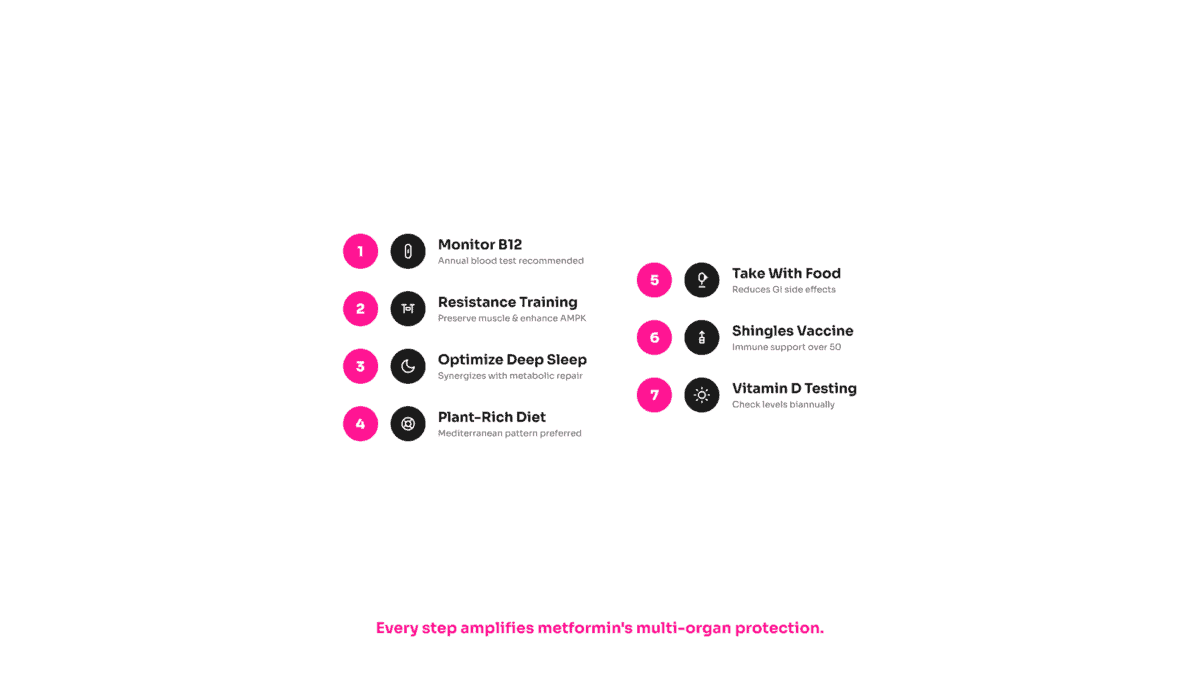
The 2026 brain discovery reframes metformin from “a diabetes drug” to “a multi-organ protective agent”, and maximizing its benefits requires deliberate complementary strategies.
1. Monitor and supplement B12. Annual testing after 4 years. Methylcobalamin 1,000mcg daily as prevention. Ask for active B12 and MMA.
2. Resistance training 90–120 minutes per week. The Harvard longevity data applies powerfully here, exercise and metformin both activate AMPK. One important nuance: some research suggests metformin may blunt exercise-induced mitochondrial adaptations. The practical recommendation: maintain exercise as the foundation; if on metformin for diabetes, the benefit of both together far outweighs any potential blunting effect.
3. Optimize deep sleep. The deep sleep growth hormone circuit drives overnight cellular repair. The Columbia 80-minute sleep study found sleep restriction causes metabolic aging within 6 weeks, directly undermining metformin’s benefits. Magnesium glycinate 200–400mg before bed improves the sleep quality that maximizes overnight repair.
4. Eat a Mediterranean dietary pattern. Metformin’s gut microbiome effects (increasing Akkermansia) are amplified by high-fiber, polyphenol-rich plant-based diets.
5. Take metformin with food, always. Reduces GI side effects and improves absorption. Extended-release (ER) formulations with the largest meal of the day.
6. Get the shingles vaccine. The Shingrix dementia evidence (17–20% lower dementia risk) complements metformin’s brain Rap1 protection through a completely different mechanism, preventing viral neuroinflammation versus activating neural metabolic protection.
7. Annual kidney function and vitamin D monitoring. eGFR testing ensures metformin remains safe; vitamin D levels should also be checked alongside B12.
Who Should Be on Metformin, and Who Should Exercise Caution
Strong candidates:
- Type 2 diabetes (first-line per ADA 2026)
- Prediabetes with high conversion risk (Diabetes Prevention Program showed 31% risk reduction)
- PCOS with metabolic features
- Obese adults with insulin resistance (off-label but widely prescribed)
- Adults in longevity-focused preventive medicine programs (TAME trial rationale)
Requires medical review before starting:
- eGFR below 45 mL/min, metformin is contraindicated in significant renal impairment
- Hospitalization or major surgery, hold due to contrast dye interaction
- Heavy alcohol use, increases lactic acidosis risk
- Liver disease, impaired lactate clearance
- Long-term users: annual eGFR, B12, and vitamin D monitoring
Rare but serious: Lactic acidosis. Extremely rare but potentially fatal, primarily in people with significant kidney impairment. Emergency symptoms: unusual muscle pain, difficulty breathing, unusual sleepiness, unexpected stomach discomfort, feeling cold, dizziness, lightheadedness, seek emergency care immediately.
FAQs About Metformin Benefits
What are the metformin benefits beyond blood sugar control? The July 2026 Baylor Science Advances study discovered metformin acts in the brain through a hidden Rap1-VMH pathway at 1,000x lower doses than needed in the liver. Beyond glucose: cardiovascular protection (39% lower MI risk), cancer prevention (10–40% across types), potential anti-aging (TAME trial underway), dementia risk reduction (20–30%), PCOS treatment, weight management, and gut microbiome improvement.
How does metformin work in the brain? Metformin suppresses Rap1 protein in the ventromedial hypothalamus, which activates SF1 neurons that signal peripheral tissues to improve glucose uptake. The brain responds at approximately 1,000x lower concentrations than the liver, meaning standard oral doses have been acting on the brain for 60 years through a pathway invisible until the 2026 Baylor discovery.
Does metformin help with weight loss? Modestly, 2–3kg over 6–12 months. Far less than GLP-1 drugs but with no rebound on stopping. The VMH pathway discovery may explain the appetite modulation component. Metformin supports long-term weight stability better than weight loss.
Can metformin slow aging? The TAME trial (results expected 2027–2028) is testing this directly. Observational evidence is compelling. The 2026 brain discovery adds a potential central mechanism. Lifestyle interventions, exercise, fasting, spermidine, activate overlapping pathways through non-pharmacological means.
What is the TAME trial and what has it found? First FDA-authorized trial testing a drug for aging itself. 3,000 adults aged 65–80 without diabetes. Measures time to cardiovascular disease, cancer, dementia, or death. Results expected 2027–2028. If positive, establishes the first regulatory framework for anti-aging drugs.
Does metformin protect against Alzheimer’s disease? 20–30% lower dementia risk in observational studies. The Baylor Rap1-VMH discovery provides the first direct brain mechanism. Dr. Fukuda is now specifically investigating whether this pathway explains metformin’s brain aging effects.
How long does it take for metformin to start working? Blood sugar: 2–4 weeks (full effect at 3 months). Weight: 3–6 months. Brain and aging benefits: accumulate over years of consistent use. The Rap1-VMH brain effects likely begin promptly at standard oral doses.
Why does metformin cause B12 deficiency and what should I do? Metformin disrupts calcium-dependent B12 absorption, affecting 10–30% of long-term users. Symptoms mimic diabetic neuropathy. ADA 2026 recommends annual B12 testing after 4+ years. Request active B12 (holotranscobalamin) and MMA. Full guide: vitamin B12 deficiency article.
Is metformin better than Ozempic for diabetes? Complementary, not competing. Metformin: first-line, $4–$15/month, 60-year record, unique brain and cancer benefits. Ozempic: superior weight loss (12–20%), stronger HbA1c reduction, but $800–$1,200/month with significant side effects and rebound on stopping. Most guidelines start with metformin and add GLP-1 when needed.
Can people without diabetes take metformin for longevity? Not FDA-approved for this. TAME trial will answer definitively. Some longevity physicians prescribe off-label. Caution: may blunt exercise adaptations in already-active non-diabetics. Lifestyle interventions activate the same AMPK pathways risk-free.
This article is for informational purposes only. Metformin is a prescription medication. Do not start, stop, or modify without consulting your healthcare provider.