Do medications damage your gut microbiome, and for how long after stopping? A landmark University of Tartu Institute of Genomics study of 2,509 people, published in mSystems and re-highlighted by ScienceDaily on August 24, 2026, found that nearly half of the 186 medications tested were associated with measurable gut bacteria changes that persisted for years after the last dose, with antidepressants, beta-blockers, proton pump inhibitors, and benzodiazepines leaving distinct microbial fingerprints detectable more than three years after people stopped taking them. The answer to whether medications damage your gut is not a simple yes or no, it depends profoundly on which medication, for how long, and how many simultaneously, but for millions of people whose gut health struggles have resisted dietary intervention, their prescription history may be the missing piece of the puzzle.
This article is for informational purposes. NEVER stop any prescribed medication without consulting your doctor. The gut microbiome effects documented here are manageable through dietary and probiotic strategies alongside continued medical treatment.
Do Medications Damage Your Gut? The 2026 Estonian Biobank Study Answers With 2,500 People’s Data
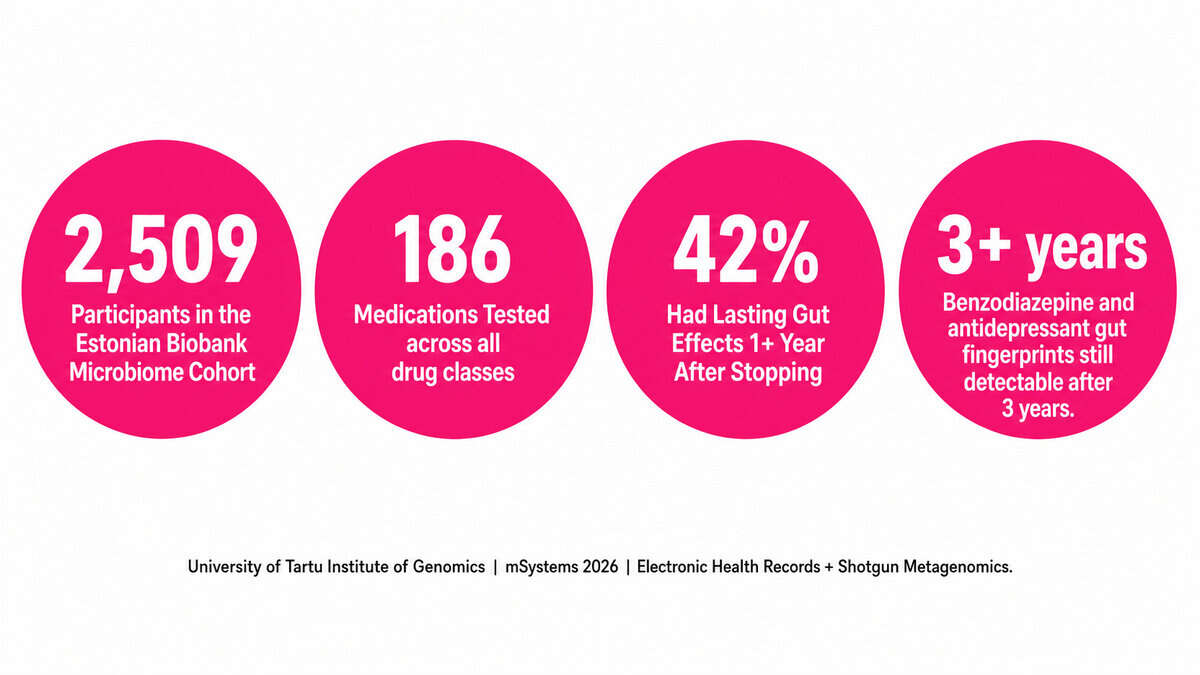
The study was published in mSystems (DOI: 10.1128/msystems.00541-25), the American Society for Microbiology’s open-access flagship journal, by researchers at the University of Tartu Institute of Genomics. Lead author Dr. Oliver Aasmets and colleagues leveraged a uniquely powerful data resource: the Estonian Biobank’s Microbiome cohort, combining complete electronic health records (EHR) with shotgun metagenomics, comprehensive gut bacterial DNA sequencing from stool samples.
The research scale. The study leveraged electronic health records and stool metagenomic data from 2,509 individuals to assess the impact of past medication use, going back up to 5 years prior to the stool sample collection, on gut microbiome composition. 186 different medications were tested across all major drug classes.
The headline finding. Nearly half of the 186 tested drugs, 42% were associated with gut microbiome changes that persisted for one or more years after the last dose. Antibiotics, beta-blockers, benzodiazepines, PPIs, and antidepressants showed the strongest and most lasting effects.
The additive cumulative effect. For some medications, the more prescriptions a person had filled in the previous five years, the stronger the microbiome signal. Repeated long-term use compounds the gut disruption beyond what a single course produces.
The paradigm-shifting conclusion. “Most microbiome studies only consider current medications, but our results show that past drug use can be just as important, as it is a surprisingly strong factor in explaining individual microbiome differences,” said Dr. Oliver Aasmets.
The expert clinical commentary. Gastroenterologist Dr. Babak Firoozi (not affiliated with the study) welcomed the research but noted important limitations: “The methodology was robust and convincingly linked changes in gut microbiome to medication uses, but this was not a controlled trial. There are far too many variables that cannot be accounted for, such as environmental factors, diet, geographic location.” The study identifies associations, not proven causation, an important distinction for both readers and clinicians.
Which Medications Damage Your Gut the Most, And for How Long?
Asking whether medications damage your gut requires separating the answer by drug class, because the mechanisms, the severity, and the duration of gut microbiome disruption vary dramatically between medication categories. Here is the most complete evidence-based breakdown available from the 2026 Estonian study:
ANTIBIOTICS — Most Well-Known, Most Acute, Hardest to Recover From
Antibiotics are the most familiar gut-damaging medications, but the scale of their ongoing impact is still underappreciated.
Mechanism: antibiotics kill both pathogenic and beneficial bacteria indiscriminately. Broad-spectrum antibiotics in particular devastate the diversity of the gut ecosystem, eliminating dozens of species that took years to establish.
Key bacteria depleted: Bifidobacterium (the most important immune-supporting gut bacteria), Lactobacillus, Faecalibacterium prausnitzii (the dominant butyrate producer that protects the gut lining), and Roseburia species, the muscle-strength bacteria that the 2026 Gut journal study showed are responsible for 29% greater handgrip strength in older adults.
Duration of effects: acute disruption lasts 1–4 weeks; full microbiome diversity recovery takes 6 months to 2+ years. Some species do not fully recover after multiple courses. Each additional antibiotic course produces deeper disruption with slower, less complete recovery.
Most disruptive: broad-spectrum antibiotics (amoxicillin-clavulanate, fluoroquinolones like ciprofloxacin, clindamycin). Less disruptive: narrow-spectrum antibiotics targeting specific organisms.
BENZODIAZEPINES — The Most Alarming Finding in the Study
Benzodiazepines (diazepam/Valium, lorazepam/Ativan, clonazepam/Klonopin, temazepam) produced microbiome alterations similar to those seen with antibiotics. This was the study’s most unexpected and alarming specific finding.
Mechanism: GABA-A receptors are expressed throughout the enteric nervous system, the gut’s own nervous system. Benzodiazepine activation of these receptors alters gut motility and pH, creating unfavorable conditions for Bifidobacterium and other beneficial anaerobes that require stable environmental conditions to thrive.
Duration: microbiome changes were detectable even in people who had last used the drug more than three years before the stool sample was collected.
Clinical significance: 12% of US adults have used benzodiazepines. Millions of people prescribed them for anxiety, insomnia, or muscle relaxation have been experiencing antibiotic-like gut disruption without any awareness of this effect. The gut-brain connection established in the USC vagus nerve memory study operates through exactly the bacterial populations most affected, depleted Bifidobacterium impairs the gut-to-hippocampal signaling that supports memory and mood simultaneously.
ANTIDEPRESSANTS — SSRIs and the Antimicrobial Discovery
SSRIs (fluoxetine/Prozac, sertraline/Zoloft, escitalopram/Lexapro) and related antidepressants carry a gut microbiome impact most prescribers and patients are completely unaware of.
Mechanism: SSRIs have direct antimicrobial properties against several gut bacteria species, separate from and independent of their serotonin reuptake inhibition in the brain. At clinically relevant concentrations, SSRI compounds inhibit the growth of specific bacteria in the Lactobacillaceae and Bifidobacteriaceae families. Beta-blockers, SSRIs, and statins alter bacterial functions relevant to the host’s health, such as vitamin biosynthesis.
The self-perpetuating cycle this creates: SSRIs deplete Bifidobacterium → reduced gut Bifidobacterium → impaired gut-derived serotonin precursor production → reduced gut-brain axis mood support → potentially requiring higher medication doses → further gut disruption. This cycle may help explain why some patients develop antidepressant treatment resistance over time.
Duration: distinct microbial fingerprint detectable years after cessation, one of the most persistent drug effects in the study.
The probiotic solution: clinical trial data shows that adding Lactobacillus helveticus R0052 + Bifidobacterium longum R0175 alongside antidepressant treatment produced significantly greater reduction in both depression and anxiety symptoms compared to antidepressants alone, restoring exactly the bacteria the antidepressant depletes. This should be discussed with your prescribing doctor before adding any supplement alongside psychiatric medications.
PROTON PUMP INHIBITORS (PPIs) — The Most Overprescribed Gut-Disruptor
PPIs (omeprazole/Prilosec, pantoprazole/Protonix, lansoprazole/Prevacid, esomeprazole/Nexium) are among the most overprescribed medications in modern medicine, intended for 4–8 weeks of acid suppression but routinely continued for years.
Mechanism: by raising gastric pH from ~2 to ~6–7, PPIs eliminate the acid barrier that normally prevents bacteria from colonizing the upper GI tract. This creates bacterial overgrowth in the small intestine and dramatically alters lower gut microbiome composition through changes in bile acid composition and gut environment.
Key bacteria affected: reduces Lachnospiraceae, a major family of SCFA-producing bacteria responsible for butyrate and propionate production that protects the gut lining and reduces systemic inflammation. This reduction in SCFA production impairs gut barrier integrity and increases LPS translocation, the same pathway that drives neuroinflammation through peripheral immune cell activation.
The B12 connection: PPIs impair vitamin B12 absorption by reducing the gastric acid required to release B12 from food-bound proteins, as documented in BillboardHealth’s B12 deficiency article. The 2026 Estonian study adds gut microbiome disruption as a second, separate mechanism of PPI harm beyond B12 depletion.
Duration: 42% of drug-microbiome associations in the study persisted more than one year post-stopping, PPI effects were among the most persistent.
BETA-BLOCKERS — The Cardiovascular Drug’s Hidden Gut Effect
Beta-blockers (metoprolol, atenolol, carvedilol, propranolol) are taken by 30 million US adults for hypertension, arrhythmia, and heart failure. Their gut effects are almost entirely unknown to patients and most prescribers.
Mechanism: beta-adrenergic receptors are expressed throughout the gut wall and enteric nervous system. Beta-blocker activity modifies the sympathetic nervous system’s influence on gut motility, mucus production, and bacterial population dynamics.
Key bacteria affected: Prevotella changes most consistently documented, the same Prevotella genus linked to blood pressure regulation through dietary nitrate conversion. The beetroot juice blood pressure research documented dietary nitrate as a natural blood pressure intervention; the beta-blocker Prevotella effect adds another dimension to why dietary support matters for cardiovascular patients on medication.
Duration: lasting microbiome changes detected in the Estonian cohort after discontinuation.
GLUCOCORTICOIDS (STEROIDS) — Often Overlooked
Systemic steroids (prednisone, dexamethasone, hydrocortisone) are prescribed for inflammation, autoimmune conditions, and asthma, often in repeated courses.
Mechanism: immunosuppression disrupts the immune-microbiome dialogue that maintains bacterial population balance. Steroid-induced immunosuppression allows opportunistic overgrowth of less beneficial bacteria and Candida at the expense of the beneficial commensal microbiome.
Duration: lasting effects detected, with cumulative harm from repeated steroid courses.
The Additive Effect — Why Multiple Medications Compound the Gut Damage
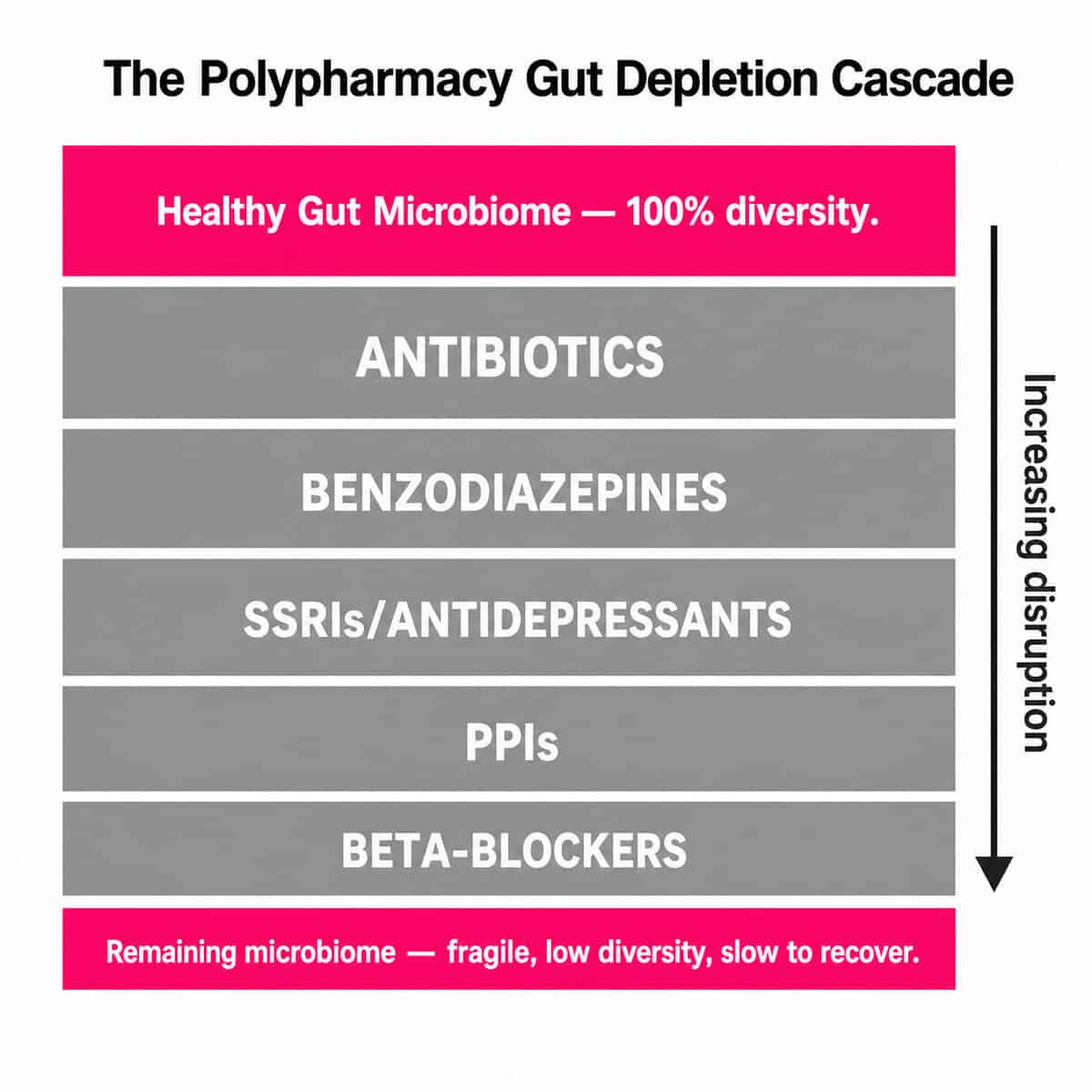
For benzodiazepines, antidepressants, and proton pump inhibitors, the researchers found that repeated long-term use was linked to a larger effect on the microbiome than single courses.
The polypharmacy reality. Adults over 65 take an average of 5–7 medications simultaneously. The most common combination in older adults managing multiple chronic conditions, type 2 diabetes + hypertension + depression + acid reflux + anxiety, may look like: metformin + beta-blocker + SSRI + PPI + benzodiazepine. Each of these five medications individually leaves a lasting gut fingerprint. Their combined effect is not simply additive, it may eliminate the microbial redundancy that normally allows ecosystem recovery.
The compounding mechanism. When one medication reduces Bifidobacterium, a second reduces Faecalibacterium prausnitzii, and a third reduces Lachnospiraceae, the combined gut dysbiosis eliminates the backup species that would normally compensate. A healthy microbiome has functional redundancy, multiple species capable of performing each ecological function. Polypharmacy systematically removes this redundancy, creating a fragile ecosystem with diminished recovery capacity.
The clinical blind spot. When doctors investigate gut symptoms in patients on multiple medications, the prescription history is rarely the first consideration. Yet Dr. Aasmets’s finding, that past drug use is “a surprisingly strong factor in explaining individual microbiome differences”, suggests it should be among the first questions explored when unexplained gut symptoms persist.
The artificial sweetener disruption found 75% of sweeteners tested disrupted at least one gut bacteria species, combining artificial sweeteners with gut-disrupting medications creates the most damaging possible combination for microbiome health.
Why This Explains Gut Struggles That Diet Alone Won’t Fix
Many people wonder: why isn’t my diet working for my gut health? The Estonian study’s findings provide four specific explanations.
Why your probiotic isn’t working. If you’re taking a medication with direct antimicrobial properties against the bacteria in your probiotic (as SSRIs have against Bifidobacterium), supplementing with that probiotic while continuing the medication may produce limited benefit. The medication continuously depletes what the probiotic is trying to establish. The solution: higher doses, more resistant strains, or, better, discussing with your doctor whether a probiotic containing the most medication-resistant strains is appropriate.
Why your diet changes aren’t moving the needle. If your gut microbiome carries lasting fingerprints from medications taken years ago, even an optimal high-fiber, plant-rich diet may take much longer to produce measurable improvements than in someone without this prescription history. The plant-based diet weight loss research documented simultaneous gut microbiome improvements from plant-forward eating, but these improvements operate against the headwind of medication history that must be factored into realistic timelines.
Why “my gut has never been the same since…” Many people pinpoint a specific period, a long antibiotic course, a period on high-dose steroids, years of PPI use, when their gut health changed fundamentally and never recovered. The Estonian study validates this perception: these medications leave lasting marks on the gut’s microbial ecosystem that persist long after the prescription ends.
The antidepressant-gut-mood cycle. Antidepressants alter the gut microbiome → reduced gut Bifidobacterium → less gut-derived serotonin precursor production → reduced mood support from the gut-brain axis → potentially requiring higher medication doses → further gut disruption. This cycle connects to the gut health and memory study, the same vagus nerve pathway that governs gut-to-brain memory signals also transmits gut-to-brain mood signals. Medication-depleted gut bacteria impair both simultaneously.
Do Medications Damage Your Gut Permanently? How to Restore Your Microbiome
The gut microbiome is not a static ecosystem, it is one of the most dynamic biological systems in the human body, capable of substantial recovery with the right interventions. “Lasting” effects do not mean “permanent” effects.
The 5-Pillar Recovery Protocol — Compatible With Continuing Medication
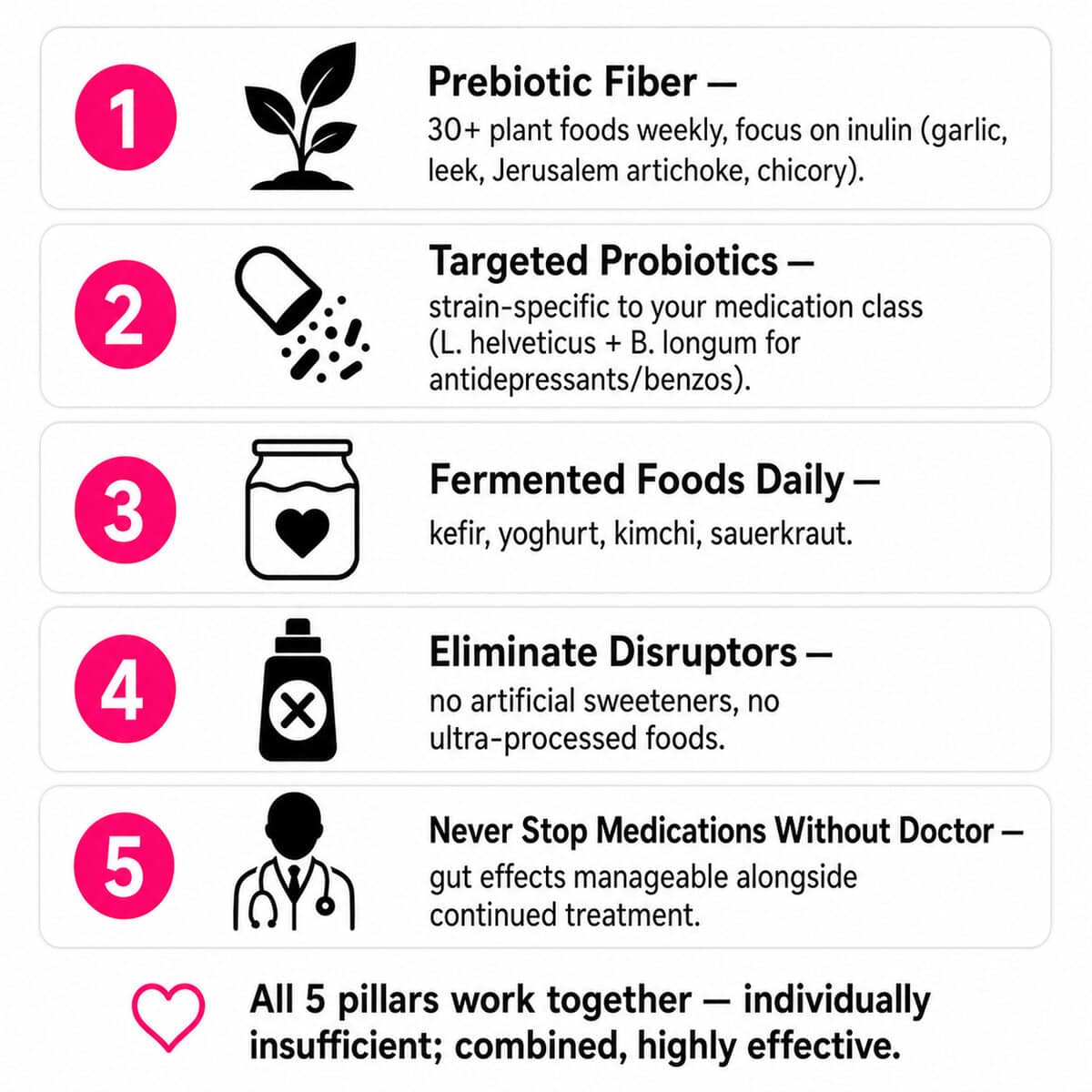
Pillar 1 — Aggressive Prebiotic Fiber Intake
The bacteria most depleted by medications, Bifidobacterium, Roseburia, Faecalibacterium prausnitzii, Lachnospiraceae, are all prebiotic fiber fermenters. They thrive on inulin, fructooligosaccharides (FOS), pectin, and resistant starch. Providing these fibers creates the ecological conditions for their recovery.
Target: 30+ different plant foods weekly, the gold standard for microbiome diversity. Specific emphasis on inulin-rich foods: Jerusalem artichoke (18g inulin/100g), chicory root (41g/100g), garlic (12g/100g), leek (6g/100g), asparagus (4g/100g). This is the same dietary strategy from BillboardHealth’s knee arthritis prebiotic article, the INSPIRE trial’s 20g daily inulin protocol restores these bacteria for both joint pain relief and gut health simultaneously.
Prebiotic-rich snacks, apple slices, carrot sticks with hummus, underripe bananas, provide continuous fiber substrate across the day rather than a single large meal bolus.
Pillar 2 — Targeted Probiotic Supplementation (Matched to Your Medication Class)
Generic probiotic supplements of uncertain strains provide less targeted benefit than strain-specific supplementation matched to your medication class:
- If taking antidepressants or benzodiazepines: prioritize Lactobacillus helveticus R0052 + Bifidobacterium longum R0175 — the PRODG trial strains that produced significantly better antidepressant outcomes when added alongside medication
- If taking PPIs: prioritize Lactobacillus rhamnosus GG and Bifidobacterium infantis, strains most robust at higher gastric pH environments that PPIs create
- If taking or recovering from antibiotics: begin probiotic supplementation DURING the antibiotic course (take 2+ hours apart from the antibiotic) and continue for 8–12 weeks after completion
- If taking beta-blockers: focus on dietary nitrate from beetroot juice alongside broad-spectrum probiotic supplementation to support Prevotella-related cardiovascular function
Pillar 3 — Daily Fermented Foods
Fermented full-fat dairy — kefir (30–50 microbial species) and full-fat plain yoghurt, provide living bacteria alongside the dairy matrix that protects probiotic viability through the digestive tract. Kimchi, sauerkraut, miso, and kombucha add bacterial diversity that capsule supplements cannot fully replicate. The gut health mental wellness research documents the broad systemic health benefits of maintaining diverse gut microbiome, fermented foods are the most bioavailable daily path to this diversity.
Pillar 4 — Eliminate Additional Microbiome Disruptors
During active microbiome recovery from medication effects, eliminating additional disrupting factors amplifies the restoration effort. The artificial sweeteners study found 75% of sweeteners disrupted at least one gut bacteria species. Combining artificial sweeteners with gut-disrupting medications creates the worst possible outcome for microbiome recovery, each artificially-sweetened “diet” product undermines the restoration the probiotic and prebiotic strategy is trying to achieve.
Pillar 5 — Do Not Stop Medications Without Consulting Your Doctor
People taking these medications should not stop them without consulting their doctor. The gut microbiome effects, while real and lasting, are manageable through dietary and probiotic strategies alongside continued medication use. The risks of stopping prescribed medications without medical guidance, antidepressant discontinuation syndrome, blood pressure rebound, acid rebound from PPIs, seizure risk from benzodiazepine withdrawal, are substantially greater than the gut microbiome disruption the medications cause.
The goal is not to avoid medications. It is to make informed decisions about their gut effects and compensate proactively with targeted dietary and probiotic strategies.
Questions to ask your prescribing doctor:
- “My gut health has not responded well to dietary changes, could my prescription history be contributing to this?”
- “Is the lowest effective dose of [medication] sufficient, to minimize my gut microbiome exposure?”
- “Should I take a probiotic alongside my [medication] to mitigate the gut microbiome impact?”
- “Is my PPI prescription still necessary, or was it intended for short-term use only?” (PPIs are frequently continued for years beyond their clinical indication)
- “Given that I take multiple gut-disrupting medications, would a consultation with a registered dietitian specializing in gut health be appropriate?”
The Metformin Exception, When Gut Disruption Is Part of the Benefit
The Estonian study’s findings are not uniformly negative about all drug-microbiome interactions. Metformin (the world’s most prescribed diabetes medication) is the instructive exception.
Metformin significantly alters the gut microbiome, but in a partially beneficial direction. It enriches Akkermansia muciniphila, a bacterium associated with improved metabolic health, lower systemic inflammation, improved insulin sensitivity, and gut barrier integrity. This Akkermansia enrichment may be one of the key mechanisms through which metformin delivers its anti-aging, cardiovascular, and brain-protective benefits documented in BillboardHealth’s metformin brain pathway article.
However, metformin also depletes certain Clostridiales species and independently depletes vitamin B12 through impaired ileal B12 absorption, creating a nutritional vulnerability that requires monitoring and supplementation in long-term metformin users. This double impact (gut microbiome alteration + B12 depletion) makes metformin users a specific population requiring both B12 monitoring and probiotic support alongside their medication.
The lesson: not all drug-microbiome effects are harmful. Some medications appear to achieve therapeutic benefit partly through beneficial gut microbiome modulation. The Estonian study’s value is not to indict medications broadly, it is to help clinicians and patients understand which drug-microbiome effects are beneficial, which are harmful, and which require compensatory dietary or probiotic intervention.
Your Personal Medication History — A Gut Health Self-Assessment

Step 1 — Review your prescription history (past 5 years)
List all medications you have taken in the past five years, including:
- Antibiotics (any courses, any duration, any reason)
- Antidepressants (SSRIs, SNRIs, tricyclics)
- Anxiety or sleep medications (benzodiazepines, Z-drugs like zopiclone)
- Acid reducers (PPIs: omeprazole, pantoprazole, lansoprazole)
- Blood pressure medications (especially beta-blockers: metoprolol, atenolol)
- Steroids (prednisone courses, high-dose inhaled corticosteroids)
- Metformin or other diabetes medications
Step 2 — Assess your current gut health
Symptoms that may indicate medication-related gut microbiome disruption:
- Persistent bloating or excessive gas despite dietary improvement
- Irregular bowel habits (alternating constipation and loose stools)
- Fatigue that persists despite adequate sleep
- Poor response to probiotic supplements
- Recurring infections (urinary, respiratory), may indicate depleted gut-immune barrier
- Gut symptoms that began or worsened after a specific medication course
Step 3 — Connect history to symptoms
If you recognize yourself in both lists, significant prescription history from the drug classes above AND ongoing gut symptoms resistant to dietary improvement — the Estonian study’s findings suggest your prescription history is a significant explanatory factor. This connection deserves a conversation with your GP or a registered dietitian specializing in gut health.
Special Focus: Antidepressants, Gut Health, and the Probiotic Connection
This section addresses the most significant clinical implication for the largest medication sub-group, the 40+ million people currently taking antidepressants in the US alone.
The SSRI antimicrobial finding is not theoretical, multiple laboratory studies have demonstrated that SSRI compounds at clinically relevant concentrations inhibit specific gut bacteria growth. The affected bacteria (Lactobacillaceae, Bifidobacteriaceae) are precisely those most associated with the gut-brain serotonin axis, meaning SSRIs may deplete the gut bacteria that independently support mood through the vagus nerve pathway, creating a dependency on the medication for serotonin function that could otherwise be partly maintained through a healthy gut microbiome.
The clinical trial evidence for the probiotic solution is compelling. Adding Lactobacillus helveticus R0052 + Bifidobacterium longum R0175 alongside antidepressant treatment produced significantly greater reduction in both depression and anxiety symptoms compared to antidepressants alone in a randomized, placebo-controlled trial. The probiotic restored exactly the gut bacteria the antidepressant depletes, not as an alternative to medication, but as a targeted compensation for its microbiome effects.
If you take an antidepressant: ask your prescribing doctor whether adding L. helveticus + B. longum probiotic alongside your treatment is appropriate for your situation. This is not a recommendation to change your medication regimen independently, it is a question to raise with your doctor at your next appointment.
The brain inflammation and Alzheimer’s research identified Bifidobacterium depletion as part of the gut-LPS-neuroinflammation cascade that drives Alzheimer’s pathology. Antidepressant-induced Bifidobacterium depletion may therefore have implications not only for current mood management but for long-term brain health through the neuroinflammation pathway, an additional reason to proactively support gut microbiome health alongside antidepressant use.
FAQs About Do Medications Damage Your Gut
Do medications damage your gut microbiome permanently? Not permanently, but nearly half of 186 medications tested produced lasting effects detectable more than a year after stopping, including more than 3 years for benzodiazepines. Recovery is possible with the 5-pillar protocol: prebiotic fiber, targeted probiotics, fermented foods, eliminating additional disruptors, and continued medical treatment.
Which common medications cause the most gut bacteria damage? Benzodiazepines (antibiotic-like disruption, 3+ year persistence), antibiotics (acute broad disruption, slow recovery), SSRIs/antidepressants (direct antimicrobial properties), PPIs (eliminate gastric acid barrier, reduce SCFA-producing bacteria), and beta-blockers (Prevotella alterations). Combined use compounds all effects.
How long do antibiotics affect the gut microbiome? Acute disruption 1–4 weeks; full recovery 6 months to 2+ years; some species never fully return after multiple courses. Each additional course produces deeper disruption.
Do antidepressants affect gut bacteria? Yes, SSRIs have direct antimicrobial properties against Bifidobacterium and Lactobacillaceae, leave a distinct microbial fingerprint years after stopping, and may create a self-perpetuating cycle that reduces gut-brain mood support over time. Targeted probiotic supplementation alongside antidepressants has shown clinical benefit.
Can PPIs damage the gut microbiome? Yes, by eliminating gastric acid, they enable upper GI bacterial overgrowth and reduce SCFA-producing Lachnospiraceae in the lower gut. Among the most overprescribed medications; many people continue them for years beyond their clinical indication.
Do benzodiazepines disrupt gut health like antibiotics? Yes, this was the study’s most alarming specific finding. Effects detectable more than 3 years after stopping, with a Bifidobacterium depletion pattern similar to antibiotic courses.
How do I restore my gut microbiome after medications? 5-pillar protocol: (1) 30+ plant foods weekly, especially inulin-rich foods; (2) Strain-specific probiotics matched to medication class; (3) Daily fermented foods; (4) Eliminate artificial sweeteners and ultra-processed foods; (5) Never stop medications without doctor guidance.
Should I take a probiotic with my antidepressant? Clinical trial evidence supports adding L. helveticus R0052 + B. longum R0175 alongside antidepressants for improved outcomes. Discuss with your prescribing doctor before adding any supplement alongside psychiatric medication.
Does metformin damage gut bacteria? Partially and with mixed effects, metformin enriches beneficial Akkermansia muciniphila (anti-aging, metabolic health) while depleting some Clostridiales. It also depletes vitamin B12. A complex picture: partly therapeutic gut modulation, requiring B12 monitoring and probiotic support.
How long after stopping a medication does the gut recover? Varies by drug: antibiotics 6 months to 2+ years; PPIs 3–6+ months; antidepressants and benzodiazepines, the Estonian study found effects 3+ years after stopping, suggesting recovery requires sustained dietary and probiotic intervention over at least this timeframe.
CRITICAL: Never stop any prescribed medication without consulting your doctor. The gut microbiome effects are manageable alongside continued medication use through dietary and probiotic strategies.